
Most families do not sit down one Sunday afternoon and decide to create a care plan for Mum or Dad. Usually, something happens first. Dad falls. Mum becomes confused after an illness. Someone ends up in hospital. A family carer suddenly cannot continue.
Then, within a few days, the family is trying to answer questions they have never discussed. Does Mum want to stay at home? Who can help every day? Has an Enduring Power of Attorney been arranged? What support might be publicly funded? How much private home care could the family afford? What happens if Dad cannot safely be alone overnight?
Planning ahead before a crisis gives families more time to answer these questions calmly and, most importantly, gives Mum or Dad more opportunity to be involved in the decisions.
✅ Quick Answer
Planning ahead for an ageing parent’s care means understanding their wishes, reviewing home safety and health needs, arranging legal documents such as an EPOA, exploring funding and likely care costs, agreeing on family responsibilities and knowing what support could be introduced if needs increase. A good plan also includes what happens after hospitalisation or in an emergency.
What Should You Include When Planning Care for an Ageing Parent?
1. Start With What Mum or Dad Actually Wants
Before talking about costs, carers or rest homes, start here:
“What matters most to you if you need more help later?”
The answers may be surprisingly specific. Mum might say:
“I want to stay in this house.”
Dad might be happy to move eventually, but he may want to stay close to his bowls club. Someone may be comfortable receiving help with cleaning but strongly prefer to manage their own meals. Another person may be open to a carer visiting but not want family members helping with personal care.
Useful questions include:
- Where would you prefer to live if you needed more support?
- What parts of your routine matter most?
- Which tasks would you be comfortable accepting help with?
- Is there anything you would prefer family not to help with?
- Who would you want involved in decisions?
- What would make staying at home important to you?
- What would make staying at home no longer feel right?
Write the answers down. They do not have to become a formal care plan immediately. The purpose is to understand the person’s priorities while they are able to express them clearly.
2. Look at Whether the Home Can Adapt With Them
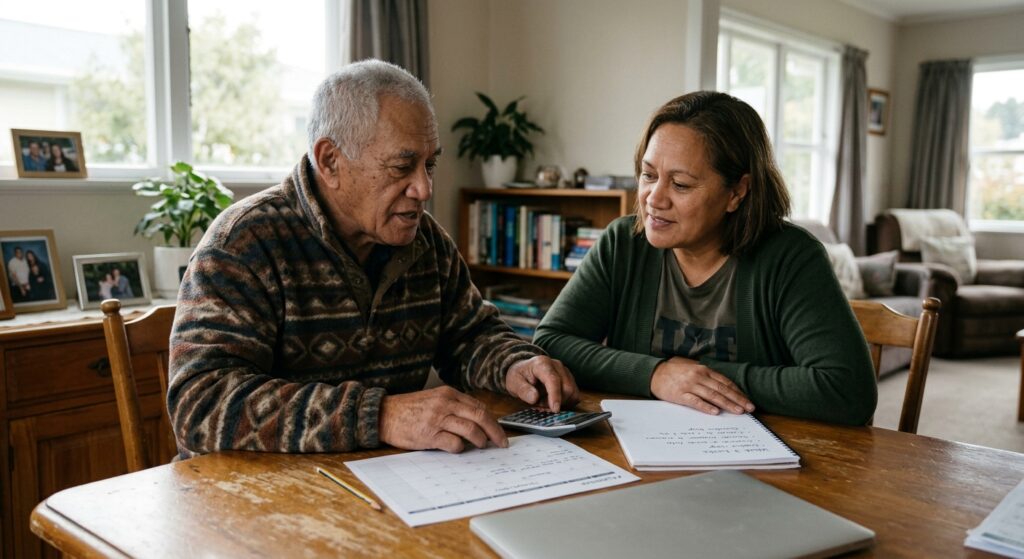
Planning ahead does not mean deciding today whether Mum will eventually need residential care. Start with the home she already has. Ask whether it could continue working if mobility, eyesight, strength or memory changed.
Look at:
- Steps and stairs
- Bathroom access
- Bedroom location
- Lighting
- Entrances
- Pathways
- Heating
- Kitchen layout
- Access to transport
- Distance from family, shops and healthcare.
The question is not simply: “Is the house safe today?” It is: “Could this home still work if Mum needed a little more support?”
Some homes can adapt relatively easily. Small changes, suitable equipment, professional advice and practical support can help many older people remain at home longer. Planning early also means families have time to make thoughtful changes rather than trying to reorganise the house just before someone comes home from hospital.
📎 RELATED READING
👉 Repeated Falls in Older People: When Is More Support at Home Needed?
3. Make Health and GP Conversations Part of the Plan
Do not wait until Mum or Dad is unwell to start keeping track of their healthcare. Families may find it useful, with the person’s permission, to understand:
- Who their GP is
- Current health conditions
- Medications
- Relevant specialists
- Allergies
- Mobility concerns
- Memory changes
- Recent hospital admissions
- Important health contacts.
This does not mean adult children should take over every medical decision. It means that if something changes, the family is not starting from zero. A regular GP appointment can also be an opportunity to raise concerns about mobility, memory, falls or increasing difficulty with daily activities.
4. Put an Enduring Power of Attorney in Place
This is one of the most important planning steps families can easily postpone. In New Zealand, an Enduring Power of Attorney (EPA or EPOA) is a legal document that allows a trusted person to make certain decisions on someone’s behalf, depending on the type of EPA and the circumstances.
There are two types:
- Personal care and welfare EPA: decisions about personal care, health and welfare
- Property EPA: decisions about money, property and other assets
Putting an EPA in place early is important because the person creating it needs to have the required mental capacity at the time it is made. That is exactly why it belongs in an early care-planning conversation. New Zealand Government guidance also notes that only one individual can be appointed as the personal care and welfare attorney, while more than one may be appointed for property. Families should obtain appropriate legal advice when setting up an EPA.
Why it is important not to leave this until the last minute:
If someone no longer has the required capacity to create an EPA, their family may need to consider other legal options. This can make decision-making more complicated, so arranging an EPA while Mum or Dad can still make their own decisions is an important part of planning ahead.
5. Understand Needs Assessments and Publicly Funded Support
One of the most useful early questions is: “What help might Mum or Dad be eligible for?”
Health NZ provides publicly funded home support for some older people who meet eligibility and assessed need requirements. Access generally involves a needs assessment through the relevant Needs Assessment Service, and referrals may come from a healthcare provider or, depending on the service, directly from the person or family.
Depending on assessed needs and eligibility, support may include personal care, household support, carer support, equipment and other relevant services. Publicly funded support and private home care are not necessarily one or the other. Many families use funded services for eligible needs and arrange additional private support where they want more hours, different services or greater flexibility.
6. Talk About Money Before Care Becomes Urgent
Care planning is also financial planning. This conversation can feel uncomfortable, but avoiding it doesn’t make future care free. Families don’t necessarily need access to every detail of Mum or Dad’s finances. What matters is having enough information to understand which options may be realistically affordable.
A staged approach is often more useful than trying to predict one fixed future cost:
| Stage | Possible Support |
|---|---|
|
Mostly independent |
Family check-ins, home maintenance, transport |
|
Small amount of help |
Cleaning, shopping, meal preparation, companionship |
|
Regular support |
Several home care visits each week |
|
Family needs relief |
Planned respite support |
|
Increased needs |
Daily personal or dementia support |
|
Night-time concerns |
Overnight support |
|
High or complex needs |
More extensive or 24/7 support |
Not everyone moves through every stage. Needs may increase gradually, temporarily after illness, or quite suddenly. The value of planning is knowing these different levels of support exist.
7. Agree What The Family Can Realistically Do
Families often build care plans on good intentions: “I can pop in.” “We’ll take turns.” “We’ll manage between us”. That may work initially. The problems begin when good intentions meet real life without a clear structure.
Be specific about who can attend appointments, manage groceries, organise meals, provide transport, check in regularly, help with paperwork, respond in an emergency, provide personal care or stay overnight. Then ask the harder question: how sustainable is that arrangement?
A daughter working full-time may happily visit twice a week. That doesn’t mean she can become available every morning indefinitely. A son living in Wellington may coordinate appointments for Mum in Nelson but cannot be there in person when something happens at 10pm. Planning works better when families are realistic about what they can manage from the beginning.
8. Understand Home Care Before You Need It
Home care doesn’t have to begin when someone can no longer manage anything themselves. It can start much earlier, perhaps with a few hours a week for cleaning, shopping, meal preparation, transport, companionship, personal routines or appointments, while the older person remains otherwise independent.
As needs change, support can change too. That flexibility matters because ageing rarely happens in neat stages. Someone may need temporary extra support after illness and then become more independent again. Understanding how home support works before it is urgent means families can introduce it thoughtfully, with the older person’s involvement, rather than searching for a solution during a crisis.
9. Put Respite Into the Plan Before the Family Carer Is Exhausted
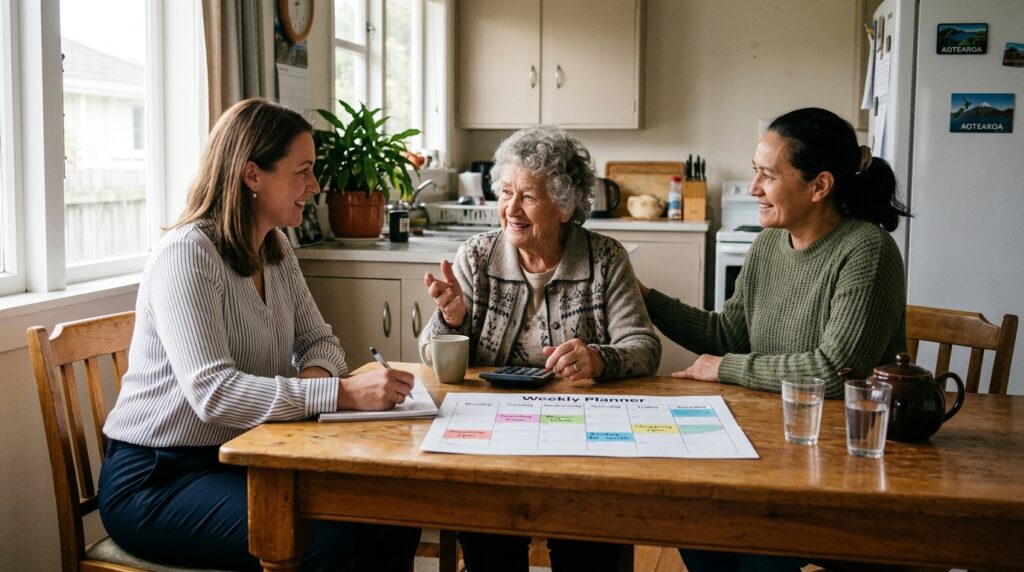
Respite should not be something families consider only when somebody can no longer cope. If one family member provides regular care, plan how they will take breaks before the need becomes urgent.
That might mean another family member taking over, regular professional respite, occasional longer breaks, additional support during holidays or temporary help during particularly demanding periods. Regular breaks can be part of a sustainable care arrangement, not a sign that the family is failing.
10. Plan for Memory Changes Before Decisions Become Harder
Not every older person will develop dementia. But memory and cognitive changes are important enough to include in future planning. Families can discuss what Mum or Dad would want if their memory or thinking changed, who they trust to help with decisions, their preferences around staying at home, routines that matter to them and what support could be introduced.
This is another reason to arrange legal planning such as an EPOA early. If memory changes do appear, families can then focus on what the person needs instead of trying to work out preferences and decisions that were never discussed.
11. Have a Hospital Discharge Plan Before Anyone Is in Hospital
Hospitalisation is one of the times when families may discover that their informal care arrangement is no longer enough. Mum may have managed independently before admission but return home weaker, less mobile, fatigued, on new medication and needing help with meals, showering and follow-up appointments at the same time.
A discharge plan can cover questions such as: Who will bring Mum home? Who will collect medication? Is food available? Can she safely move around the house? Who will be there the first evening? Who handles follow-up appointments? What if the family cannot provide enough support?
Thinking about these questions ahead of time can make it easier to put a plan together if an unexpected hospital admission occurs.
12. Know What Would Trigger Overnight or 24/7 Support
Planning ahead does not mean booking 24/7 care years before it is needed. It means discussing in advance what circumstances would lead the family to reconsider the current arrangement.
Possible triggers might include needing frequent help during the night, dementia-related wandering or confusion overnight, difficulty remaining safely alone, significant mobility difficulties, repeated falls, increasingly complex support needs or family carers finding regular overnight supervision difficult to sustain.
Overnight care and 24/7 home care are different levels of support. Overnight care helps when the main concern occurs during the night. 24/7 support provides continuous care across the day and night when someone needs a much higher level of ongoing assistance. Knowing the difference early can make future conversations less daunting.
13. Create a Simple Written Emergency Plan
Finally, think through the situations nobody wants to think about. What happens if Mum falls? What if Dad becomes suddenly confused? What if the main family carer becomes ill? What if there is an unexpected hospital admission? What if a carer cannot attend? What if someone can no longer safely remain alone?
A basic written emergency plan doesn’t need to be elaborate. It just needs to be easy for the right people to find when they need it.
📞 Key contacts
- GP name and practice number
- Pharmacy name and number
- Primary family contact
- Backup family contact
- Support provider (if in place)
- Trusted neighbour or local contact
📄 Key information
- Current medication list with dosages
- Known allergies
- EPOA details and document location
- Health insurance details if applicable
- Location of important documents
🏠 Home access
- Who holds a spare key
- Security code if applicable
- How emergency services can gain access
- Location of the fuse box and water shut-off
🏥 If hospitalisation occurs
- Who accompanies Mum or Dad to hospital
- Who coordinates family communication
- Who manages the home during the admission
- Who prepares for discharge support
- In an emergency, call 111
The 13-Step Care Planning Checklist
Families don’t need to solve everything at once. Even working through the first few steps can create a meaningful foundation.
- Do we know what Mum or Dad wants? Have we asked and written down their priorities for care and independence?
- Could their home adapt with them? Have we looked at stairs, bathroom access, lighting and home safety with future needs in mind?
- Do we understand their important health information? With their permission, do we know their GP, medications, specialists and any recent health changes?
- Have appropriate EPOAs been arranged? Have personal care and welfare, and property, been considered with appropriate legal advice?
- Do we understand how a Needs Assessment works? Do we know how to access publicly funded home support if eligible?
- Have we discussed likely care costs and finances? Do we have a staged picture of what support might cost at different levels?
- Do family members know what they can realistically contribute? Have we discussed specific tasks, realistic availability and individual limits?
- Do we understand what home care could provide? Have we looked at what professional support might look like at different stages?
- Is respite part of the plan? Do the main family carers have a plan for taking regular breaks?
- Have we discussed what happens if memory changes? Have we considered legal arrangements, personal preferences and who may be involved in future decisions?
- Do we know what to organise after a hospital stay? Who does what, and what if the family can’t provide enough support alone?
- What changes would make us consider overnight or 24/7 support? Have we discussed these triggers before the situation becomes urgent?
- Is there a written emergency plan? Are contacts, health information, home access details and hospitalisation roles written down and easy to find?
Planning Ahead Does Not Mean Assuming the Worst
Talking about an EPOA doesn’t mean Mum is about to lose capacity. Learning about dementia support doesn’t mean Dad will develop dementia. Understanding 24/7 care doesn’t mean someone will need it. Discussing care costs doesn’t mean independence is disappearing.
Planning ahead simply creates options. It allows families to say: “If something changes, we know where to start.” That can make difficult situations easier to navigate if circumstances do change.
How Home Carers Fits Into a Wider Care Plan
Planning care is rarely about choosing one provider to do everything. A future support plan might involve a range of people and services working together:
Family
GP
Pharmacy
Physiotherapist
Occupational therapist
Funded services
Private home support
Community services
Respite Care
Home Carers can sit within that wider network, providing practical support around changing needs, existing family involvement and other services already in place.
That might start with a few hours of home help. Later, it could involve respite. After hospitalisation, it might include short-term recovery support. If needs become more complex, the plan can be reviewed again. The aim is to build support around the person rather than fit the person into a fixed package.
For families managing care from a distance:
Mum may live in Queenstown while her children are in Auckland and Christchurch. Dad may be in Dunedin while family members coordinate his support from overseas. Home Carers supports families across Christchurch, Tauranga, Queenstown, Wānaka, Nelson, Auckland, Wellington, Dunedin and Hamilton.
Having clear responsibilities, trusted local support and a plan for changing needs can reduce the number of decisions families need to make at short notice during a crisis.
The Best Time to Plan Is While Mum or Dad Can Help Make the Plan
Families cannot predict exactly how ageing will unfold. Good planning is not about trying to control the next ten years. It is about understanding the person’s wishes, knowing what support exists, preparing financially and legally, and agreeing what happens when circumstances change.
Start while Mum or Dad can be fully involved. Start before somebody is sitting in an emergency department, before one sibling is exhausted, and before the family has 24 hours to organise care.
The goal is not to prepare for the worst. It is to give Mum or Dad more choice about what happens next.
🔗 MORE FROM OUR BLOG
Does Your Family Have a Plan for What Happens If Something Changes Suddenly?
Visit Home Carers New Zealand to talk through a realistic support plan for Mum or Dad, including what support might be useful after a hospital discharge, when overnight care may be appropriate and how professional home support could fit around your family’s existing plan.
Home Carers supports families across New Zealand with flexible care that can be introduced as needs change.
Whether you’re planning for the future or dealing with something that’s happening right now, our team can help you understand the options and work out what support might be useful next.
YOU CAN ALSO REACH US DIRECTLY
Frequently Asked Questions
When should families start planning care for an ageing parent?
Ideally, planning should begin while the parent is still relatively independent and able to clearly express their wishes. The plan can then be updated as health, mobility, memory or family circumstances change.
What should be included in an ageing parent care plan?
A useful plan covers the person's wishes, home environment, health information, EPOA, funding options, finances, family responsibilities, home support, respite, hospital discharge arrangements, possible future care needs and an emergency plan.
What is an EPOA in New Zealand?
An Enduring Power of Attorney is a legal document that appoints someone to act on another person’s behalf in certain circumstances. New Zealand has separate EPOAs for personal care and welfare and for property.
How do older people access publicly funded home support in New Zealand?
Eligibility generally involves a needs assessment through a Health New Zealand Needs Assessment Service. Referral pathways can vary, so families can ask a GP, healthcare provider or their local Needs Assessment Service how to begin the process. The assessment considers what help may be needed to maintain the person’s independence and wellbeing.
Does government funding pay for all home care?
Not necessarily. Publicly funded home support depends on eligibility and assessed need. Some families combine funded services with privately paid support where they want additional hours, services or flexibility.
How much should families budget for home care?
There is no single figure because costs depend heavily on the amount and type of support required. Planning in stages, from occasional home help to regular care, respite, overnight support and 24/7 care, is more useful than assuming one fixed future cost.
Should respite care be planned before it is needed?
Yes. Respite can be part of a proactive family care plan rather than something arranged only after a family carer becomes exhausted. Regular or occasional breaks can make a long-term care arrangement more sustainable.
When might an ageing parent need overnight or 24/7 care?
It may be worth reviewing support when someone cannot safely remain alone, needs frequent help overnight, experiences significant dementia-related wandering or confusion, has complex support needs or when the level of supervision being provided by family is becoming difficult to sustain. The appropriate level of care depends on the individual.