
When an ageing parent needs a little more support, families often know the names of the big services but are less sure about what each one actually does.
Age Concern is a good example. A family may have heard the name through a GP, a community noticeboard or a friend, but may not be sure what Age Concern actually offers. Does it provide home care, social visits, advice, exercise programmes or support with elder abuse concerns? Or is it somewhere families can turn when they simply don’t know where to start?
The answer is that Age Concern supports older New Zealanders in several different ways, with a strong focus on wellbeing, connection, information, independence and rights. However, it is not a replacement for healthcare, emergency services or regular hands-on home care.
Understanding that difference can make it much easier to know when Age Concern is the right place to call and when another service may be more appropriate.
✅ Quick Answer
Age Concern New Zealand is a charity supporting the wellbeing, rights and dignity of older people. Through local Age Concerns, services may include social connection and visiting programmes, health promotion, strength and balance activities, information and advice, driver education, and support for people experiencing elder abuse or neglect. Services vary between regions, so families should check what their nearest Age Concern provides.
✅ Key Takeaways
- Age Concern is a community support and information organisation, not a home care agency or health service.
- Services differ between local Age Concerns.
- Volunteer visitors provide companionship, rather than household help or personal care.
- Elder abuse helpline: 0800 32 668 65 (text 5032). Emergencies: 111.
- Community support and paid home care can work side by side.
How Does Age Concern Work in New Zealand?
Age Concern has a national organisation and local Age Concerns throughout Aotearoa New Zealand. Each plays a different role.
The national organisation focuses on advocacy, providing information and raising awareness about issues affecting older New Zealanders. At community level, local Age Concerns deliver services and programmes directly to older people.
As a result, the programmes available in Tauranga may differ from those offered in Christchurch, Wellington or Dunedin. Rather than assuming a particular service is available everywhere, families can search by suburb, town or postcode through the Age Concern website to find their nearest organisation and see what it offers.
What Can Age Concern Actually Help With?
The easiest way to understand Age Concern is to think of it as a community support and information organisation for older people, rather than a home care agency or health service. Depending on the local organisation, support can fall into several areas.
1. Social Connection and Regular Visiting
Loneliness does not always look dramatic. Sometimes it is an older person who has gradually stopped going out. Friends may have died or moved away. Driving may have become difficult. Their partner may have passed away. Family might live in another city or overseas.
The person may still be managing well at home, but their days have become much quieter. Age Concern’s Visiting Service is designed for situations like these.
Where the service is available, an older person who is lonely or socially isolated can be matched with a trained, police-checked volunteer. The volunteer visits regularly, offering conversation, companionship and opportunities to enjoy activities together. This is not limited to people who live alone. Someone can live with other people and still experience loneliness or want more social contact.
The relationship is about connection and companionship. It is not designed to provide regular household help, personal care or routine shopping assistance. That distinction matters.
A volunteer visitor may be exactly what someone needs when the main issue is loneliness. If the person is struggling to shower, prepare meals, manage the house or move safely, another type of support may be needed as well.
👉 Read more: Home Help for Older People in NZ: A Complete Guide.
2. Activities That Help Older People Stay Connected
A weekly visitor is only one way Age Concern addresses social isolation. Local organisations may also offer groups, activities, events and opportunities for older people to meet others in their community.
For someone who has become less socially active after retirement, bereavement or giving up driving, these activities can provide structure to the week as well as social contact. They may also appeal to someone who doesn’t feel they need formal support but would enjoy getting out, meeting people and trying something new.
This can be particularly valuable because staying well at home is not only about physical safety. Connection, purpose and having something to look forward to matter too. For an adult child who lives far away, finding out what is happening through Mum or Dad’s local Age Concern can be a useful practical step.
3. Strength, Balance and Healthy Ageing Programmes
Age Concern is also involved in health promotion. Depending on the local organisation, programmes can include:
- strength and balance activities
- exercise classes
- nutrition and cooking sessions
- health education
- mental wellbeing activities
- technology support
- presentations about independent living
- other locally developed wellbeing programmes
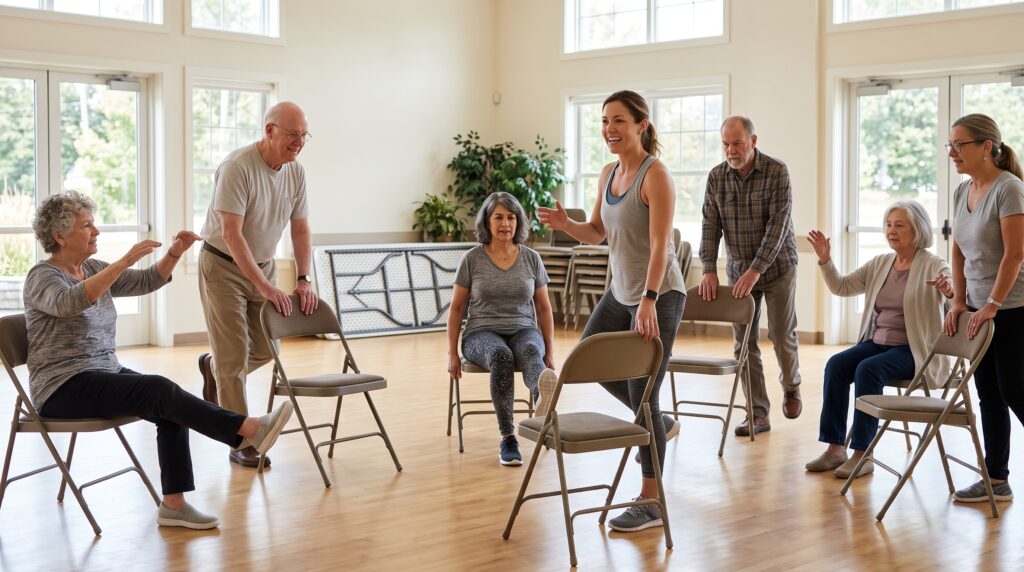
One programme families may come across is Steady As You Go®, a strength and balance programme for older adults offered by many local Age Concerns. These programmes focus on prevention, helping older people maintain their strength, balance and confidence.
For example, Dad may not need someone physically assisting him around the house, but he may have become less active and less confident after a minor fall. A local strength and balance programme could be one useful part of helping him stay active.
If his mobility has changed significantly, however, or falls are becoming frequent, it is also important to involve the appropriate health professionals rather than relying on a community exercise programme alone.
4. Information When Families Do Not Know Where to Start
This may be one of Age Concern’s most useful roles for families. The ageing support system in New Zealand can feel fragmented when someone first encounters it. Families may find themselves navigating Health New Zealand, GPs, NASC, private home care providers, community organisations, retirement villages, allied health services and financial support systems. With so many options, it’s not always clear where to begin.
Age Concern provides information across a wide range of topics affecting older people and can help connect people with appropriate local resources. Its information covers areas such as:
- staying at home
- housing choices
- accessing home support
- health and wellbeing
- memory and brain health
- hearing and vision
- medicines
- advance care planning
- financial wellbeing
- driving and transport
- social connection
Age Concern can also direct families towards publicly funded or private home support when those services are more appropriate. Even if Age Concern cannot provide the support Mum or Dad needs directly, it may still be a useful place to start.
5. Support Around Elder Abuse and Neglect
This is a very different part of Age Concern’s work, and an important one. Elder abuse can involve more than physical harm. It can include financial, psychological or emotional abuse, neglect and other behaviour within a relationship of trust that causes harm to an older person.
Sometimes the signs are subtle. An older person may suddenly become anxious around a particular family member. Money may be disappearing. Someone may be putting pressure on them to change financial arrangements. Their needs may be neglected by someone they depend on. Or family members may simply have an uneasy feeling that something is not right.
Age Concern has elder abuse response teams across much of New Zealand. These teams offer confidential support, listen to concerns, help people understand their options, provide advocacy and work alongside other services when needed. The wishes and dignity of the older person remain central to the process.
Free national 24-hour elder abuse helpline: 0800 32 668 65 · text 5032
If someone is in immediate danger, Age Concern is not an emergency response service. Call 111 for urgent Police, ambulance or fire assistance.
6. Help With Staying Safe Behind the Wheel
Driving can be an emotionally loaded subject in families. For an older person, the car may represent much more than transport. It can mean independence, grocery shopping, seeing friends, attending appointments and remaining connected to the community.
Age Concern offers Staying Safe driver education through participating local organisations. The aim is to help older drivers refresh their knowledge, build confidence and stay safe on the road, rather than focusing only on when they should stop driving. For families noticing changes, this can create a more constructive starting point for a difficult conversation.
Driving concerns should still be discussed with the appropriate health professional when medical fitness to drive is in question.
7. Advocacy for Older New Zealanders
Not everything Age Concern does happens directly with individual families. The organisation also advocates on wider issues affecting older people in New Zealand. This includes areas such as:
- healthy ageing
- access to support
- social connection
- elder abuse prevention
- housing
- transport
- digital inclusion
- home-based support
- residential care
- the needs of family and whānau carers
This advocacy work is one reason Age Concern is often part of national conversations about ageing, even when it is not directly involved in someone’s day-to-day care.
Age Concern, NASC or Private Home Care: Who Should You Contact?
It can be confusing because several services may support the same older person, but each has a different role.
| Situation | A Useful Starting Point |
|---|---|
|
Mum is lonely and wants more social contact |
Age Concern |
|
Dad wants local groups or healthy ageing activities |
Age Concern |
|
Family wants general information about ageing services |
Age Concern |
|
There are concerns about elder abuse or neglect |
Age Concern / Elder Abuse Response Service |
|
Mum wants to explore publicly funded support at home |
NASC / Health NZ pathway |
|
Dad’s health or memory has changed |
GP or appropriate health professional |
|
Family wants regular practical help at home |
Home support provider |
|
Support is needed with meals, shopping or household routines |
Home support provider |
|
Mum needs help with personal care |
Appropriate funded or private home support |
|
There is an immediate medical or safety emergency |
111 |
These options are not mutually exclusive. An older person might attend an Age Concern strength and balance programme, receive a weekly volunteer visit, have publicly funded support following a NASC assessment and privately arrange additional help with meals or shopping.
The question is not always “Which one should we choose?” Often it is: “Which combination of support makes everyday life work?”
👉 Read more: Can Government Funding Help Cover Home Care in NZ? or see Home Carers pricing for private support costs.
What Age Concern Does Not Replace
It also helps to know what Age Concern cannot provide.
- It is not a GP or health service. Age Concern can provide health information and connect people with resources, but concerns such as sudden memory changes, unexplained falls, significant weight loss, medication problems or new physical symptoms need appropriate clinical assessment.
- It is not an emergency service. Age Concern can support people dealing with difficult situations, including elder abuse, but immediate danger or medical emergencies require emergency services.
- A volunteer visitor is not a home carer. The Visiting Service is centred on companionship and social connection. Volunteer visitors are not there to routinely clean the house, provide personal care, prepare meals or take over regular household responsibilities.
- It does not replace NASC. If the goal is to determine eligibility for publicly funded home and community support, a needs assessment through the appropriate NASC pathway may be required.
- It is not a substitute for regular practical support. If Mum needs someone to help prepare meals three times a week, Dad needs assistance getting to appointments, or everyday household routines are becoming difficult, families may need funded or private home support. The two can work alongside each other.
A Simple Example: When Several Services Work Together
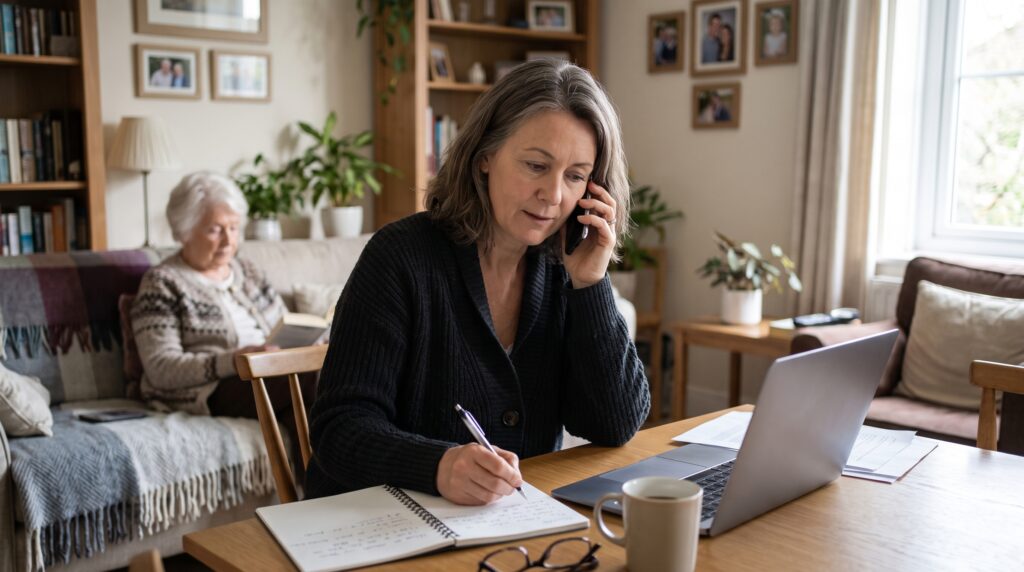
Consider an older woman called Margaret. Margaret is 82 and lives alone. She manages her personal care independently and enjoys living in her own home, but she stopped driving last year. Since then, she has become increasingly isolated. Her daughter lives in Auckland and notices during phone calls that her mum rarely seems to leave the house anymore. A local Age Concern may be able to connect Margaret with a visiting volunteer or community activities.
Later, Margaret has a fall. Her GP reviews her health, and she begins a strength and balance programme. Her family also looks at practical changes around the house.
A few months later, cooking and shopping become tiring. At that point, the family may explore a NASC assessment for funded support or arrange private home help.
Margaret doesn’t need to stop using one service when another becomes necessary. Her support network can grow and adapt as her needs change.
That is often what ageing well at home looks like in practice: different services doing different jobs at the right time.
How to Find Your Local Age Concern
Because services differ between regions, the best first step is to find the organisation covering Mum or Dad’s area. Age Concern New Zealand has an online location finder where families can enter an address, suburb, town or postcode. You can also filter the directory by services such as:
- visiting services
- social connection
- information and advice
- health promotion
- Steady As You Go
- driver education
- elder abuse response services
Local organisations include Age Concern Tauranga and Age Concern Canterbury, which covers Christchurch. For general enquiries, Age Concern New Zealand can also be contacted on 0800 65 2 105. Find your nearest Age Concern.
When calling a local organisation, it can help to explain the situation rather than asking only whether they provide a particular programme. For example:
“Mum is 79 and lives alone. She is managing well at home, but since she stopped driving, she hardly sees anyone during the week. We're wondering what social support might be available locally.”
When Should Families Look Beyond Age Concern?
Sometimes what first appears to be a social concern may point to a more practical or health-related difficulty. Mum is not going out anymore, but perhaps that is because she is afraid of falling. Dad has stopped attending activities, but perhaps getting dressed and preparing to leave the house have become difficult. The fridge is empty, not because Mum has lost interest in cooking, but because getting to the shops has become too difficult.
Those changes deserve a wider look. Consider whether Mum or Dad is having increasing difficulty with:
- preparing meals
- shopping
- showering or dressing
- keeping the house manageable
- walking safely
- taking medication correctly
- attending appointments
- remembering everyday routines
- spending long periods safely alone
If several of these are changing, social connection may still be valuable, but it may no longer be the only support needed.
Community Support and Home Care Can Complement Each Other
There is sometimes an assumption that once paid home care begins, community services are no longer relevant. That would be a shame. An older person’s life should not become entirely about receiving care.
Mum may have a carer helping with shopping and meal preparation while still attending a weekly Age Concern group. Dad may receive mobility support at home and also enjoy regular time with a volunteer visitor. Someone living with early dementia may have family and professional support around daily routines while still participating in suitable community activities.
Each relationship serves a different purpose. Good support at home is not simply about completing tasks. It is about helping someone maintain as much of their ordinary life, independence and connection as possible.
Finding the Right Support Does Not Have to Happen All at Once
Families often feel they need to understand all the different services available for older people in New Zealand before making the first call. But they don’t have to. Sometimes the first useful step is simply identifying what has changed.
- Is Mum lonely?
- Is Dad becoming less steady?
- Is shopping becoming difficult?
- Does the family need information?
- Is there concern about someone’s safety?
- Or are several things changing at once?
Age Concern can be an excellent community resource when an older person needs connection, information, healthy ageing programmes or support around their rights and wellbeing. When practical day-to-day needs become part of the picture, other services can sit alongside that support.
Home Carers helps families with the practical side of remaining at home, including home help, companionship, meal preparation, transport, mobility and recovery support, dementia support, respite, overnight supervision and more comprehensive support when needs increase.
The aim is not to replace the people and community connections already supporting an older person. It is to fill the gaps that are making everyday life harder, while helping them remain connected to the people, routines and places that matter.
🔗 MORE FROM OUR BLOG
- Repeated Falls in Older People
- How In-Home Physiotherapy Supports Recovery for Older Adults in New Zealand
- Moving Safely, Living Confidently: How Mobility Services Ltd and Home Carers Support Independence at Home
- The First 2 Weeks After Hospital Discharge Are Critical
- Moving Forward Together: How The Mobile Physio & Home Carers Support Recovery and Independence
Not Sure What Kind of Support Mum or Dad Needs Yet?
Visit Home Carers New Zealand and start with what has changed in everyday life. From there, it becomes much easier to work out whether community support, health services, home care or a combination may help. Home Carers provides flexible, relationship-based support for older people and their families across New Zealand. Whether you need help now or are planning ahead, we’re here to guide you through the next steps.
YOU CAN ALSO REACH US DIRECTLY
Frequently Asked Questions
Is Age Concern only for people who live alone?
No. Some services, including visiting and social connection programmes, may also suit older people who live with a partner, relatives or others but still experience loneliness or limited social contact.
Do all Age Concern branches provide the same services?
No. Programmes are developed around local communities and services vary between local Age Concerns. Use Age Concern's location finder or contact the local team directly to see what is available.
Can an adult child contact Age Concern about a parent?
Yes. Family and whānau can contact Age Concern for information or to discuss concerns. What happens next will depend on the situation and service involved, while respecting the older person’s rights, preferences and privacy.
Does an older person need to be unwell to use Age Concern?
No. Many Age Concern programmes focus on connection, healthy ageing, independence and prevention rather than illness. Someone may be healthy and independent but simply want more social contact or community activities.
Can Age Concern help if an older parent is being financially pressured by someone?
Age Concern's elder abuse services can provide confidential support where there are concerns about abuse or neglect, including financial abuse. Families can contact the elder abuse helpline to discuss the situation. Immediate danger should be reported through emergency services.
Does Age Concern provide transport?
Transport availability varies between local Age Concerns. Some local organisations may offer or know about community transport options, but families should check directly with the organisation covering their area.
Can Age Concern help someone who has stopped driving?
Potentially. Participating local Age Concerns may offer driver education, social activities and information about local support. What is available depends on the region and the person's needs.