
In-home physiotherapy helps older people recover from surgery, injury, falls, or reduced mobility by delivering structured rehabilitation exercises and movement support directly in the home environment. When paired with consistent daily care support — such as mobility assistance, safe home routines, and transport to appointments — physiotherapy outcomes improve significantly. In New Zealand, families in Christchurch and Tauranga can access coordinated in-home recovery support through private providers like Home Carers, often faster than through public waitlists.
Why Recovery at Home Matters for Older New Zealanders
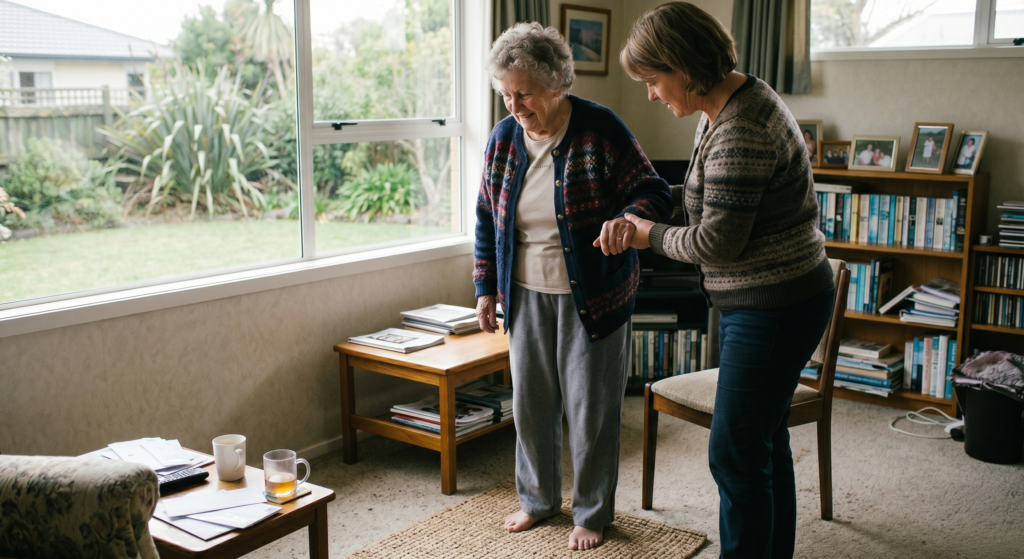
When an older parent comes home after a hip replacement, a fall, or a stroke, the transition from hospital to home is often more fragile than families expect. Hospitals discharge patients far sooner than they once did — a reality driven by bed pressures across New Zealand’s health system, particularly in Christchurch and Tauranga where demand for public services continues to outpace supply.
The result is that many older people return home still needing significant rehabilitation support. Physiotherapy plays a central role in rebuilding strength, improving balance, and restoring the ability to move safely. But without consistent daily support around that rehabilitation — someone to help with safe transfers, encourage movement, prepare nutritious meals, and manage the home environment — progress can quickly stall.
What Is In-Home Physiotherapy?
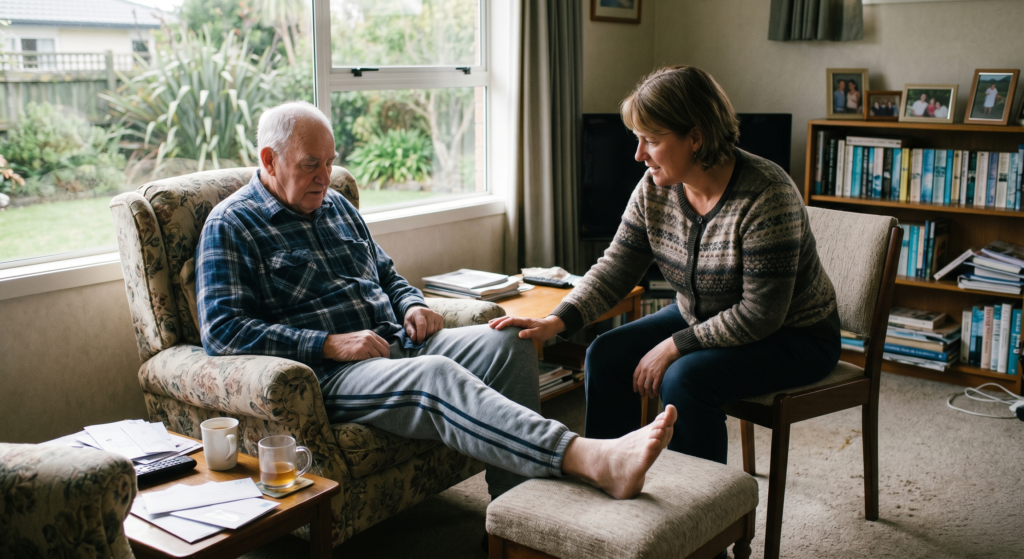
In-home physiotherapy involves a qualified physiotherapist visiting a patient in their own home rather than at a clinic. For older adults — especially those with limited mobility, no driving access, or complex recovery needs — this model removes a significant barrier to accessing rehabilitation.
In-home physiotherapy commonly includes:
- Assessment of mobility, strength, balance and fall risk in the home environment
- A tailored exercise programme designed for safe progression at home
- Guidance on safe movement after surgery, injury or illness
- Advice on home modifications to reduce falls hazards
- Coordination with the GP, specialist or discharge team on goals and progress
- Education for family members on how to assist safely without risk of injury
This kind of assessment in the actual home environment — rather than a clinic — gives physiotherapists valuable insight into the real challenges a person faces. A staircase, a slippery bathroom, or a low chair: these are things that only become visible in the patient’s own surroundings.
How Daily Home Care Supports Physiotherapy Outcomes
Physiotherapy sessions alone — whether once or twice a week — have limited impact if the time between appointments is unstructured or unsafe. This is where coordinated daily care makes a real difference to recovery.
Experienced home carers working alongside a physiotherapy plan can reinforce the work being done in sessions by supporting safe daily movement, encouraging the recommended exercises, and watching for signs that something isn’t right.
The most successful recoveries aren't just about what happens during the physiotherapy session — they're about what happens the other 22 hours of the day.
What Daily Support Looks Like Alongside Physiotherapy
- Assisting with safe transfers — from bed, chair or bathroom — using techniques aligned with the physiotherapist’s guidance
- Encouraging and supervising home exercise routines between sessions
- Accompanying clients to physiotherapy and other allied health appointments
- Providing meals and hydration support to aid healing
- Monitoring energy levels, pain, and progress — and reporting changes to family or the care team
- Managing home safety, such as keeping pathways clear and ensuring aids are in the right position
- Providing companionship and emotional encouragement during a difficult period
Clinic-Based vs In-Home Physiotherapy: A Practical Comparison
For families weighing up options after hospital discharge, understanding the difference between clinic and home-based physiotherapy helps with planning.
| Factor | Clinic-Based Physio | In-Home Physio |
|---|---|---|
|
Transport required |
Yes — challenging post-surgery |
Yes — challenging post-surgery |
|
Environment assessed |
Clinic only — home unseen |
Home assessed in real context |
|
Suitable after hip/knee surgery |
Difficult in early stages |
Ideal from discharge day |
|
Falls hazard review |
Not possible |
Done during home visit |
|
Family included in guidance |
Sometimes |
Naturally part of each session |
|
Coordination with daily carer |
Rarely |
Supported easily with home care |
|
Public wait times (NZ) |
Often weeks to months |
Private support: often available within days |
Common Recovery Situations That Benefit From Physio at Home
After Hip or Knee Replacement
Joint replacement surgery is one of the most common procedures older adults undergo in New Zealand. Post-operative rehabilitation is essential to achieving the full benefit of the surgery. Without consistent physiotherapy and safe daily support, complications such as reduced range of motion, falls, or loss of confidence are common.
After a Fall or Fracture
Fear of falling again is one of the most significant barriers to recovery after a fall-related injury. A physiotherapist can help rebuild confidence, address the specific movement patterns that contributed to the fall, and work alongside carers to reduce risk in the home. In Tauranga and Christchurch, where older populations are growing rapidly, falls prevention support is increasingly important.
Following a Stroke
Rehabilitation after stroke needs to be consistent and begin as early as safely possible. When a person returns home, in-home physiotherapy allows therapy to continue in the environment where the person will be living and functioning, with carers reinforcing the daily practice in between sessions.
After Hospital Discharge With Limited Mobility
Many older people are discharged from hospital still significantly deconditioned — weaker than before they were admitted. Bed rest, illness and disruption all contribute. In-home physiotherapy, combined with attentive daily care, supports a steady return to baseline function.
What Support Can a Home Care Provider Offer Alongside Physio?
| Support Type | How It Helps Recovery | Available Through Home Carers |
|---|---|---|
|
Safe transfers and mobility |
Reduces injury risk during daily movement |
Yes |
|
Exercise routine encouragement |
Maintains physio progress between sessions |
Yes |
|
Appointment transport |
Ensures continuity of physiotherapy access |
Yes |
|
Meal and nutrition support |
Fuels recovery and healing |
Yes |
|
Home safety management |
Reduces falls risk in the daily environment |
Yes |
|
Family communication |
Keeps families updated on progress |
Yes |
|
Respite for family carers |
Prevents caregiver burnout during long recoveries |
Yes |
|
Overnight supervision |
Essential in early post-discharge stages |
Yes |
The Role of Respite Care During Physiotherapy Recovery
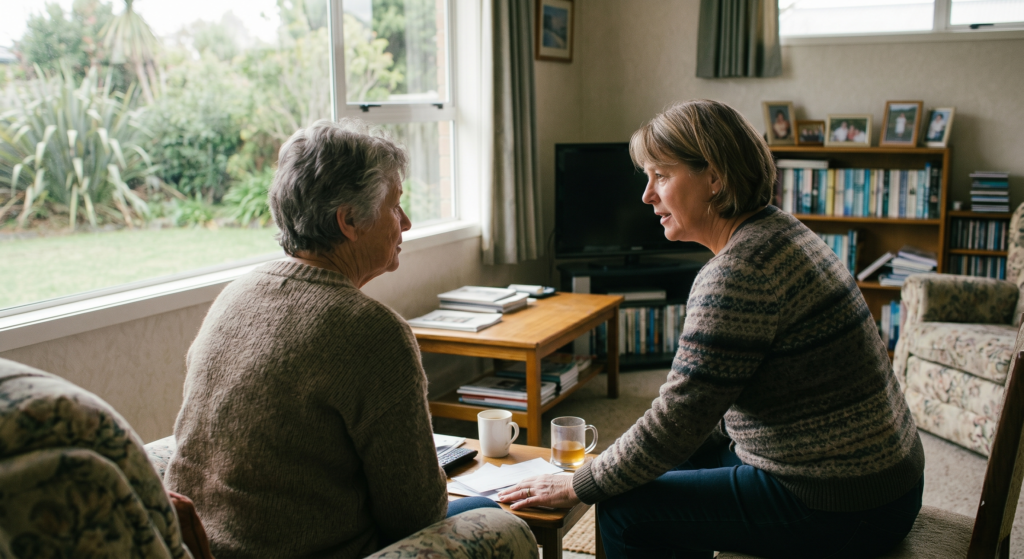
Family members often step in to help with recovery in the early stages, particularly after hospital discharge. This is a natural and generous response — but it is also one that carries significant risk of burnout, especially when recovery is prolonged or complex.
When a parent or loved one is receiving physiotherapy at home, the physical demands on family carers — assisting with transfers, being on call overnight, managing medications and appointments — can accumulate quickly. Respite care provides structured, professional support that gives family caregivers the genuine break they need to sustain their own wellbeing.
Respite care options available during physiotherapy recovery:
- Daytime respite care — a regular carer covers shifts while family goes to work or rests
- Overnight respite care — particularly valuable in the weeks after hospital discharge when supervision is needed at night
- Emergency respite — fast-setup support when a family member becomes unwell or unavailable
- Flexible blocks — days or weeks of support to coincide with physiotherapy programmes
ACC, Funding and Physiotherapy Recovery in New Zealand
New Zealand’s ACC scheme provides funding for injury-related physiotherapy for eligible individuals. This can include physiotherapy following a fall, accident, or injury — either in a clinic or at home, depending on need and availability. It is worth speaking with a GP or NASC coordinator about what funding may be available in your specific circumstances.
For many families, however, the challenge is not just access to physiotherapy itself but access to the broader daily support that makes rehabilitation work. Public home care services have long wait times across much of New Zealand. Private support — arranged directly through a provider like Home Carers — can typically be set up within 24 to 48 hours, and can begin at the point of hospital discharge.
🌐 TRUSTED NEW ZEALAND RESOURCES
- Carers New Zealand — Caregiver support and burnout resources
- Health NZ / Te Whatu Ora — Hospital discharge and rehabilitation information
- Age Concern New Zealand — Falls prevention and healthy ageing guidance
- ACC New Zealand — Injury recovery and rehabilitation support pathways
Ready to Support Recovery at Home With Physiotherapy Coordination?
If your parent or loved one is recovering from surgery, a fall, or hospital discharge and you’re looking for reliable support that works alongside their physiotherapy plan — Home Carers can help. From daily mobility assistance and safe home routines to respite care and overnight support, the Home Carers team helps families across Christchurch and Tauranga navigate recovery with confidence and peace of mind.
Whether you need support urgently or are planning ahead, reach out in a way that suits you. The team is calm, experienced, and ready to guide you through the next steps.
YOU CAN ALSO REACH US DIRECTLY
Frequently Asked Questions
What does in-home physiotherapy involve for older adults in New Zealand?
In-home physiotherapy involves a registered physiotherapist visiting the person at their home to assess mobility, strength and balance, design a tailored exercise programme, review the home environment for falls hazards, and deliver rehabilitation in the context where the person actually lives. For older adults recovering from surgery or injury, this is often more practical and effective than attending a clinic.
How can daily home care support a physiotherapy recovery plan?
A regular home carer can reinforce physiotherapy progress by assisting with safe transfers, encouraging prescribed exercise routines, supporting meal preparation and hydration, accompanying the person to appointments, monitoring for changes in condition, and communicating with the family. This daily consistency is often the difference between a smooth recovery and a setback.
Can ACC help fund in-home physiotherapy in New Zealand?
ACC may fund physiotherapy for injuries that meet the scheme's eligibility criteria, including falls, accidents, and certain post-surgical needs. The specific funding available depends on the nature of the injury and how it occurred. It is best to discuss options with your GP or a Needs Assessment and Service Coordination (NASC) provider for guidance on what may be available in your situation.
How quickly can private recovery support be arranged in Christchurch or Tauranga?
Private home care support through Home Carers can typically be arranged within 24 to 48 hours, including at the point of hospital discharge. This is significantly faster than public home care services, which often involve waitlists of weeks to months in Christchurch and Tauranga.
Does Home Carers provide physiotherapy directly?
Home Carers does not provide clinical physiotherapy treatment. Home Carers is a support-at-home coordination provider — the team coordinates and delivers the practical daily care that helps physiotherapy plans succeed. Where needed, Home Carers can help connect families with trusted allied health providers, including physiotherapists, occupational therapists and podiatrists in Christchurch and Tauranga.
What support is available after a fall in New Zealand?
After a fall, support in New Zealand may include GP assessment, hospital care if needed, referral for physiotherapy and occupational therapy through either public or private pathways, ACC support for injury-related costs, and private home care to assist with safe daily functioning during recovery. Falls prevention programmes are also available in many regions. Home Carers can coordinate daily support from the point of discharge to help older people recover safely at home.
Is overnight care available during physiotherapy recovery in Christchurch and Tauranga?
Yes. Home Carers provides overnight care for older adults during recovery periods, including the critical first weeks after hospital discharge when supervision and safe assistance overnight are most important. This can be arranged as part of a broader recovery support plan or as a standalone service.