
The first two weeks after hospital discharge are often the highest-risk period for older adults recovering at home. Reduced mobility, medication changes, post-surgical weakness, and fatigue can increase the risk of falls, hospital readmission, and loss of confidence. Recovery and mobility support at home helps older people stay safe, follow recovery routines, attend appointments, and regain independence gradually.
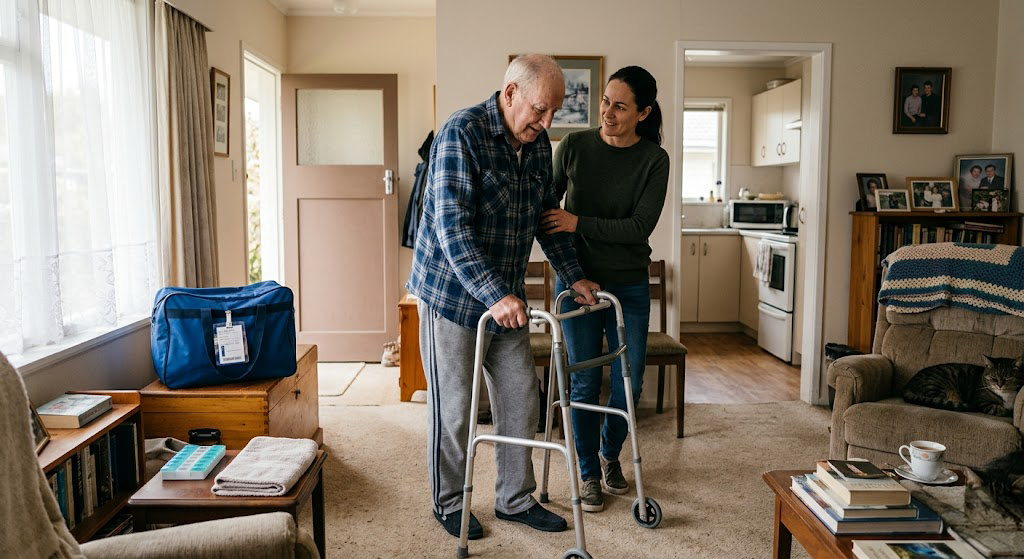
Why the First Two Weeks After Discharge Matter So Much
If you’ve just helped Mum or Dad come home from hospital, the relief can quickly turn into worry. Who’s checking on them? Are they taking their medication correctly? What happens if they fall?
These aren’t overreactions — they’re valid concerns. New Zealand health data consistently shows that the first two weeks after hospital discharge are the highest-risk period for older people — with elevated rates of complications, medication errors, and hospital readmission.
For families in Christchurch and Tauranga, navigating the gap between hospital care and full independence at home can feel overwhelming — especially when general practitioner appointments are hard to secure quickly, and publicly funded support may take time to be arranged.
HIDDEN RISKS FAMILIES OFTEN UNDERESTIMATE
- Concealed mobility decline: A person may appear steady on flat hospital floors but struggle with uneven carpets, threshold steps, or low chairs at home
- Complex discharge instructions: New medication schedules, follow-up appointments, and rehabilitation exercises can quickly overwhelm someone recovering from major surgery
- Night-time fall risk: A significant proportion of readmissions in New Zealand occur due to falls during simple night-time movements or unassisted transfers in the first fortnight
- Family caregiver exhaustion: Adult children juggling work, travel, and emotional stress while trying to coordinate care are at high risk of burnout themselves
Without enough support, small issues can quickly become emergencies. That is why recovery support at home is increasingly important across New Zealand — particularly as hospitals face ongoing discharge pressures and families try to prevent readmission or premature residential care placement.
Signs Your Parent May Need Recovery & Mobility Support at Home
Families often assume things will settle down after a few days at home. Sometimes they do. But there are clear warning signs that additional support may be needed sooner rather than later — and acting early makes recovery significantly smoother.
| Physical warning signs | Behavioural and emotional signs |
|---|---|
|
|
Even temporary, short-term support during this window can make recovery smoother, safer, and less stressful — for both the person recovering and the family around them.
How Recovery Support Helps Prevent Hospital Readmission
One of the most pressing concerns after discharge is ending up back in hospital. Older adults recovering alone at home may struggle with hydration, nutrition, medication routines, rehabilitation exercises, and attending follow-up appointments — each of which carries its own risk.
Practical in-home recovery support bridges the gap between the structured hospital environment and independent life at home.
| Recovery need | How in-home support helps |
|---|---|
|
Reduced mobility |
Walking assistance, movement supervision, and safer daily transfers |
|
Fall prevention |
Monitoring, home safety checks, and guided movement support |
|
Medication routines |
Prompt reminders, daily structure, and liaison with pharmacy or general practitioner |
|
Fatigue after surgery |
Meal preparation, hydration support, and light household help |
|
Appointment coordination |
Transport to physiotherapist, general practitioner, and specialist follow-ups |
|
Family overwhelm |
Flexible respite, overnight assistance, and regular family updates |
|
Allied health support |
Working alongside physiotherapists, occupational therapists, and district nurses |
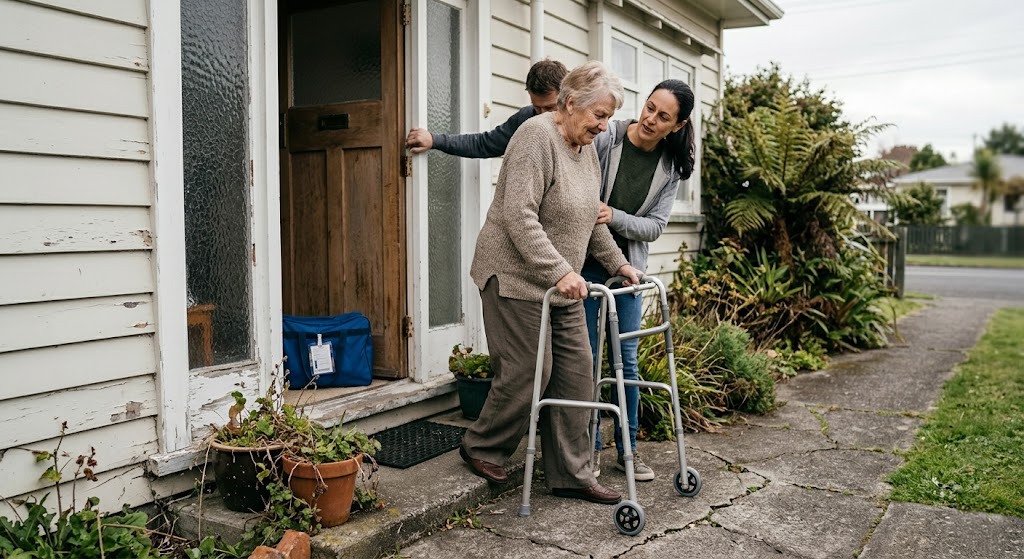
Recovery Support Is Not Just About Physical Help
Many families notice emotional and psychological changes after discharge that can be just as significant as the physical challenges. These shifts deserve the same attention and care.
Older adults may feel anxious about falling again, embarrassed about needing help, worried about losing their independence, isolated at home, or frustrated by a slower-than-expected recovery. These feelings are entirely normal — and they can directly affect how well someone follows their recovery plan.
"The goal is not simply getting someone home from hospital — it is helping them recover safely enough to remain independent longer."
Gentle encouragement, familiar companionship, and consistent daily routines help people feel more confident and motivated during recovery. This is especially important after hip surgery, falls, stroke recovery, illness-related hospital stays, joint replacement surgery, or ACC-related injuries.
Supporting families during recovery
Recovery affects not only the person leaving hospital. Family caregivers are often juggling work commitments, coordinating appointments, managing overnight worries, and communicating with multiple healthcare providers — while trying to be emotionally present for a parent who is frightened or in pain.
In many cases, families simply need temporary support while things stabilise. Flexible in-home care can relieve this pressure before caregiver burnout develops — which benefits everyone, including the person recovering.
A Week-by-Week Recovery Guide for Families
Understanding what to expect at each stage helps families plan proactively — rather than scrambling after a crisis has already developed.
 WEEK 1 : THE HIGHEST-RISK WINDOW
- Confirm all discharge medications are correct, understood, and being taken
- Arrange daily carer visits — morning and evening where possible
- Remove trip hazards: loose rugs, cords, clutter, and low chairs
- Book a general practitioner follow-up appointment within 5–7 days of discharge
- Confirm all physiotherapy or district nursing referrals are active and scheduled
- Establish a clear family communication plan — who to call if concerns arise
➡️ WEEK 2 — BUILDING A RECOVERY ROUTINE
- Gradually increase activity levels as guided by the physiotherapist
- Assess whether current support levels remain adequate — and adjust if needed
- Begin reconnecting socially — phone calls, short visits, familiar routines
- Review medication understanding and confirm compliance with discharge instructions
- Assess the home for any ongoing safety modifications still needed
- Plan what ongoing support — if any — will be needed beyond the two-week window
Public Support Pathways vs Private Recovery Coordination
Understanding the difference between publicly funded support and private care coordination helps families make faster, better-informed decisions after discharge — particularly in regions like Christchurch and Tauranga where public waitlists can delay support significantly.
| Factor | Public pathways (NASC / Te Whatu Ora) | Private care coordination (Home Carers) |
|---|---|---|
|
Response speed |
Can involve long waitlists due to regional healthcare pressures |
Fast support set-up designed to match exact hospital discharge dates |
|
Flexibility |
Strictly defined task allocations based on needs assessments |
Highly flexible, adapts daily as physical strength improves |
|
Scope of daily help |
Primarily restricted to essential clinical or personal hygiene needs |
Includes meals, transport, appointment support, home help, and companionship |
|
Family communication |
Limited, often formal reporting only |
Regular, proactive family updates and open communication |
|
Continuity of Carers |
Variable — depends on regional staffing |
Consistent carers selected for compatibility and relationship continuity |
Bridging the Gap — Allied Health and Recovery Coordination
True recovery is rarely achieved in isolation. It works best when practical daily support is properly coordinated with the broader clinical team — creating a working bridge between formal medical directives and real daily life at home.
How Home Carers works alongside allied health professionals:
- Physiotherapy support: Assisting your parent with their specific mobility exercises to safely restore balance and rebuild walking confidence between formal sessions
- Occupational therapy integration: Implementing recommended home safety adjustments — positioning mobility aids correctly, identifying trip hazards, supporting the use of recommended adaptive equipment
- General practitioner and district nursing coordination: Monitoring for signs of deterioration and communicating promptly with the clinical team when needed
- Family communication: Regular, clear updates to adult children so everyone stays informed about recovery milestones, any concerns, and what is working well
Home Carers does not replace clinical treatment. The role is to make recovery plans work in practice — filling the daily gaps that clinical visits alone cannot cover.
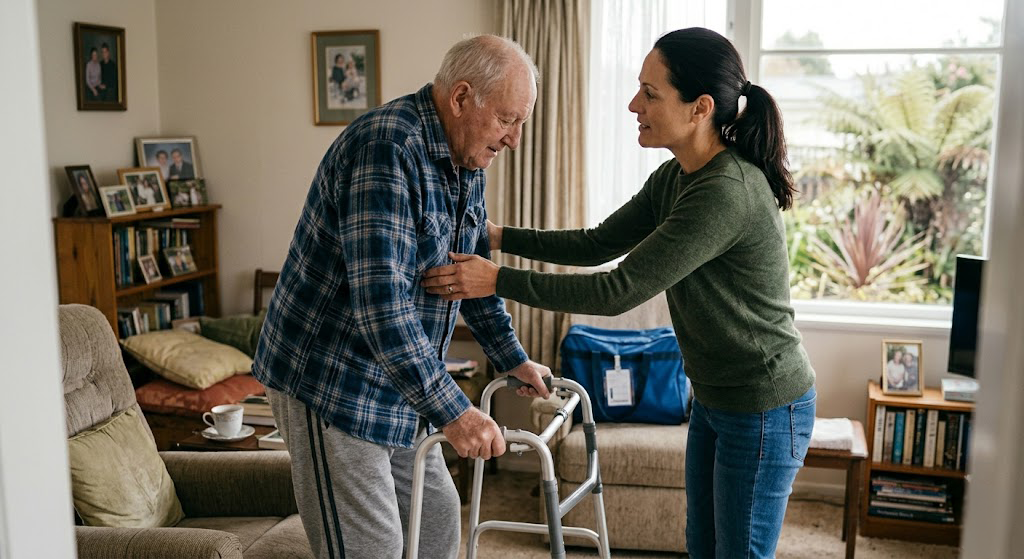
Helping a Loved One Stay Independent After a Health Setback?
Recovery at home can feel overwhelming — especially after a fall, surgery, illness, or sudden mobility decline. Visit Home Carers New Zealand to explore flexible recovery and mobility support designed to help older adults regain confidence, routine, and independence safely at home.
From mobility assistance and wellness checks to overnight support and post-hospital recovery care, Home Carers works alongside families to make everyday life safer, easier, and less stressful across Christchurch and Tauranga.
Early support can often prevent setbacks, reduce caregiver exhaustion, and help loved ones remain comfortable in familiar surroundings for longer.
YOU CAN ALSO REACH US DIRECTLY
Frequently Asked Questions
How long should older adults have support after hospital discharge?
Recovery timelines vary depending on surgery type, illness severity, mobility level, and individual confidence. Some people need support for a few days, while others benefit from several weeks of in-home recovery assistance. The most important thing is ensuring the highest-risk window — the first two weeks — is well supported, and then reassessing needs as recovery progresses.
What support is available after a fall in New Zealand?
Support after a fall may include mobility assistance, meal preparation, wellness checks, transport coordination, rehabilitation support, and temporary in-home care. If the fall resulted in injury, ACC may fund some or all of the recovery support needed. See our full guide to ACC support at home.
Can recovery support help prevent another hospital admission?
Yes. Practical daily support directly reduces the risks most commonly associated with readmission — falls, medication errors, poor nutrition and hydration, missed follow-up appointments, and insufficient mobility exercise. Families who put support in place early consistently see better outcomes than those who wait until a crisis occurs.
Is private recovery support available quickly in Christchurch and Tauranga?
Yes. Many families choose private support precisely because it can be arranged faster than waiting for publicly funded services. Home Carers can often begin support within 24–48 hours of enquiry — which is particularly important when a parent is being discharged at short notice.
Can someone recover safely at home after hip or knee surgery?
In most situations, yes — particularly when the home environment is safe and appropriate mobility support is in place. The key risks following major joint surgery are falls, wound complications, and failure to follow rehabilitation exercises consistently. All of these are manageable with the right level of in-home support coordinated with the surgical team's instructions.
Does Home Carers provide medical treatment?
No. Home Carers provides practical in-home recovery and support services that work alongside healthcare professionals, rehabilitation providers, and allied health teams. The team does not replace clinical treatment — it supports recovery in practice, day to day, in the real home environment.
What if family members live overseas or outside the region?
This is a situation Home Carers manages regularly. Regular communication, coordinated support, and proactive family updates mean that adult children living in Auckland, Australia, or further afield can stay genuinely informed — and feel confident their parent is being well supported — without needing to be physically present every day.