
Dementia disrupts the brain's sleep-wake cycle, causing frequent waking, night-time confusion, and potentially dangerous wandering. These disturbances often worsen as dementia progresses, placing enormous strain on family caregivers — especially those caring alone overnight. In New Zealand, families in Christchurch and Tauranga can access specialist overnight dementia support through private home care providers like Home Carers, without waiting for public funding.
What You’ll Learn in This Article
- Why dementia disrupts normal sleep patterns
- Common night-time behaviours families experience
- How to make the home safer overnight
- When professional overnight dementia support may be needed
- What overnight care looks like in Christchurch and Tauranga
- How to access support through Home Carers NZ
Why Dementia Disrupts Sleep
For most people, sleep follows a predictable rhythm — tired at night, alert during the day. For someone living with dementia, this rhythm becomes increasingly difficult to maintain. The areas of the brain responsible for regulating sleep and circadian timing are often affected early in the disease process.
Researchers refer to this as “sundowning” — a pattern of confusion and restlessness that typically intensifies in the late afternoon and evening. For families, it often means the night becomes the hardest part of the day.
There is also a condition known as REM sleep behaviour disorder, which can appear in Lewy body dementia and Parkinson’s disease dementia. In this condition, the normal muscle relaxation that occurs during dreaming doesn’t happen — meaning someone may physically act out their dreams, sometimes with distressing or dangerous results.
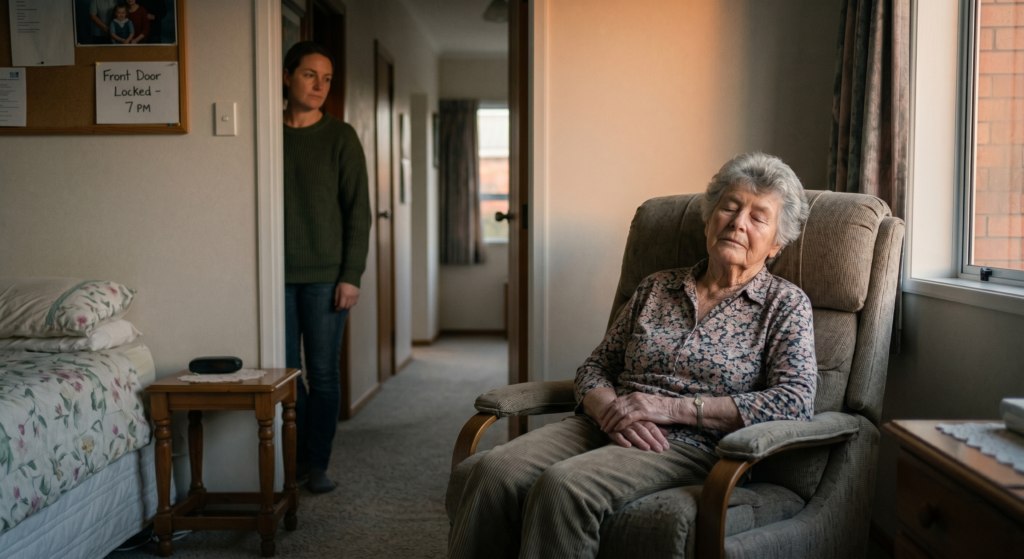
Common Night-Time Behaviours in Dementia
Every person with dementia experiences the condition differently, but there are several night-time behaviours that many families recognise:
Wandering and leaving the home
One of the most serious safety risks in dementia, wandering can occur at any time but is especially prevalent at night. A person may wake disoriented, convinced they are somewhere else entirely — perhaps looking for a job they retired from decades ago, or searching for family members who have passed away.
In New Zealand’s cold winter nights, a person wandering outdoors without appropriate clothing faces serious risk of hypothermia or injury. For families in Christchurch and Tauranga, this concern is very real.
Night-time confusion and agitation
Reduced lighting at night removes many of the environmental cues that help someone with dementia orient themselves. Shadows, darkness, and silence can all contribute to increased confusion and fear. This often presents as calling out, distressed vocalisation, or attempts to get up repeatedly.
Reversed sleep cycles
Some people with dementia become entirely nocturnal — sleeping through much of the day and remaining awake at night. This can make caregiving almost impossible for a family member who also needs to sleep.
"The nights are the hardest. By the time morning comes, I've been up four or five times and I'm running on empty. I love my mum, but I wasn't coping."
How Dementia Affects Sleep Differently by Stage
| Stage | Common Sleep Issues | Night-time Safety Risk | Overnight Support Need |
|---|---|---|---|
|
Early Stage |
Insomnia, increased dreaming, early waking |
Low–Moderate |
Occasional |
|
Middle Stage |
Sundowning, confusion, wandering starts |
Moderate–High |
Regular |
|
Later Stage |
Reversed sleep cycles, high agitation, frequent waking |
High |
Essential |
Making the Home Safer at Night
There are practical steps families can take to reduce overnight risk before professional support becomes necessary — or alongside it:
Lighting adjustments
- Install motion-activated night lights along hallways and to the bathroom
- Use low-level LED strips that reduce glare and disorientation
- Ensure the bedroom environment doesn’t create confusing shadows
Door and exit safety
- Consider door alarms that alert a caregiver if an exit is attempted
- Place a visual barrier such as a curtain or sign over door handles
- Ensure the front and back doors are secured without creating a fire risk
Environmental familiarity
Research consistently shows that people with dementia feel calmer and safer in familiar environments. Keeping the bedroom layout consistent, using familiar bedding and furniture, and avoiding unnecessary rearrangement all reduce confusion and distress overnight.
Routine
A predictable evening routine — a warm drink, familiar music, gentle conversation, and a consistent bedtime — can significantly reduce the severity of sundowning behaviour over time. The brain responds well to cues it has learned to associate with rest.
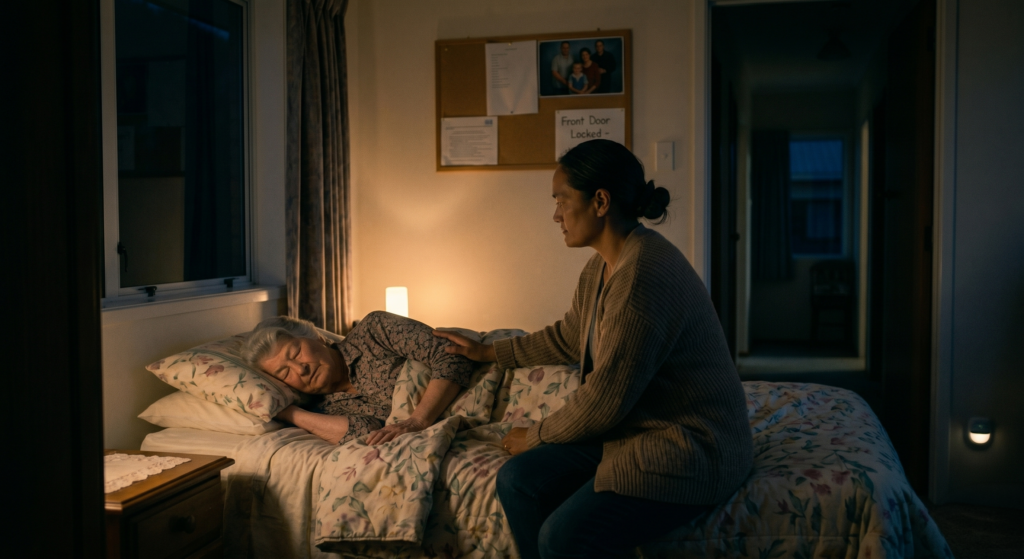
Overnight Dementia Care — Home vs Rest Home
For many New Zealand families, the decision about whether to keep a parent at home or transition to residential care is one of the most difficult they’ll ever face. This comparison may help clarify the options:
| Feature | Overnight Home Care | Rest Home |
|---|---|---|
|
Familiar environment |
Yes |
No |
|
Consistent carer relationship |
Yes (same carer) |
Varies |
|
Personalised care |
Highly personalised |
Shared staff ratio |
|
Family involvement |
Fully flexible |
Visit-based |
|
Immediate availability (NZ) |
Often within days |
Waitlists common |
|
Flexible hours |
Fully flexible |
Set schedule |
|
ACC / funded support eligible |
Some pathways |
NASC assessment |
|
Private pay option |
Yes — no waitlist |
Yes |
When Is Professional Overnight Dementia Support Needed?
Many families ask this question too late — often after a crisis rather than before. Knowing the warning signs can help families plan proactively rather than reactively.
⚠️ SIGNS IT’S TIME TO CONSIDER OVERNIGHT SUPPORT
- Your parent is waking multiple times each night and cannot be resettled alone
- You have found them outside the house, or attempting to leave, at night
- They become distressed, frightened, or aggressive overnight and you’re unsure how to help
- You are sleeping fewer than five hours per night regularly due to caregiving
- You have your own health, work, or family commitments being affected
- The person has fallen during the night, or is at high risk of falling
- You feel fear or dread each evening as bedtime approaches
In New Zealand, NASC (Needs Assessment Service Coordination) can assess eligibility for publicly funded care — but waiting times are real, and not every situation qualifies. Private overnight dementia support can often begin within days and offers far more flexibility in terms of hours, consistency, and approach.
Overnight Dementia Support in Christchurch and Tauranga
Home Carers provides overnight dementia support across both Christchurch and Tauranga — two cities where the ageing population is growing rapidly and the pressure on public care services is significant.
Christchurch families are managing within a healthcare system that has faced substantial pressure in recent years, and local hospital discharge timelines can mean that families are asked to manage complex situations at home with limited preparation time. In Tauranga — one of New Zealand’s fastest-growing retirement regions — the demand for private overnight dementia care is increasing as more families choose to keep loved ones at home in familiar surroundings.
Home Carers works with families to understand the full picture: the individual’s routines, preferences, fears, and needs — and to provide overnight support that feels consistent and reassuring rather than clinical and transactional.
Need Help Keeping a Parent With Dementia Safe at Home?
Visit Home Carers New Zealand to explore dementia care services that support safety, independence, and peace of mind for families across Christchurch and Tauranga.
From overnight dementia supervision and respite care to ongoing daily support, Home Carers helps families navigate the challenges of dementia with flexible, relationship-based care at home.
Whether support is needed urgently or you’re planning ahead, our team can guide you through the next steps in a calm and supportive way.
YOU CAN ALSO REACH US DIRECTLY
Frequently Asked Questions
Why does my parent with dementia stay awake all night?
Dementia damages the areas of the brain that regulate sleep and circadian rhythms, meaning the natural sleep-wake cycle becomes disrupted. Sundowning — increased confusion and restlessness in the evening — is one of the most common causes. Changes in light, pain, medication, and the need to use the bathroom can all compound the issue. A GP or specialist can help identify contributing causes, and overnight care support can relieve the burden on family members.
Is overnight dementia care available in Christchurch without a waitlist?
Yes. Private overnight dementia care through providers like Home Carers can often begin within days in Christchurch. While public NASC funding involves assessments and waiting periods, private home care is available immediately for families who choose to self-fund. Home Carers can discuss all options during an initial consultation.
What does an overnight dementia carer actually do?
An overnight carer is present in the home throughout the night to monitor safety, assist with any night-time needs such as bathroom trips, and provide calm reassurance if the person with dementia wakes and becomes distressed. They help prevent wandering, manage any agitation, and allow the family caregiver to sleep properly. Good overnight carers bring a consistent, familiar presence that gradually builds trust with the person they support.
Can someone with dementia stay safely at home long-term?
Many people with dementia can remain safely at home for months or years with the right level of support. The key factors are a safe, familiar environment, a consistent support team, family involvement, and a plan that adapts as needs change. Many families find that coordinated home support — including overnight care — makes long-term independence at home achievable even in the later stages of dementia.
How much does overnight dementia care cost in Tauranga?
Costs can vary depending on the level of dementia support needed, overnight supervision requirements, and the complexity of care involved. Home Carers offers transparent pricing and flexible support options tailored to each family’s situation.
Families can call 0800 227 686 for a friendly, no-obligation conversation, or visit Home Carers Pricing Information to explore current care options and pricing details for Christchurch and Tauranga.
What is sundowning and how does it affect night-time safety?
Sundowning refers to increased confusion, agitation, and restlessness that often occurs in the late afternoon and evening for people with dementia. It is linked to disruption of the brain's circadian rhythm and can significantly increase night-time safety risks including wandering, falls, and distressing episodes. Managing the environment, maintaining routine, and having overnight support in place are all important strategies.
Can ACC help with support for someone with dementia?
ACC support is primarily available following an injury (such as a fall), not for dementia care directly. However, if a person with dementia has had an ACC-covered injury, some in-home support during recovery may be funded. Home Carers works alongside ACC recovery plans and can assist families in understanding what support pathways may be available.