
Advice & Resources
Supporting Family Carers
Practical support for the person doing the caring — sharing the load with siblings, avoiding burnout, and knowing when and how to get a break.
21 articles 3 videosLast reviewed September 2026
Quick overview
Understanding family caregiving
Most family carers don’t set out to become one — the role tends to grow gradually, one small task at a time, until it’s a significant part of daily life. It’s common for carers to under-recognise how much they’re doing, or to feel guilty asking for help.
Caring for someone well starts with looking after yourself too. That might mean sharing responsibilities more evenly with siblings, arranging respite so you can properly rest, or simply recognising the early signs of burnout before they build up.
Below you’ll find where to start, all of our advice for family carers, answers to common questions, and the New Zealand organisations that support carers directly.
Start here
If you are new to this, start with these
The questions families ask first. Each one takes you straight to a full answer.
1
How do I know if I'm heading toward carer burnout?
Read advice →
Family carers content

Read advice / Watch video →


Read advice / Watch video →


Read advice / Watch video →
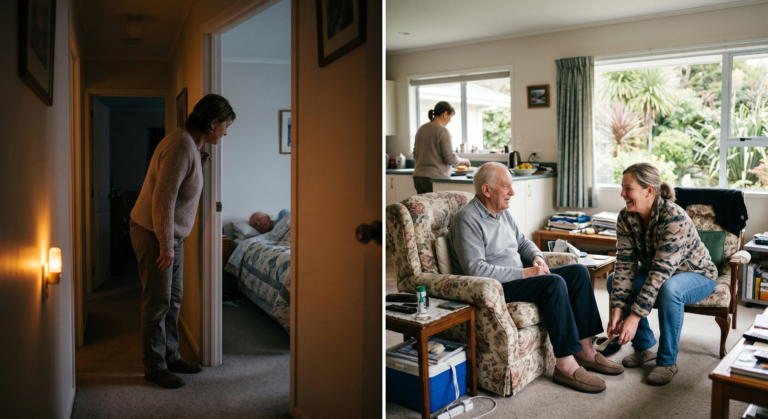
Read advice / Watch video →
FEATURED IMAGE
Article
Dementia & Memory Support
Early Signs of Dementia: When Should Families Step In?
The changes families notice first are rarely dramatic. Here is what is worth paying attention to, and what to do next.
Read advice →
VIDEO THUMBNAIL
Video
Dementia & Memory Support
Supporting Someone With Dementia at Home
A short walk-through of the practical things that help most: routine, familiar surroundings and the right kind of help.
Watch video →
FEATURED IMAGE
Article
Dementia & Memory Support
Dementia and Daily Routines: Building a Calmer Day
Why routine matters so much, and how families can shape a day that feels predictable without feeling restrictive.
Read advice →
FEATURED IMAGE
Article
Dementia & Memory Support
Respite Care for Someone With Dementia: How It Works in NZ
What respite actually looks like, how families arrange it, and what support may be funded through a needs assessment.
Read advice →
VIDEO THUMBNAIL
Video
Dementia & Memory Support
Sundowning at Night: What Families Can Do
If your parent seems like a different person once evening arrives, this explains why it happens and what helps.
Watch video →
FEATURED IMAGE
Article
Dementia & Memory Support
When Memory Changes Become Unsafe: Knowing When to Get Help
The signs that suggest more support is needed, and the options open to families before a crisis happens.
Read advice →
Common questions
Questions families ask about family carers
Short answers to the things we are asked most, with links to the full guidance where it helps.
What are the early signs of carer burnout?
Persistent exhaustion, irritability, withdrawing from friends, and feeling resentful or guilty are common early signs. Physical symptoms like poor sleep or getting sick more often can also be a signal.
Can family carers get paid for the care they provide in New Zealand?
In some circumstances, funded family care arrangements exist, depending on the person’s needs assessment and circumstances. It’s worth discussing directly with your local NASC.
How do I bring up sharing responsibilities with siblings who live far away?
Being specific helps — naming concrete tasks (phone check-ins, financial admin, occasional weekend cover) is usually more productive than a general request for “more help.”
What is respite care exactly?
A planned break for the family carer, while the person they care for is supported either at home or elsewhere for a short period — anywhere from a few hours to a week or more.
Is counselling or support available specifically for carers?
Yes, several New Zealand organisations run carer support groups and can point you toward appropriate counselling, often at no cost.
How much caregiving is "too much" for one person to manage alone?
There’s no fixed threshold — it’s more about whether the carer is sustaining their own health, work and relationships. If those are consistently suffering, it’s worth looking at additional support.
Trusted NZ sources
Trusted New Zealand information & support
Independent organisations that support families living with dementia across New Zealand.
Carers NZ
National support, information and advocacy for New Zealand’s family and whānau carers.
Age Concern New Zealand
Local carer support groups and practical guidance nationwide.Rehabilitation and mobility support following an accident-related hospital stay.
Healthline
Free 24/7 health advice line, useful for carers needing guidance outside business hours.
Keep exploring
You may also find helpful
Category
Dementia & Memory Support
Specific guidance for carers supporting someone with dementia.
Category
Costs, Funding & Planning
Financial support that may be available to family carers.
Category
Home Care Explained
How bringing in paid support can ease the load on a family carer.
Need some extra support at home?
If someone you care about is finding everyday life more difficult, we’re happy to talk through what’s happening and help you understand your options — no pressure, no obligation.