
Dementia caregiver burnout is a state of chronic physical, emotional, and mental exhaustion that develops when a family member takes on prolonged caregiving without adequate support. Common signs include persistent fatigue, social withdrawal, declining health, and feeling resentful or hopeless about the caring role. Recognising these signs early — and arranging respite care or in-home support — can protect both the caregiver’s wellbeing and the safety of the person living with dementia.
WHAT THIS ARTICLE COVERS:
- What dementia caregiver burnout actually is — and why it’s so common in New Zealand
- The 8 warning signs families should watch for
- Why burnout puts the person with dementia at greater risk
- How in-home respite and overnight care can help families recover
- When to ask for professional support — and how to take that first step
Why Dementia Caregiving Is Different — and Harder
Caring for a parent with dementia is unlike most other forms of caregiving. There’s no predictable recovery arc. The person you’re caring for may no longer recognise you. The role is relentless and can continue for years without a clear endpoint in sight.
In New Zealand, a significant proportion of dementia care is carried out by unpaid family members — often an adult daughter managing the role alongside a job, her own family, and the complex emotions that come with watching a parent change. Dementia NZ estimates there are over 70,000 people living with dementia across the country, and that number is expected to grow substantially as the population ages. The pressure on family carers is real, and it is increasing.
Public support systems — including NASC assessments and government-funded home care — provide some relief. But waiting times can be long, funded hours are often limited, and families in Christchurch and Tauranga are regularly navigating gaps in support that fall squarely on their shoulders. For many, the result is gradual burnout.
Many family carers don't realise how exhausted they've become until something — a health scare, a fall, or a moment of crisis — forces them to stop and take stock.
8 Warning Signs of Dementia Caregiver Burnout
Burnout rarely arrives suddenly. It builds slowly, often hidden beneath a quiet determination to keep going. These are the signs that deserve attention.
- Persistent exhaustion that rest doesn’t fix
- Feeling emotionally flat or numb
- Withdrawing from friends and social activities
- Resentment or guilt — sometimes both
- Neglecting your own health
- Difficulty concentrating or making decisions
- Feeling like there’s no way out
- Increased use of alcohol or medication
If several of these signs feel familiar, it may be time to talk to someone. Home Carers NZ offers flexible respite care and overnight support that gives family carers genuine, ongoing relief — not just a temporary break.
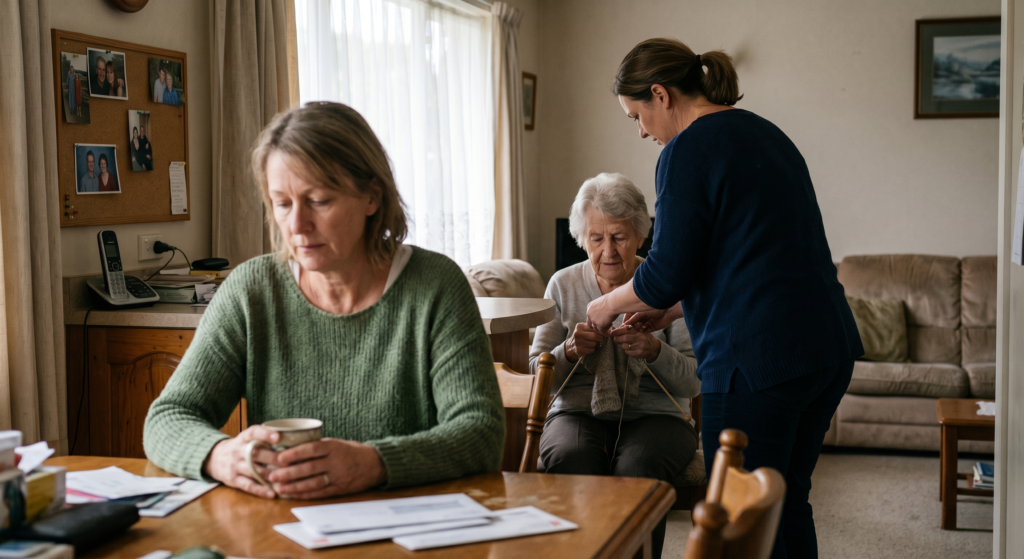
The Hidden Risk: How Burnout Affects the Person With Dementia
Burnout doesn’t just affect the carer. When a primary caregiver reaches the point of exhaustion, the person with dementia is also placed at greater risk. The safety and quality of care can quietly deteriorate — not through any failure of love or commitment, but simply because there is nothing left to give.
Research consistently shows that the mental health and wellbeing of the caregiver is one of the strongest predictors of care quality. A burnt-out carer may miss early signs of illness, become less patient during difficult behaviours, or make decisions during moments of crisis rather than calm consideration.
There is also a practical risk. When a sole family carer becomes unwell — whether physically or mentally — there may be no immediate backup plan. This is one of the most common reasons for sudden, unplanned admissions to residential care or extended hospital stays. Supporting the carer is, in the most direct sense, supporting the person living with dementia.
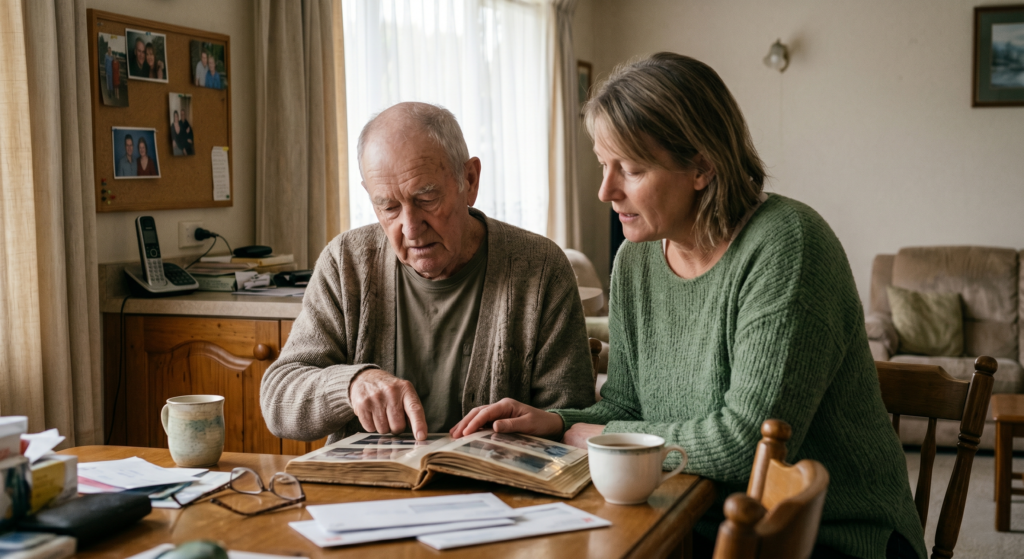
How In-Home Dementia Support Helps Families Recover
One of the most effective interventions for caregiver burnout is consistent, reliable respite — not a one-off break, but structured relief that allows a carer to genuinely recover over time.
In-home support for dementia allows the person living with the condition to remain in their own familiar environment — which is particularly important for people with dementia, who often experience heightened anxiety and confusion in unfamiliar settings. At the same time, it creates space for the family carer to rest, attend to their own health, reconnect with their own life, and rebuild their emotional and physical reserves.
Types of In-Home Dementia Support That Can Help
- Regular daytime visits — a consistent carer spends time with the person living with dementia, allowing family members to rest, attend appointments, or simply have time for themselves.
- Overnight dementia supervision — particularly valuable when wandering, sleep disturbance, or night-time confusion becomes a concern. Overnight support can dramatically improve sleep quality for the entire household.
- Emergency or short-notice respite — ideal when a carer suddenly becomes unwell, needs to travel, or urgently requires support.
- Ongoing daily support — a structured care schedule throughout the week that reduces the burden of constant vigilance and helps make caregiving more sustainable long-term.
Home Carers NZ provides all of these services across Christchurch and Tauranga, with carers who are experienced specifically in dementia support — not just general home care. Continuity of carers matters greatly to people with dementia, and it’s a priority that Home Carers builds into every support arrangement from the outset.
Dementia Care Options: A Practical Comparison
Families exploring dementia support options often want a clearer understanding of the practical differences between the available care options.
| Care Option | Familiar Environment | Continuity of Carer | Flexible Hours | Overnight Available |
|---|---|---|---|---|
|
In-home private care (Home Carers NZ) |
Yes — own home |
Prioritised |
Highly flexible |
Available |
|
Government-funded home support |
Own home |
Variable |
Limited hours |
Rarely funded |
|
Residential memory care (rest home) |
Unfamiliar |
Shift-based |
Fixed schedule |
24/7 staffed |
|
Day programmes |
Away from home |
Group-based |
Set days only |
No |
When Is the Right Time to Ask for Help?
One of the most consistent patterns families describe is waiting too long. The decision to seek outside support is often delayed by guilt, by a belief that “we should be able to manage this ourselves,” or by uncertainty about what’s available and how to access it.
In reality, the best time to ask for help is before a crisis happens. Respite care and in-home dementia support work best when introduced gradually and consistently — not as an emergency measure when the carer has already collapsed under the weight of the role.
Practical Signs It’s Time to Explore Support Options
- You are sleeping poorly most nights due to caregiving responsibilities
- You have not had a full day to yourself in several weeks or months
- You have been unwell but haven’t had time to see a doctor
- You feel irritable, short-tempered, or no longer like yourself most of the time
- You’re managing wandering, night-time disturbance, or physical aggression alone
- You have stopped seeing friends or doing things that previously brought you joy
- You feel frightened about what would happen if you became seriously unwell yourself
Any one of these is a reasonable reason to explore what support might look like. A conversation with a home care coordinator — like the team at Home Carers NZ — doesn’t commit you to anything. It’s simply information that can help you make a clearer decision.
🌐 RELATED READING — HOME CARERS NZ
- Dementia Care at Home in Christchurch & Tauranga → Support, helpline, and education for families
- Overnight Care in Christchurch & Tauranga → Supervision while families rest
- Respite Care for Family Carers → Taking a break without guilt
- 24/7 Home Care Support → Around-the-clock dementia supervision
- Resources Hub for Older People & Families → Guides, tools, and planning support
What the Research Says About Caregiver Support
The evidence supporting respite care as a meaningful intervention for caregiver burnout is well established. Studies consistently show that regular, structured breaks allow family carers to maintain their caring role for longer — and with better outcomes for the person with dementia.
According to Carers NZ, unpaid carers in New Zealand provide an estimated 20 hours of care per week on average — with many dementia carers providing far more. The emotional, physical, and financial impact of carer burnout is significant. When carers reach burnout and are no longer able to continue, the result is often a rapid and costly escalation to residential care or hospital intervention.
The Ministry of Health NZ recognises carer support as an important component of the wider dementia care system. While funded options remain limited in many regions, the gap between funded support and actual need is typically filled by private home care arrangements — which is where services like Home Carers NZ play an important and practical role.
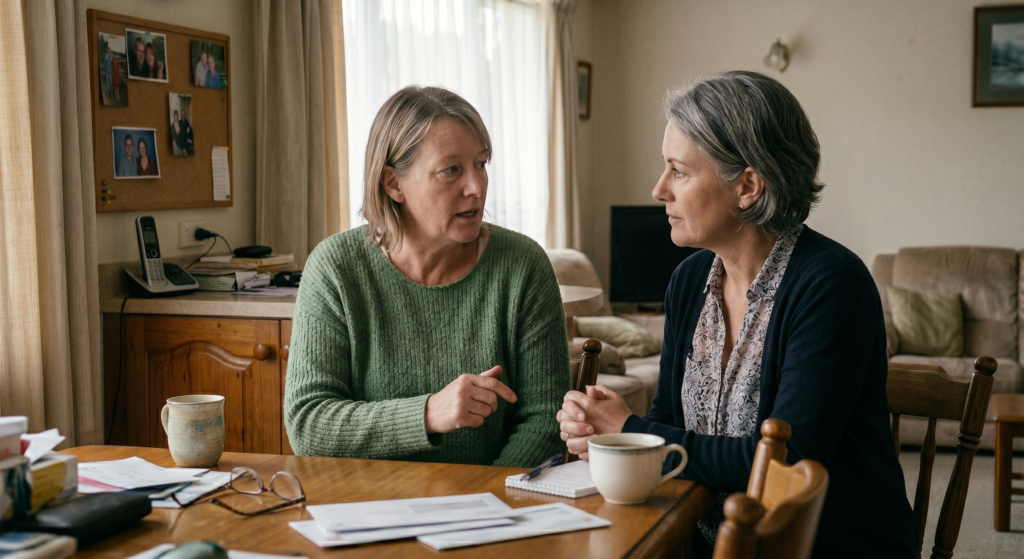
Talking to the Rest of the Family
In many families, caregiving responsibility falls unevenly — often on one person who lives closest, has fewer perceived commitments, or who simply stepped up first. Over time, this imbalance can become a source of resentment, and the primary carer can feel unsupported or invisible.
If burnout is beginning to affect the household, having an honest conversation with wider family members about what is actually involved in the caregiving role can be a useful first step. Approaching that conversation with clear, practical information — about what professional support is available, potential costs involved, and how professional support could realistically improve daily life for both the carer and the person living with dementia — tends to be more productive than a discussion about feelings alone.
A care coordinator at Home Carers NZ can help families think through a sustainable plan — including how to talk to other family members about the need for relief, and what a realistic care schedule might look like.
🌐 TRUSTED EXTERNAL RESOURCES FOR TAURANGA FAMILIES
- Dementia New Zealand — Support, helpline, and education for families
- Carers New Zealand — Respite resources and caregiver support services
- Health NZ / Te Whatu Ora — NASC, home care and aged care funding information
- Age Concern New Zealand — Elder wellbeing and community support
- Health Navigator NZ — Dementia — Clinical information and symptom guidance
Is Caregiver Burnout Affecting Your Family?
If you’re caring for a parent with dementia in Christchurch or Tauranga and recognise these signs in yourself, you don’t have to reach crisis point before asking for help.
Home Carers NZ offers flexible, relationship-based dementia care at home — from overnight supervision and regular respite to ongoing daily support — so families can regain balance, rest, and peace of mind.
Whether support is needed urgently or you’re simply planning ahead, the team can guide you through the next steps in a calm, supportive, and practical way.
YOU CAN ALSO REACH US DIRECTLY
Frequently Asked Questions
What is dementia caregiver burnout and how is it different from general tiredness?
Dementia caregiver burnout is a sustained state of physical, emotional, and mental exhaustion caused by the prolonged demands of caring for someone with dementia without adequate support or rest. Unlike ordinary tiredness, it does not improve after a single night’s sleep. It typically involves emotional blunting, loss of motivation, social withdrawal, and declining physical health. Left unaddressed, it can escalate into serious mental health conditions including clinical depression and anxiety.
Can I access respite care quickly in Christchurch or Tauranga?
Private home care services like Home Carers NZ can often arrange support within a short timeframe — in some cases, within days — depending on availability and the type of care required. Government-funded respite care through NASC typically involves an assessment process and waiting period, which may not suit urgent situations. For immediate needs, contacting a private provider directly is usually the fastest pathway. You can reach Home Carers NZ on 0800 227 686 or via homecarers.co.nz/contact.
Is it safe for someone with dementia to remain at home as the condition progresses?
For many people, remaining at home with appropriate support is both safe and beneficial — particularly in the mild to moderate stages of dementia. Familiar surroundings, consistent carers, and a structured routine can significantly reduce the anxiety and confusion that often accompany dementia. As needs increase, overnight supervision, 24/7 care, or coordinated daily support can help people maintain safe, comfortable living at home for much longer. The right time for a transition to residential care depends on individual circumstances and is best assessed with input from a general practitioner, specialist, or experienced home care coordinator.
What are the signs that a family carer urgently needs support?
Urgent indicators include: the carer becoming physically unwell, signs of depression or severe anxiety, ongoing inability to sleep properly, thoughts of self-harm or emotional collapse, or situations where the safety of the person with dementia is being compromised due to carer exhaustion. If any of these apply, support should be sought immediately — through a general practitioner, via 1737 (NZ mental health line), or by calling Home Carers NZ directly for emergency care coordination.
Can overnight care help with dementia-related wandering?
Yes. Overnight dementia supervision is one of the most valuable forms of support for families managing wandering, night-time disturbance, or sleep reversal. Having a trained carer present overnight means the household can rest safely, and any wandering or confusion can be managed calmly and promptly. This type of support is available through Home Carers NZ across Christchurch and Tauranga.
How do I talk to my parent about accepting help at home?
This is one of the most common challenges families face. Resistance to outside help is normal — particularly for people with dementia who may not fully understand why someone new is visiting. Introducing support gradually, framing it as companionship rather than "care", and ensuring consistency of the same carer over time are all approaches that tend to work well. Home Carers NZ can offer guidance on how to introduce support in a way that feels natural and non-threatening for the person with dementia.
What is the difference between respite care and ongoing dementia support?
Respite care refers to temporary relief for family carers — whether for a few hours, a day, or longer — allowing the primary carer to rest. Ongoing dementia support refers to a structured, consistent schedule of professional care that becomes part of the person's regular routine. Many families begin with respite and transition gradually into a more consistent arrangement as needs increase. Both are available through Home Carers NZ with flexible scheduling.