
For families in Christchurch facing the decision about rest home placement, 24/7 home care offers a genuinely viable alternative. Professional carers rotating in shifts can provide around-the-clock support — including overnight supervision, dementia monitoring, and daily living assistance — allowing older people to remain safely in their own homes for longer, with far greater personalisation than residential facilities can typically offer.
When a Rest Home Doesn’t Feel Like the Right Answer
It’s one of the most difficult conversations a family can face. Mum’s memory is slipping. Dad had a fall last month. The nights are getting harder. And everyone is quietly wondering: is it time for a rest home?
For many Christchurch families, the answer isn’t straightforward. Rest homes have their place — but they’re not the only option, and for a growing number of families, they’re not the preferred one either. New Zealand’s ageing population is putting real pressure on residential care availability, costs are rising, and many older people express a strong preference to remain in the home they know.
The good news is that genuine alternatives exist — and the most comprehensive of these is 24/7 care at home.
Key Alternatives to Rest Homes in Christchurch
- 24/7 home care — rotating carers providing around-the-clock support at home
- Overnight care — a dedicated carer through the night for safety and supervision
- Dementia-specific home care — specialist support managing wandering, routine, and safety
- Respite care — short-term relief for family carers, preventing crisis and burnout
- Recovery and transitional care — post-hospital support to avoid permanent placement
- Retirement village top-up support — additional care layered onto village living
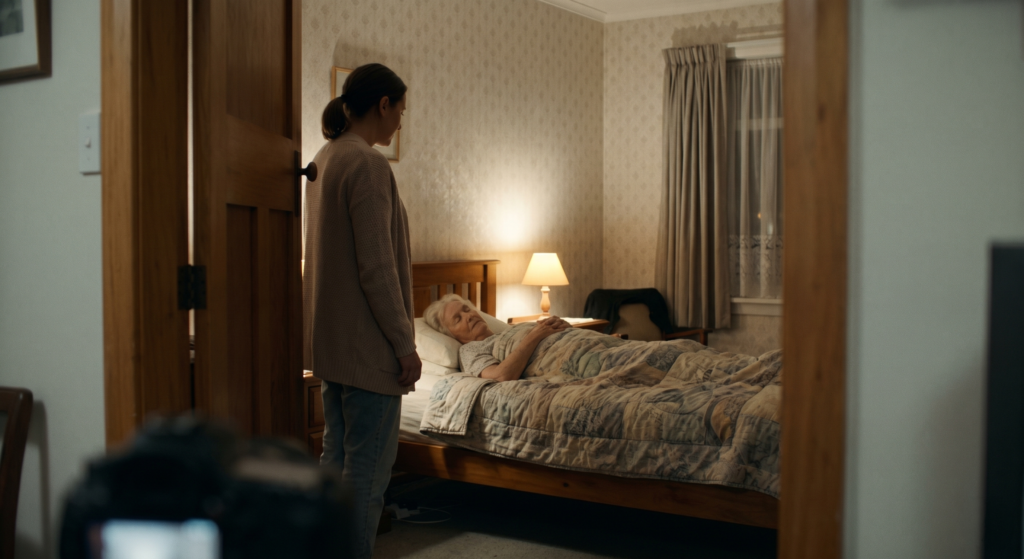
This guide walks through each option in practical detail — helping Christchurch families understand what’s actually available, what it costs, and how to make the right decision for their situation.
Why Many Christchurch Families Are Choosing Home Care Over Rest Homes
Residential care facilities serve a real need — particularly for people who require clinical nursing care 24 hours a day. But the reality is that many people who enter rest homes do not necessarily need that level of clinical input. What they need is consistent presence, supervision, and practical support.
That’s precisely what well-coordinated home care can deliver — and often at a level of personalisation that institutional care simply can’t match.
There is a real difference between needing round-the-clock care and needing round-the-clock nursing. Many families do not realise that the former can be provided at home.
Common reasons families choose home care instead:
- Their loved one is strongly resistant to moving into a facility
- The person’s needs are primarily supervision and daily living support — not clinical nursing
- A recent dementia diagnosis has prompted the family to keep their loved one living at home for as long as possible
- The individual has a strong sense of identity tied to their home, garden, and routine
- The family wants to remain closely involved in day-to-day care decisions
- Previous rest home experiences in the family have raised concerns about continuity of carers
- A cost comparison may show that home care is comparable in cost, or even more cost-effective, for their level of need
Note: Home care is not always the right answer — and a good provider will be honest about when residential care is genuinely the safer or more appropriate choice. The goal is informed decision-making, not simply keeping someone at home at all costs.
Rest Home vs 24/7 Home Care in Christchurch: A Practical Comparison
The table below compares key aspects of residential rest home care with professional 24/7 home care for families in the Christchurch area considering their options.
| Factor | Rest Home | 24/7 Home Care (Home Carers) |
|---|---|---|
|
Location |
Move to residential facility |
Remain in own home |
|
Carer consistency |
Rotating staff, often high turnover |
Matched, consistent carers |
|
Personalisation |
Group schedules and routines |
Entirely personalised to individual |
|
Overnight supervision |
Limited — often shared staff |
Dedicated overnight carer |
|
Family involvement |
Visiting hours and protocols |
Family remains involved at all times |
|
Dementia wandering risk |
Managed by shared staff |
1-to-1 supervision at all times |
|
Time to commence care |
Often waiting lists |
Often within 24–48 hours |
What 24/7 Home Care Actually Looks Like in Christchurch
The term “24/7 care” can sound daunting, as though it implies a medical ward inside a family home. In practice, well-run home care is far more natural and calm than that.
How rotating carer arrangements work:
Professional 24/7 support is delivered through a structured rotation of carers — typically in shifts ranging from 8 to 12 hours. A carefully matched team of two to four carers will cover the full day and night, with each individual knowing the person they support well.
This continuity of carers is one of the most significant differences from institutional care. Rather than encountering a new face each morning, the person being supported builds a genuine relationship with a small consistent team who understands their preferences, routines, and personality.
Day shift support includes:
Meal preparation, personal care, mobility assistance, medication prompts, companionship, transport, appointment support, and home routines.
Night shift support includes:
Overnight supervision, assistance getting to the bathroom, dementia wandering risk management, safety checks, and reassurance if the person wakes.
When 24/7 home care is most appropriate:
- Moderate to advanced dementia with wandering or night-time disturbance
- Following a significant fall or hospitalisation, where the family wants to avoid facility placement
- Complex health presentations requiring consistent physical assistance throughout the day and night
- High fall risk that cannot be safely managed with part-time support
- Emotional or psychological conditions causing significant distress when left alone
- Situations where family carer burnout has reached a critical point
Home Carers coordinates directly with families, GPs, and allied health professionals — including physiotherapists, occupational therapists, and district health teams — to ensure care plans reflect actual clinical needs and are adjusted as those needs change.
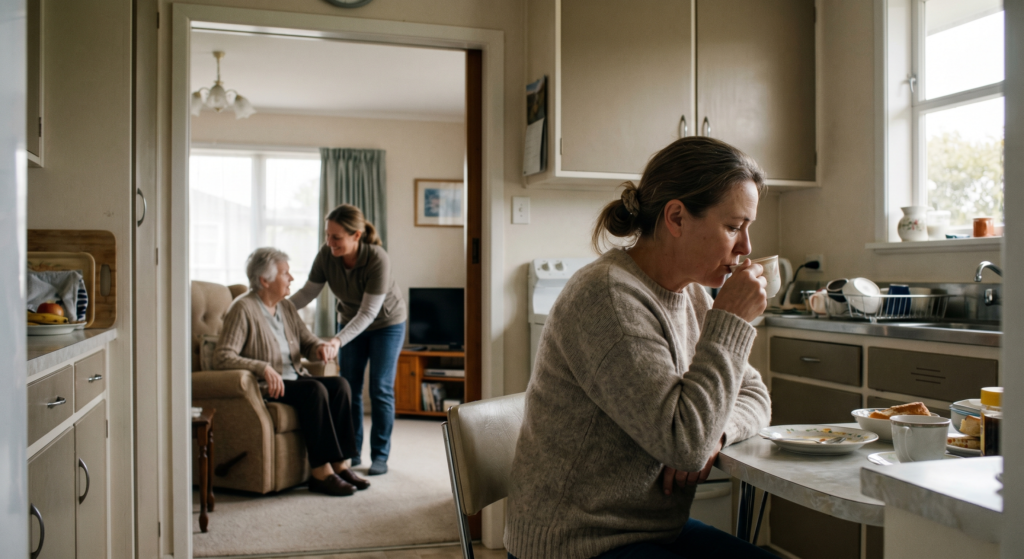
24/7 Dementia Care at Home in Christchurch
Dementia is the leading reason Christchurch families begin researching residential care. The progression of memory loss, increasing confusion, and the risks associated with leaving someone unsupervised can make families understandably anxious, often leading them to enquire about rest homes out of urgency rather than through a considered decision-making process.
But dementia, in many of its stages, is highly manageable at home with the right level of support. Familiarity is profoundly important to people living with dementia — the home environment, familiar smells, routines tied to a specific kitchen or garden, pets, and local community connections all play a meaningful role in emotional wellbeing and cognitive stability.
What dementia-specific home care addresses:
- Wandering risk — a consistent overnight carer provides supervision that’s difficult to replicate in a shared residential setting
- Routine maintenance — carers experienced in dementia support know how to maintain calming routines without distress
- Sundowning and evening agitation — responsive, familiar support can help reduce incidents
- Medication support — prompts and monitoring as part of daily care
- Family communication — real-time updates so family members — including those not based in Christchurch — stay informed
Dementia NZ provides excellent guidance for families navigating these decisions. Their resources can help families understand what stage of dementia typically requires increased support levels, and when clinical input is needed.
🌐 RELATED READING ON HOME CARERS NZ
- 24/7 Home Care Services — Christchurch and Tauranga — Explore how continuous home support is structured
- Overnight Care at Home — What overnight supervision involves and who it’s for
- Dementia Care at Home — Specialist dementia support and supervision at home
- Respite Care — Giving Families a Break — Short-term and emergency respite options
- Home Care Pricing and Support Options — Private care costs explained clearly
Respite Care as a Bridge — Not a Last Resort
Many families reach the point of considering a rest home not because their loved one’s needs are unmanageable, but because the family carer has reached their own limit. Carer burnout is real, well documented, and entirely understandable.
Respite care — whether for a few days, a week, or on a regular weekly schedule — provides the break families need to recover, recharge, and sustain the caring relationship long-term. It’s one of the most effective tools for preventing permanent rest home placement.
Short-term respite:
A few days to a couple of weeks of full in-home support, typically while a family carer takes a break, travels, or recovers from illness.
Ongoing weekly respite:
Regular scheduled care — one to several nights per week — that builds a sustainable rhythm for the whole household.
Carers NZ offers support and resources specifically for New Zealand family carers who are approaching burnout — including a helpline and practical guidance on accessing respite support.
🌐 TRUSTED NEW ZEALAND RESOURCES
- Dementia New Zealand — Support, resources, and helpline for families
- Carers New Zealand — Carer wellbeing, rights, and support
- Health NZ / Te Whatu Ora — Hospital discharge and rehabilitation information
- Age Concern New Zealand — Falls prevention and healthy ageing guidance
- Health Navigator NZ — Dementia — Clinical information and symptom guidance
Is 24/7 Home Care the Right Option for Your Family in Christchurch?
Home Carers New Zealand supports families across Christchurch with flexible, relationship-based 24/7 care at home — from overnight supervision and dementia monitoring to full around-the-clock support. Whether you’re looking urgently or planning ahead, our care advisers will guide you through your options calmly and honestly.
YOU CAN ALSO REACH US DIRECTLY
Frequently Asked Questions
What are the main alternatives to rest homes in Christchurch?
The primary alternatives include 24/7 professional home care with rotating carers, dedicated overnight care, dementia-specific in-home support, short or long-term respite care, and top-up support for those living in retirement villages. The right option depends on the individual's level of need, their living situation, and family circumstances. A needs assessment through your GP or local NASC coordinator can help clarify eligibility and options.
When should someone have 24/7 care at home rather than moving to a rest home?
24/7 home care is typically most appropriate when someone requires consistent supervision and daily living support — but not round-the-clock clinical nursing. This includes moderate-to-advanced dementia with wandering risk, high fall risk, post-hospital recovery where facility placement is being considered, and situations where carer burnout has become a safety concern. A qualified care provider can help families assess this honestly.
How much does 24/7 home care cost in Christchurch?
The cost of 24/7 home care in Christchurch varies depending on the level of support required, the number of carers needed, and whether overnight care is included. Home Carers NZ provides transparent, upfront pricing — unlike many providers. Costs are typically discussed during an initial consultation. Public subsidies through NASC may partially offset private home care costs in some circumstances. Contact Home Carers on 0800 227 686 for a direct conversation about costs based on your situation.
Can someone with dementia safely stay at home in Christchurch without a rest home?
Yes — many people with dementia, including in moderate stages, can remain safely at home with the right level of support. Key factors include overnight supervision to manage wandering risk, consistency of carers who understand the individual's routines and triggers, home safety assessments coordinated with occupational therapists, and regular communication with family. The suitability of home care for dementia depends on individual circumstances and should be evaluated with professional guidance.
How quickly can 24/7 home care be arranged in Christchurch?
In many cases, Home Carers can arrange support within 24 to 48 hours — particularly for urgent situations such as hospital discharge or a sudden change in a parent's condition. This responsiveness is a significant advantage over rest home waiting lists, which can involve delays of weeks or months depending on availability and funding pathways.
What is respite care and can it prevent rest home admission?
Respite care provides temporary relief for family carers — typically through professional carers taking over support for a period of days, nights, or longer. It is one of the most effective tools for preventing crisis-driven rest home admissions, because it allows family carers to recover before reaching burnout. Regular weekly respite can sustain a home care arrangement significantly longer than would otherwise be possible.
Is 24/7 home care more expensive than a rest home in New Zealand?
It depends on the specific level of need and care arrangement. For people who require high levels of supervision but not clinical nursing, 24/7 home care can be comparable in cost to residential care — while offering significantly greater personalisation and flexibility. For those with lighter support needs, part-time or overnight-only arrangements may be considerably more cost-effective. A direct comparison with a care adviser is the best way to assess relative costs for a specific situation.
Can Home Carers NZ help with hospital discharge planning in Christchurch?
Yes. Home Carers NZ regularly supports families navigating hospital discharge — including arranging care quickly when a loved one is being discharged from Christchurch Hospital and the family is uncertain about next steps. The team can coordinate with discharge planners, GPs, and allied health professionals to ensure a safe transition home rather than a move to residential care.