
When an older parent lives alone, a small change can suddenly make the house feel less safe.
Perhaps Mum has had a fall in the bathroom. Maybe Dad has become less steady on his feet. Or perhaps nothing serious has happened yet, but your family is starting to wonder what they would do if something went wrong.
For many New Zealand families, a personal medical alarm is one of the first safety measures they consider. It can provide a direct way to call for help after a fall or medical event, without requiring someone to be physically present all the time.
But a medical alarm has limits. It can be a useful part of a safety plan, particularly for someone who is still largely independent, but it does not replace regular support when mobility, memory or day-to-day functioning begins to decline.
✅ Quick Answer
A personal medical alarm can be worthwhile for an older person who lives alone, is at risk of falling or has a health condition that could require urgent help. The key question is not simply whether they own an alarm, but whether they can reliably wear, activate and use it when needed. As care needs increase, an alarm is often most useful as one part of a wider support plan.
✅ Key Takeaways
- Alarms help after an emergency; they do not prevent the cause.
- Most alarms rely on the person wearing and activating them, although some devices also offer automatic fall detection.
- People experiencing dementia-related changes, repeated falls or increasing difficulty with daily activities may need more support than an alarm alone can provide.
- Disability Allowance may help with rental and monitoring costs.
- Check the arrangement regularly, not just once.
What Is a Personal Medical Alarm?
A personal medical alarm is a device that allows someone to call for assistance when they are unable to reach a phone.
Depending on the system, the alarm may come as a pendant, wrist-worn device or portable unit. When activated, it connects the person with a monitoring service that can assess what is happening and arrange appropriate help.
In New Zealand, there are generally two broad types:
- In-home medical alarms are designed primarily for use in and around the home.
- Anywhere or mobile medical alarms can provide support outside the home as well, depending on the device and available mobile coverage.
Some systems also offer additional features, such as fall detection or location functions. These vary between providers, so families should check exactly what is included rather than assuming every medical alarm works in the same way.
When Can a Medical Alarm Be Particularly Useful?
Medical alarms can be particularly useful when an older person is still managing daily life independently but may occasionally need urgent assistance. An alarm may be worth considering when Mum or Dad:
- lives alone for significant periods
- has experienced a previous fall
- has become less steady when walking
- has difficulty getting up after a fall
- has a health condition that could lead to an unexpected medical event
- feels anxious about being alone
- has recently returned home after hospital treatment
- wants to remain independent but would feel more confident knowing help is accessible
For adult children living in another city or overseas, an alarm can also provide an extra layer of reassurance.
Using a medical alarm doesn’t mean someone has lost their independence. In fact, having a reliable way to call for help may give them more confidence to continue doing things for themselves.
The Important Limitation: An Alarm Only Helps If It Can Be Used
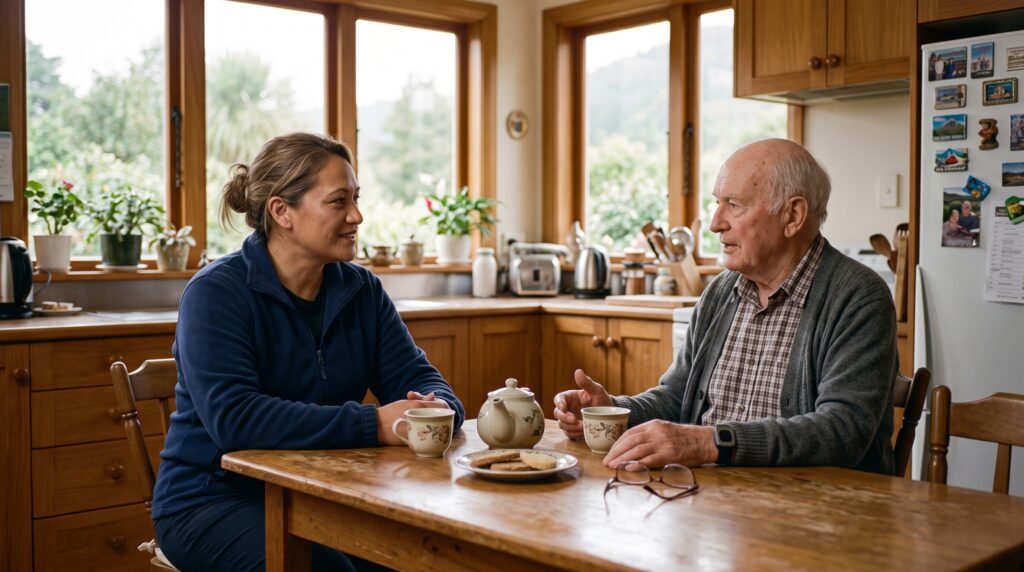
This is where families need to look beyond the device itself. Imagine Dad falls beside the bed during the night. If he is wearing his alarm, remains conscious and knows what to do, he may be able to call for help quickly.
But what if the pendant is sitting on the bedside table? What if he is confused? What if he has taken it off before showering? What if his dementia has progressed to the point where he no longer remembers what the button is for?
Each situation brings a different level of risk, which is why it’s important to review whether the alarm still meets someone’s needs over time.
A medical alarm can help someone call for assistance during an emergency, but it cannot prevent the underlying cause.
Medical Alarm vs Regular Support at Home
A medical alarm and home support do different jobs. For some families, the most effective approach is not choosing one or the other, but understanding where each fits.
| Need | Medical Alarm | Regular Support at Home |
|---|---|---|
|
Calling for help after a fall |
✔ |
✓ If someone is present |
|
Emergency response connection |
✔ |
Carer can seek appropriate help |
|
Meal preparation |
✘ |
✔ |
|
Help with showering and dressing |
✘ |
✔ |
|
Mobility assistance |
✘ |
✔ |
|
Noticing gradual changes |
Limited |
✔ |
|
Companionship |
✘ |
✔ |
|
Supporting daily routines |
✘ |
✔ |
|
Family updates |
✘ |
✔ Where arranged |
|
Help with shopping and appointments |
✘ |
✔ |
|
Someone physically present |
✘ |
✔ During scheduled support |
This is why a medical alarm may be enough for one older person but provide too little support for another. The question is what happens during the hours when there is no emergency, but Mum or Dad is finding everyday life increasingly difficult.
👉 Read more: Is it time for home care? A checklist for adult children.
What About Falls?
Falls are one of the clearest reasons families begin thinking about medical alarms. If someone falls and cannot reach a phone, activating a medical alarm may help them get assistance sooner.
But if falls are becoming more frequent, the conversation needs to go further. Repeated falls may be linked to changes in balance, muscle strength, vision or mobility, as well as medication effects, hazards around the home or underlying health conditions. A medical alarm may help after a fall, but it does not address why the falls are happening.
Look at the wider picture
- Are there loose rugs or cluttered walkways?
- Is bathroom safety becoming an issue?
- Is Mum holding onto furniture when walking?
- Is Dad struggling to get out of a chair?
- Have there been several near misses?
- Are they avoiding parts of the house because they no longer feel safe?
- Has mobility changed noticeably after illness or hospitalisation?
Those signs may warrant a conversation with their GP, physiotherapist, occupational therapist or another appropriate health professional, alongside practical support at home. Dementia NZ also shares falls and dementia guidance.
What If Mum or Dad Has Dementia?
This needs a little more thought. Someone in the earlier stages of dementia may still understand their alarm, remember to wear it and know when to activate it. In that situation, an alarm may remain a useful safety measure.
As dementia progresses, however, reliability can change. The person may:
- forget to wear the alarm
- remove it and leave it somewhere
- forget what the button does
- become confused during an emergency
- be unable to explain what has happened
- wander away from the area covered by an in-home device
- become unable to recognise that they need help
Families should therefore regularly check whether the alarm still meets their parent’s needs. Something that worked six months ago may no longer provide enough support today. Increasing memory problems, wandering, night-time confusion or difficulty managing basic routines may indicate that more active supervision or dementia support at home is needed.
Technology can support a care plan. It cannot notice everything a person can.
In-Home or Mobile Medical Alarm: Which Makes More Sense?
The answer depends largely on the person’s routine.
| Situation | Option to Explore |
|---|---|
|
Mostly stays at home |
In-home medical alarm |
|
Regularly walks or goes shopping independently |
Mobile/anywhere alarm |
|
Spends time in the garden |
Check the operating range of an in-home alarm |
|
Regularly leaves home alone |
Mobile/anywhere option may be more appropriate |
|
Has changing mobility or health needs |
Discuss requirements with the provider and health practitioner |
Families should ask providers about coverage, monitoring, battery life, water resistance, what happens during a power or network interruption, and exactly what happens after the alarm is activated.
Do not choose solely on the number of features advertised. The best alarm is one that fits the person’s actual daily routine and that they feel comfortable using.
Can Medical Alarms Be Funded in New Zealand?
For some people, yes. Work and Income states that some people may qualify for help with the ongoing costs of a medical alarm through Disability Allowance. Importantly, a person does not necessarily have to be receiving a benefit to qualify.
Eligibility depends on the person’s circumstances. A medical practitioner must confirm that the alarm is needed on an ongoing basis because of a disability. They must also confirm that the person’s life or health could be at risk without it, or that their disability could become worse. The medical alarm generally needs to come from an MSD-accredited supplier.
The allowance may help with eligible ongoing rental and monitoring costs, but it does not automatically cover every alarm-related expense or optional feature.
Because eligibility criteria, income thresholds, accredited providers and prices can change, check current information directly with Work and Income: Medical alarms rather than relying on an older price quoted online.
👉 Read more: Financial support for ageing parents in New Zealand, or see Home Carers pricing for private support costs.
Questions to Ask Before Choosing a Medical Alarm
It is easy to compare alarms by price. A better comparison starts with what would actually happen on a difficult day.
- Where does it work? Only inside the home, around the property, or out in the community as well?
- Who responds when the button is pressed? Find out how the monitoring and response process works.
- What happens if Mum cannot speak? Ask what the provider does when an alarm is activated but the person does not respond.
- Can it be worn in the shower? Bathrooms are an important place to consider when assessing fall risk.
- Does it rely on mobile coverage? This is particularly important for mobile alarms, especially in areas where network coverage may be unreliable.
- What happens during a power cut? Ask about battery backup and how the system is monitored.
- Does it include automatic fall detection? Do not assume it does. Ask whether it is included, optional or unavailable.
- What are the full ongoing costs? Check installation, rental, monitoring and optional feature costs.
- Is the provider MSD accredited? This matters if applying for the Disability Allowance.
- Will Mum or Dad actually wear it? This may be the most important question of all.
When Is a Medical Alarm No Longer Enough?
There is no single moment when an alarm suddenly becomes unsuitable. Usually, families notice a collection of small changes.
Mum is skipping meals. Dad is struggling to shower safely. There have been two falls instead of one. Medication is being forgotten. The house is becoming harder to manage. Someone needs to call every evening to make sure everything is okay.
Or perhaps one family member has become the person everyone relies on, constantly checking their phone and worrying when Mum or Dad doesn’t answer.
At that point, the question is no longer just whether the person can call for help during an emergency. It becomes: Are they managing safely and comfortably between emergencies?
That may be the point to consider regular home support, additional family involvement, allied health input or a needs assessment. For some families, this could mean only a few hours of support each week for meals, shopping, appointments or home help. For others, particularly where dementia, repeated falls or significant mobility decline are involved, support may need to become more regular.
A Medical Alarm Works Best as Part of a Wider Safety Plan
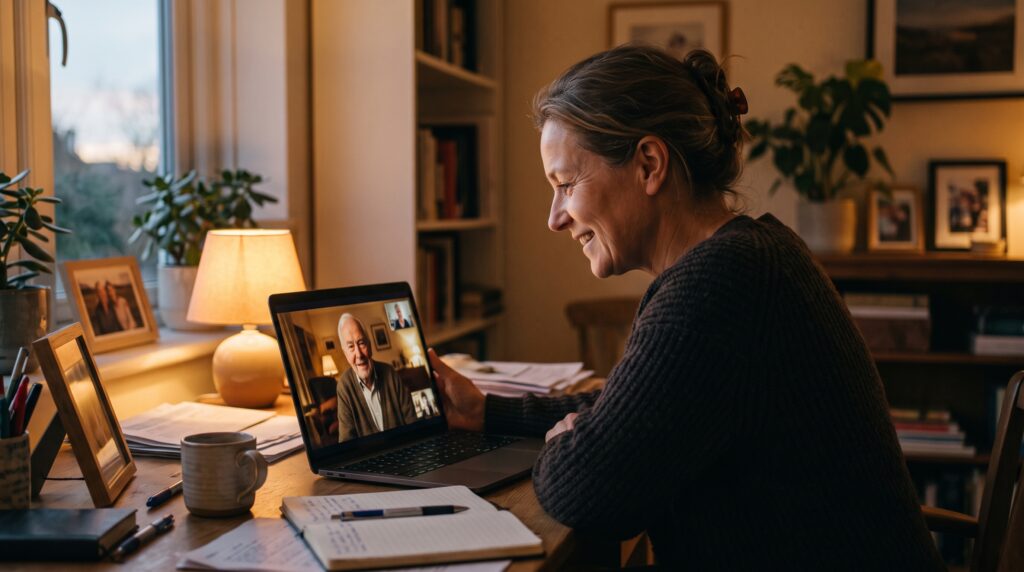
There is rarely one device, service or family arrangement that solves everything. A stronger plan may combine:
- a personal medical alarm
- practical changes around the home
- appropriate mobility equipment
- regular GP and health reviews
- family check-ins
- physiotherapy or occupational therapy where appropriate
- medication management systems
- home support
- respite for family carers
- a clear emergency contact plan
The balance will be different for every family. For someone who is independent and simply wants a reliable way to call for help, a medical alarm may be all that is needed right now. For someone whose day-to-day abilities are changing, it may be one useful part of a broader support plan.
So, Is a Personal Medical Alarm Worth Having?
For many older New Zealanders, yes, it can be. A medical alarm is relatively simple to use, can support independence and provides a way to call for help when reaching a phone may not be possible.
But its value depends on the person. A medical alarm is most useful when the wearer understands how to use it, wears it consistently and has needs that can reasonably be supported by an emergency response system.
If Mum or Dad is increasingly struggling with mobility, memory, meals, personal care or everyday safety, families should be careful not to rely on an alarm alone.
The aim is not simply to make the home safer after something goes wrong. It is to look at what could help them continue living there safely, confidently and with the right level of support.
Supporting Independence Without Waiting for a Crisis
Families do not need to choose between giving Mum or Dad complete independence and taking over their life. Often, the most sustainable approach sits somewhere in between.
A medical alarm may provide one layer of reassurance. Family involvement may provide another. Practical support at home can fill the gaps that technology cannot.
Home Carers works with families to understand where extra help is needed and arrange practical support around the older person’s existing routines. This might include a few hours of home help, mobility and recovery support, dementia care, respite, overnight supervision or more comprehensive care at home. Our services complement the support provided by GPs, physiotherapists and occupational therapists rather than replacing it.
The goal is not to add more care than someone needs. It is to put the right support in place at the right time, so they can remain independent at home for as long as it remains safe and appropriate.
🔗 MORE FROM OUR BLOG
- Repeated Falls in Older People
- How In-Home Physiotherapy Supports Recovery for Older Adults in New Zealand
- Moving Safely, Living Confidently: How Mobility Services Ltd and Home Carers Support Independence at Home
- The First 2 Weeks After Hospital Discharge Are Critical
- Moving Forward Together: How The Mobile Physio & Home Carers Support Recovery and Independence
Worried That a Medical Alarm May No Longer Be Enough?
Visit Home Carers New Zealand to explore practical support that helps older people stay safe, comfortable and independent at home. From occasional home help to dementia care, respite and overnight support, our team can help families find the right level of care for their needs.
Whether you’re planning ahead or need support sooner, we’re here to help you understand your options and take the next step with confidence.
YOU CAN ALSO REACH US DIRECTLY
Frequently Asked Questions
Are medical alarms monitored 24/7 in New Zealand?
Many monitored medical alarms in New Zealand provide access to a 24-hour monitoring service. However, the exact monitoring arrangements and emergency response process vary between providers, so families should confirm these details before choosing a service.
Can a medical alarm automatically detect a fall?
Some devices may offer fall detection, but it should not be assumed that every medical alarm includes this feature. Ask the provider exactly how fall detection works and what its limitations are.
Can you get a medical alarm funded in New Zealand?
Some people may qualify for help with ongoing medical alarm rental and monitoring costs through Work and Income’s Disability Allowance. Medical assessment and other eligibility requirements apply, and an MSD-accredited supplier is generally required.
Do you have to be on a benefit to get help with a medical alarm?
No. Work and Income states that a person does not have to already receive a benefit to qualify for Disability Allowance. Income and other eligibility criteria still apply.
Should someone with dementia have a medical alarm?
A medical alarm may be useful if the person can reliably wear, recognise and activate it. As dementia progresses, families should regularly reassess whether the alarm still provides adequate protection.
Is a medical alarm enough for someone who keeps falling?
Not necessarily. An alarm may help someone call for assistance after a fall, but repeated falls should also prompt consideration of the underlying cause, home safety, mobility and whether additional support is needed.
What is the difference between an in-home and mobile medical alarm?
An in-home alarm is primarily designed to provide coverage at home, while an anywhere or mobile alarm is designed to work away from home as well, subject to the system and network coverage.
When should we consider home support as well as a medical alarm?
Additional support may be worth considering when everyday tasks are becoming harder to manage, not just when emergencies happen. Changes in meals, medication, personal care, mobility, memory, household tasks or safety can all indicate that regular human support may now be helpful.