
For many older New Zealanders, being able to get out and about is an important part of staying independent. A trip to the supermarket, a visit to the GP or an afternoon catching up with friends can make a real difference to everyday life.
But what happens when Mum no longer feels confident behind the wheel? Or when Dad struggles to walk to the bus stop but still wants to get out and about?
Families often step in to help with transport, juggling appointments and shopping trips alongside their own busy schedules. What many don’t realise is that New Zealand has several transport assistance schemes and community services that may help.
Understanding what’s available, who qualifies and where to start can make everyday travel easier to organise.
✅ Quick Answer
Older people in New Zealand may be able to access transport assistance through the Total Mobility Scheme, SuperGold public transport concessions, community transport services and National Travel Assistance for eligible medical appointments. The right option depends on mobility needs, eligibility, location and the type of journey. Some services reduce travel costs, while others provide more accessible transport for people who cannot use regular buses or trains.
Why Reliable Transport Matters for Older People
No longer being able to drive, or feeling less confident behind the wheel, doesn’t mean someone has to give up the activities they enjoy. However, limited transport options can gradually change everyday routines.
Mum might start postponing her hair appointments because she doesn’t want to trouble anyone for a lift. Dad might stop attending his weekly social group because getting there has become too difficult. Over time, these small changes can leave someone feeling less connected to their community.
Access to suitable transport can help older people continue to:
- Attend medical and specialist appointments.
- Shop for groceries and collect prescriptions.
- Visit friends and family.
- Participate in community groups and social activities.
- Maintain hobbies and regular outings.
- Stay involved in decisions about their daily lives.
It's about more than simply getting someone from A to B. It's about helping them stay involved in the activities that matter to them.
Transport Assistance at a Glance
| Option | Who it helps | What it offers | Where to start |
|---|---|---|---|
|
Total Mobility Scheme |
People with a long-term impairment who cannot use regular public transport independently |
Subsidised door-to-door travel through approved operators, including participating taxis |
Regional council or public transport authority; eligibility assessment |
|
SuperGold Card |
Eligible people aged 65+ who can use public transport |
Free travel on most participating off-peak services |
Check participating services with the regional transport provider |
|
Community transport and volunteer drivers |
People without convenient transport, especially in smaller or rural areas |
Volunteer drivers, shuttles, group trips (donation or small fee may apply) |
Local council, community centre or Citizens Advice Bureau |
|
National Travel Assistance |
Eligible patients travelling for publicly funded specialist care |
Help with eligible travel, accommodation and support person expenses |
Hospital, specialist clinic or Health NZ travel coordinator |
What Transport Assistance Is Available in New Zealand?
Several government-supported schemes and local services can make getting around easier and more affordable. However, they work differently, and not every older person will qualify for every programme.
1. Total Mobility Scheme: Subsidised Transport for People With Mobility Difficulties
The Total Mobility Scheme is a government-supported programme designed for people with disabilities or long-term impairments who cannot use regular public transport independently. It provides subsidised door-to-door transport through approved operators, including participating taxi services.
This can be particularly helpful for older people who struggle to reach a bus stop, board public transport or travel safely without additional assistance.
Who can qualify? Eligibility is based on a person’s disability or long-term impairment and how it affects their ability to use public transport. Being over 65 does not automatically qualify someone. For example, an older person with significant mobility limitations may be eligible, while someone who simply prefers taxis to buses may not be.
How much assistance is available? From 1 July 2026, eligible Total Mobility users receive a 65% discount on qualifying fares, subject to a maximum subsidised fare set by the regional public transport authority. If the journey exceeds the regional fare cap, the passenger pays the remaining amount.
How to apply. Applications generally involve an eligibility assessment carried out by an approved assessment organisation. Families can contact their regional council or public transport authority to find out how assessments work locally. Families in Christchurch can start with Environment Canterbury: Total Mobility.
👉 Read more: Total Mobility scheme (Ministry of Transport).
2. SuperGold Card: Free Off-Peak Public Transport
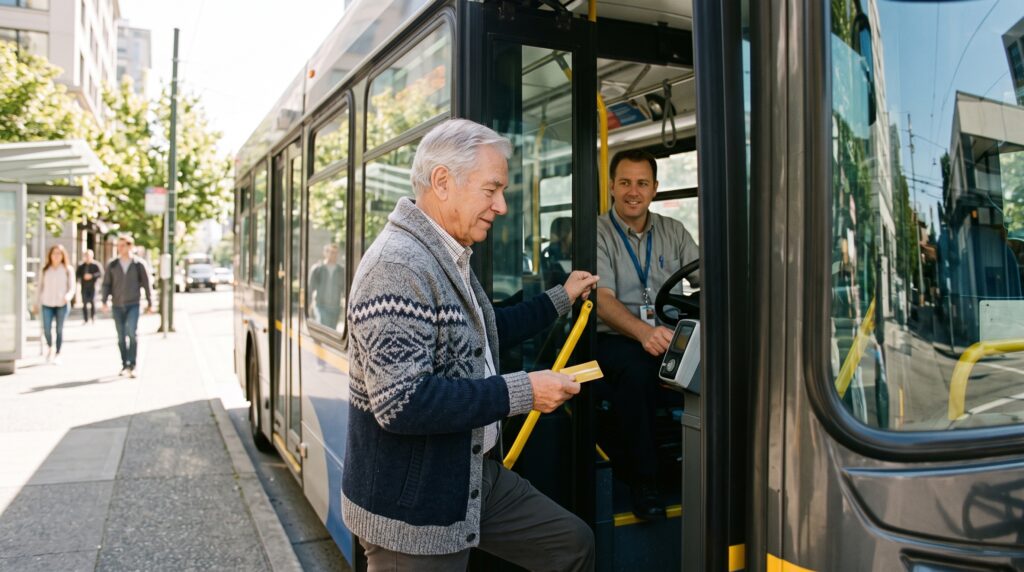
For older New Zealanders who are comfortable using regular public transport, the SuperGold Card can help make everyday travel more affordable. Eligible cardholders can travel free on most participating off-peak public transport services. This may include buses, trains and selected ferry services, depending on the region.
Who can use it? The SuperGold Card is generally available to eligible New Zealand residents aged 65 and over, as well as some people who meet other qualifying criteria.
When can it be used? Free travel is generally available during designated off-peak periods. Exact conditions, participating services and any additional local concessions should be checked with the relevant transport provider.
For someone who enjoys a trip to the library, catching up with friends over coffee or taking part in community activities, this can help keep regular outings affordable. However, public transport may not be suitable for everyone. Someone who struggles with steps, balance or walking longer distances may need a different option.
👉 Read more: SuperGold Card (Work and Income).
3. Community Transport and Volunteer Driver Services
Not every older person lives close to a convenient bus route. In smaller towns and rural communities, transport options can be particularly limited. Community transport services can help bridge this gap, making it easier for older people to attend appointments, go shopping and take part in community activities. Depending on the location, local organisations may offer:
- Volunteer drivers for medical appointments.
- Community shuttle services.
- Transport to shopping centres.
- Group transport for social activities.
- Accessible vehicles for people with mobility difficulties.
Some services are run by charitable organisations, community trusts or local volunteer networks.
Are community transport services free? This varies between providers. Some rely on donations, while others charge a small fee or ask for a contribution towards their running costs. Availability can also vary considerably between regions.
Where should families start? Contacting a local council, community centre or Citizens Advice Bureau can be a useful first step. Ask whether there are volunteer driver programmes or community transport services operating in your parent’s area. It’s also worth asking whether there’s room for mobility equipment and if a family member or support person can come along.
4. National Travel Assistance: Help With Eligible Medical Travel
Some families face a different challenge: arranging travel for an older parent who needs specialist medical treatment that isn’t available locally. Health New Zealand’s National Travel Assistance (NTA) scheme may help eligible patients with certain travel and accommodation costs when they need to travel for publicly funded specialist healthcare. This can be particularly relevant for families living outside major centres.
What expenses may be covered? Depending on eligibility and the circumstances, assistance may include:
- Travel by private vehicle.
- Public transport fares.
- Certain approved air travel.
- Accommodation when treatment requires staying away from home.
- Some travel or accommodation costs for an approved support person.
The scheme has specific eligibility criteria, including requirements based on travel distance, how often treatment is needed and individual circumstances. It does not cover every medical appointment or ordinary local trip to the GP.
How can families apply? Ask the hospital, specialist clinic or Health New Zealand travel coordinator whether the patient may qualify. Check eligibility and registration requirements before booking any travel, as reimbursement isn’t guaranteed.
👉 Read more: National Travel Assistance (Health New Zealand).
When Public Transport Is No Longer an Option
Sometimes, cost isn’t the main concern. The journey itself can be difficult. An older person may find it challenging to walk to a bus stop, climb into a vehicle, carry shopping bags or navigate unfamiliar places. In these situations, families may need to explore other transport options that better suit their parent’s needs.
Accessible taxis and transport services
Some transport operators provide wheelchair-accessible vehicles or assistance for passengers with mobility difficulties. Before booking, check whether the vehicle suits the person’s needs, whether the driver can provide the assistance required and whether mobility equipment can be accommodated.
Family or companion-supported outings
For someone who feels anxious travelling alone, having a familiar person alongside them may make a difference. A family member, friend or support worker may be able to accompany them, depending on their needs and what support is available.
Mobility equipment
A suitable walking frame, wheelchair or mobility scooter may make certain journeys more manageable. However, equipment should be selected according to the person’s abilities and environment. An occupational therapist or physiotherapist can help assess what is appropriate.
👉 Read more: Mobility Changes in Older People: When to Get Support.

Other NZ Services That Help Older People Stay Independent
Transport is only one part of helping an older person stay active and independent. Families may also need help with mobility equipment, downsizing or moving into a more suitable home.
The Home Carers Resources Hub features organisations that offer practical support to older New Zealanders and their families. Here are three services worth knowing about:
TaskMasters: Help With Decluttering and Downsizing
TaskMasters provides professional organising and downsizing assistance. For older people preparing to move into a smaller home or retirement village, sorting through years of belongings can be physically and emotionally demanding. TaskMasters helps families organise possessions, reduce clutter and prepare for a more manageable living environment. Although it isn’t a passenger transport service, this type of practical assistance can make a significant difference during later-life transitions.
Mature Moves: Supporting Older People Through Relocation
Mature Moves specialises in relocation support for older people. Its services include downsizing, packing, moving and helping clients settle into a new home. For families supporting a parent moving into a retirement village or a more suitable home, professional relocation assistance can make the process easier to manage. This is particularly useful when adult children live in another city or cannot manage every stage of the move themselves.
Mobility Services Ltd: Equipment Hire, Repairs and Maintenance
Mobility Services Ltd supports older people and those with mobility difficulties through equipment sales, hire, servicing and repairs. Based in Christchurch, the company provides access to mobility equipment such as wheelchairs, walking aids and mobility scooters. For someone who relies on mobility equipment to leave the house, keeping that equipment in good working order is an important part of maintaining independence. Families can contact the provider to discuss suitable equipment options and availability.
These organisations offer different kinds of support, helping families manage practical challenges that can affect an older person’s independence.
👉 Read more: Home Carers Resources Hub
How to Choose the Right Transport Option for Your Parent
With several schemes and services available, the best place to start is by thinking about where your parent needs to go and what support they may need along the way. Consider these questions before contacting a provider.
- What kind of journeys are needed? Is Mum mainly travelling to medical appointments, or does she also need transport for shopping, social activities and everyday errands? Some schemes are designed for specific purposes, while others offer more general transport assistance.
- Can they use regular public transport safely? Think about how far they need to walk to reach the nearest stop, whether they can board the vehicle safely and if the journey involves steps or changing services. If regular public transport is unsuitable because of a long-term impairment, the Total Mobility Scheme may be worth investigating.
- Do they need assistance during the journey? A door-to-door service may not include personal care or someone to stay with your parent during an appointment. Check what assistance is included before making arrangements.
- What services operate locally? Transport availability varies across New Zealand. A service operating in Christchurch may not be available in Tauranga or a smaller rural community. Contact local providers to confirm their coverage, booking requirements and costs.
- Is the arrangement suitable for regular use? Getting to an occasional appointment is quite different from needing transport several times a week. For ongoing needs, consider affordability, reliability and whether bookings can be arranged consistently.
Where to Find Local Transport Services in NZ
If you’re unsure where to begin, these local organisations and services can help point you in the right direction.
- Start with your regional council or public transport authority for information about Total Mobility and public transport concessions.
- For medical travel, ask the relevant hospital or specialist service about National Travel Assistance.
- For community transport, local councils, community centres and Citizens Advice Bureau offices may be able to direct you to organisations operating nearby.
When contacting a service, explain your parent’s mobility needs, the journeys they want to make and whether they require assistance getting into or out of a vehicle. This helps families avoid arranging transport that may not meet their parent’s needs.
Helping Older People Stay Connected to Everyday Life
Being able to leave the house is about more than getting to appointments. It’s about enjoying familiar routines, spending time with friends and staying connected to the community.
For some older New Zealanders, a SuperGold Card or community shuttle may be enough. Others may need accessible transport, mobility equipment or someone to accompany them on outings. The right support can make it easier to keep doing the things they enjoy.
At Home Carers, we understand how much these everyday moments matter. Whether it’s a trip to the shops, an appointment or an afternoon out, having someone there to help can make all the difference.
If you’re exploring local services, visit our Resources Hub for Older People to discover organisations supporting older New Zealanders and their families. And if Mum or Dad needs a little extra help getting out and about or managing everyday life at home, we’re here to help you explore the options.
🔗 MORE FROM OUR BLOG
- Repeated Falls in Older People
- How In-Home Physiotherapy Supports Recovery for Older Adults in New Zealand
- Moving Safely, Living Confidently: How Mobility Services Ltd and Home Carers Support Independence at Home
- The First 2 Weeks After Hospital Discharge Are Critical
- Moving Forward Together: How The Mobile Physio & Home Carers Support Recovery and Independence
Not Sure Which Transport Option Fits Your Parent’s Day-to-Day Life?
Whether it’s shopping, appointments or simply enjoying a day out, the right support can help your parent stay active and connected.
At Home Carers New Zealand , we provide practical, personalised support to help older people continue enjoying everyday life at home and in their community.
Get in touch for a friendly chat about what might work best for your family.
YOU CAN ALSO REACH US DIRECTLY
Frequently Asked Questions
Can older people get free transport in New Zealand?
Some older people can access free off-peak public transport through the SuperGold Card. Community transport programmes may also offer free or low-cost journeys, depending on the provider. Eligibility and availability vary.
Does everyone over 65 qualify for the Total Mobility Scheme?
No. Total Mobility eligibility is based on a disability or long-term impairment that prevents someone from using regular public transport independently. Age alone does not determine eligibility.
Can the Total Mobility Scheme be used for shopping and social outings?
Yes, eligible users can generally use approved Total Mobility transport for everyday journeys, including shopping and social activities. Regional scheme conditions and participating operators should be checked before booking.
Is there help with travelling to specialist hospital appointments?
Health New Zealand’s National Travel Assistance scheme may help eligible patients with certain travel and accommodation costs when accessing publicly funded specialist healthcare. Not all appointments or journeys qualify.
Can someone travel with an older person who needs assistance?
Many transport services allow a family member, friend or support person to travel alongside an older passenger, but arrangements differ between providers.
What if my parent lives in a rural area with limited transport?
Start by contacting your local council or community organisations to ask about volunteer drivers and transport services available in the area.