
If your parent seems like a different person once evening arrives, becoming more confused, more agitated, or harder to settle, you may be dealing with sundowning, one of the most exhausting parts of caring for someone with dementia.
Dunedin’s cold, dark winter evenings can make sundowning feel even more pronounced, with early nightfall and chilly nights increasing the risk if a confused parent tries to wander outside. For families already stretched thin, the nights are often harder than the days.
This guide explains what’s actually happening during sundowning, the signs to watch for, and practical ways to make nights calmer for everyone, including how private overnight care can help.
✅ Quick Answer
- Sundowning is thought to be linked to changes in the brain’s sleep-wake regulation and can be worsened by fading light, fatigue, and unmet needs like hunger or pain.
- Private overnight care provides a calm, consistent presence through the night, helping to reduce risks and giving family carers genuine rest.
- Simple routine changes such as adjusting lighting, creating quieter evenings, and keeping consistent bedtime habits can help reduce the severity of sundowning alongside professional support.
What Is Sundowning, and Why Does It Happen?
Sundowning refers to a worsening of dementia symptoms such as confusion, agitation, restlessness, or anxiety that tends to appear in the late afternoon and intensify into the evening.
It’s not a separate condition, but a pattern linked to how dementia affects the brain’s internal clock.
Common contributing factors include:
- Disrupted circadian rhythm: dementia affects the areas of the brain that regulate the sleep-wake cycle.
- Fading light and shadows: reduced visual cues can increase disorientation as evening sets in.
- Accumulated fatigue: by evening, mental and physical energy for coping is often depleted.
- Unmet needs: hunger, thirst, pain, or needing the toilet can intensify agitation if not recognised early.
Understanding the reasons behind sundowning doesn’t make it any easier to manage, but it does help reframe it as a predictable pattern rather than random difficult behaviour.

Signs of Sundowning to Watch For
Sundowning can look different from person to person, but common signs include:
- Increased confusion or disorientation as daylight fades.
- Pacing, restlessness, or repetitive movements.
- Agitation, irritability, or tearfulness without an obvious trigger.
- Wanting to “go home” even when already at home.
- Difficulty settling to sleep or waking frequently through the night.
- Attempting to leave the house, which can be particularly concerning during Dunedin’s cold winter nights.
If these patterns are becoming a regular feature of your evenings, it’s worth having a conversation with a GP as well as considering practical support at home.
How Private Overnight Care Helps Manage Sundowning
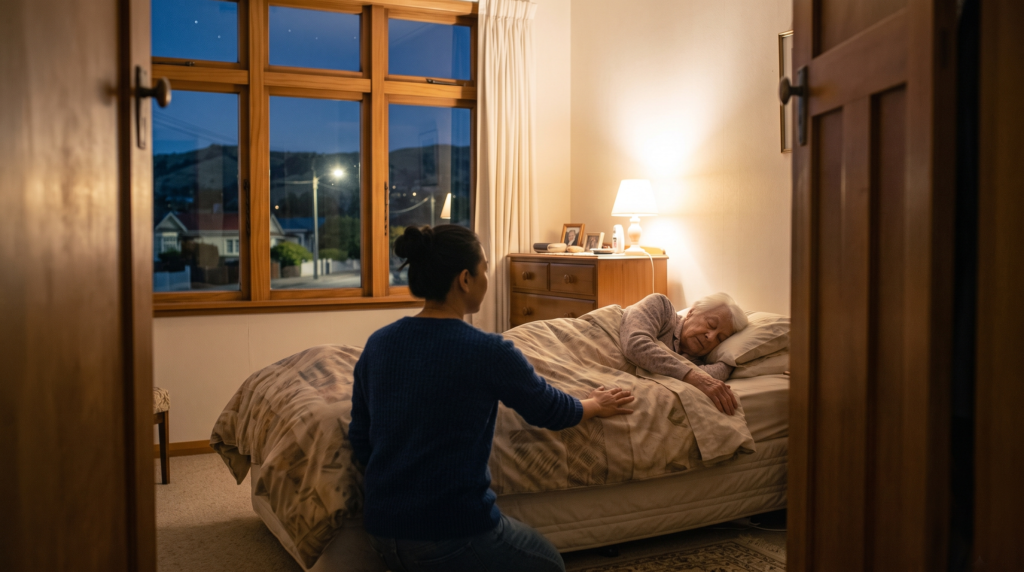
An experienced overnight carer does more than simply supervise. They can also help manage periods of confusion and agitation as they arise.
This typically includes:
- A calm, familiar presence through the night, which can reduce anxiety and disorientation.
- Recognising early signs of agitation and responding before the situation escalates.
- Gentle redirection, using calming conversation, familiar routines, or soothing activities to ease distress.
- Preventing unsafe wandering, which is particularly important overnight when confusion may be at its worst.
- Supporting toileting, medication reminders, and comfort needs without disrupting sleep more than necessary.
For many families, the reassurance of having someone experienced and awake during these hours can make as much difference as the practical support itself.
Practical Strategies to Ease Evening Confusion at Home
Alongside professional overnight support, small environmental and routine changes can help reduce the severity of sundowning:
- Keep evenings calm and low stimulation. Reduce noise, clutter, and busy activity as the day winds down.
- Maintain consistent lighting. Turning on lamps before it gets properly dark can reduce shadow-related confusion.
- Stick to a predictable bedtime routine. A warm drink, familiar music, or quiet conversation can signal that it’s time to wind down.
- Address needs early. Offering food, water, or a toilet trip before agitation builds can help prevent it from escalating.
- Avoid arguing or correcting. Gentle redirection tends to work far better than trying to reason through confusion.
These strategies can work well alongside consistent overnight support when safety has become a concern.
When to Consider Overnight Care or Full 24/7 Support
Overnight care isn’t always the final step. For some families, it’s exactly the right level of support, while for others, it may be part of a gradual move towards more comprehensive care.
It’s worth considering full 24/7 support if:
- Sundowning episodes are also occurring during the day, not just in the evenings.
- Your parent’s daytime safety needs have increased alongside night-time confusion.
- The family carer is experiencing burnout from managing both daytime and night-time care.
For many families, though, overnight care alone, combined with daytime independence or lighter support, remains the right fit for quite some time.
Practical Next Steps
- Keep a simple log of when episodes occur and any possible triggers.
- Speak with your parent’s GP about contributing factors and possible support.
- Try small environmental changes such as adjusting lighting, maintaining a consistent routine, and keeping evenings quiet.
- Arrange a conversation with a private overnight care provider about what support might look like.
Calmer Nights for Both of You
Sundowning doesn’t have to mean every evening feels like a battle.
For many families, private overnight care can turn the hardest part of the day into something more manageable for everyone.
If you’re unsure whether overnight care is the right fit for your parent’s sundowning, speaking with an experienced care team can help you understand what’s genuinely appropriate for your family’s situation.
Learn more about overnight care and dementia support options available for families in Dunedin by visiting Home Carers New Zealand.
YOU CAN ALSO REACH US DIRECTLY
Frequently Asked Questions
Does sundowning happen to everyone with dementia?
No, not everyone experiences sundowning, though it's common, particularly in the middle to later stages of dementia. Severity and frequency vary significantly between individuals.
How long does a sundowning episode typically last?
This varies, but episodes often last for a few hours in the evening, sometimes easing once the person is settled into a night-time routine or asleep.
Can medication help with sundowning?
Sometimes, though medication is usually considered only after non-medication approaches have been explored. A GP can advise whether it’s appropriate for your parent’s situation.
Is overnight care only for people with severe dementia?
No. Overnight care can be valuable at any stage when night-time confusion or safety risks are present, not only in advanced dementia.
Will my parent be upset by having a carer present overnight?
Many people adjust well, especially with a familiar, consistent carer and a gentle introduction. Discreet, low-key support tends to work better than an obvious clinical presence.
What's the difference between sundowning and general dementia-related confusion?
Sundowning specifically refers to a worsening pattern linked to the time of day, whereas general confusion can occur at any point and doesn’t necessarily follow this evening pattern.
Can environmental changes alone manage sundowning, without professional support?
For milder cases, yes. Environmental and routine changes may help reduce sundowning symptoms. As symptoms progress or safety risks increase, professional overnight support may become helpful or necessary.
How do I start the conversation with my parent about having overnight support?
Framing it around comfort and safety rather than “needing supervision” tends to be received better, particularly when support is introduced gradually.