
One fall can be frightening. A second one, a few weeks later, can feel different. It may start to look like a pattern, and for many families, this is when questions about safety at home begin to surface.
The hesitation that follows is understandable. Nobody wants to be the person who “takes over” or makes a parent feel that their independence is being taken away. However, waiting too long after repeated falls can mean waiting until something more serious forces a decision.
This article explains what repeated falls may signal, what useful support at home can look like, and how families can start the conversation before a crisis forces them to.
✅ Quick Answer
If an older person has fallen more than once, is becoming less steady on their feet, or is growing hesitant about moving around the home, it is worth reviewing both the cause of the falls and the level of support available. Repeated falls are not an inevitable part of ageing. They can be a sign that something has changed and deserves a closer look. More support at home does not mean taking over. For many families, it means helping Mum or Dad stay safely at home for longer.
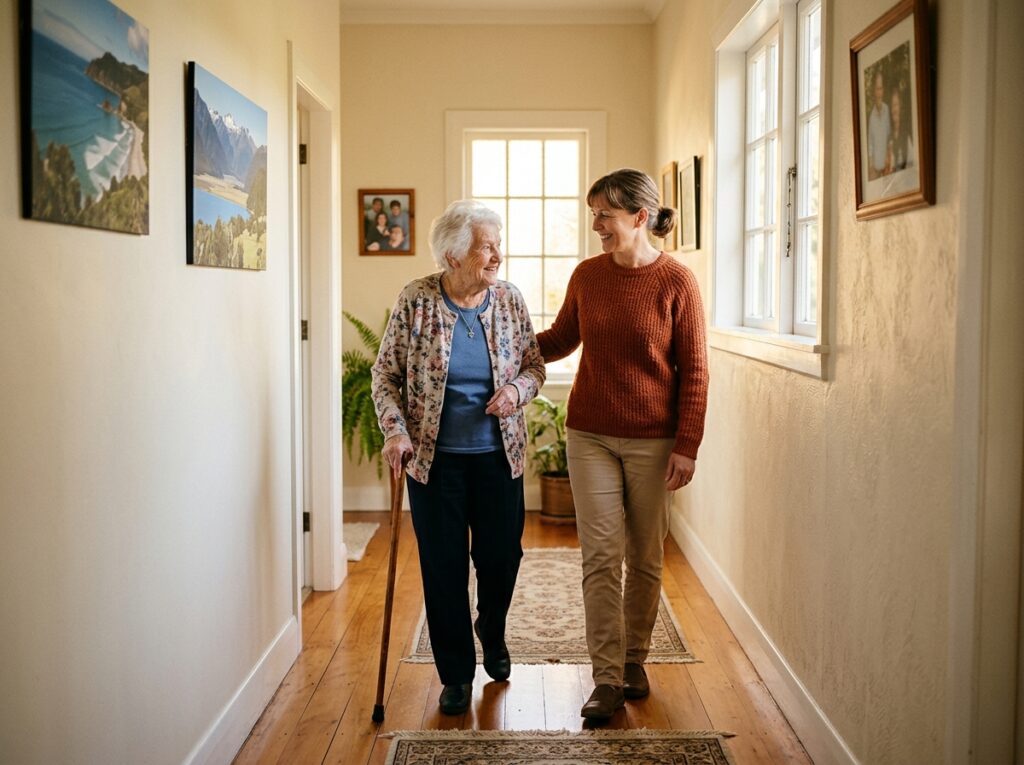
How Common Are Falls Among Older New Zealanders?
Falls are among the most common and consequential events in the lives of older New Zealanders. Around one in three people aged 65 and over fall at least once each year. By the age of 80, that rises to roughly one in two.
ACC reports that over 170,000 claims related to falls among people aged 65 and over are lodged in New Zealand each year. For many, a fall is more than a physical event. It can reduce confidence and activity levels, affect sleep, and change how someone moves around their own home, sometimes for the long term.
Falls also rarely happen in isolation. They tend to occur alongside other gradual changes in strength, mobility, medication, eyesight or the home environment. This is why addressing the pattern matters as much as treating the injury.
"One in three New Zealanders aged 65 or older experience a fall-related injury each year — and when you hit 80 it can be one in two." — ACC
Why Does an Older Person Keep Falling?
There is rarely one explanation that applies to everyone. For one person, the problem may be reduced leg strength after an illness. For another, it could be dizziness, poor eyesight, medication effects or difficulty navigating the bathroom at night.
Common factors can include:
- reduced strength or balance
- changes in walking or mobility
- poor eyesight
- dizziness or light-headedness
- medication changes or side effects
- getting up too quickly
- difficulty getting in or out of bed or chairs
- rushing to the bathroom
- unsuitable footwear
- loose rugs, clutter or poor lighting
- steps and uneven surfaces
- recovery after surgery, illness or hospitalisation
- memory or cognitive changes that affect judgement and safety
A hallway that was perfectly manageable two years ago may become difficult when strength and balance have quietly declined. That same hallway at 2am, when someone needs the bathroom urgently, can present an entirely different challenge. Addressing falls effectively means looking at the combination of factors rather than focusing only on the most obvious one.
When Should Repeated Falls Become a Concern?
There is no single number that automatically signals a care need. The pattern around the falls is more revealing than the count.
The falls are becoming more frequent or harder to explain
One isolated trip with a clear cause, such as a wet floor or an unfamiliar step, is different from several falls or near-falls over a short period without a clear explanation. “I don’t know. I was just on the floor” is something families should take seriously, as unexplained falls warrant a health review.
Near-falls matter too. Mum grabbing the kitchen bench before losing her balance completely is not a fall in the strict sense, but it can still tell you something important about how steady she is on her feet.
Everyday tasks are quietly getting harder
Falls rarely happen in isolation from the rest of daily life. The physical changes that contribute to falls, such as reduced strength, slower reactions and impaired balance, can also show up in other ways:
- Struggling to get out of a low chair or sofa
- Holding walls or furniture as they move around the house
- Avoiding the stairs or using them much more cautiously
- Taking longer to walk to the letterbox or the car
- Difficulty getting in or out of the shower safely
- Putting off shopping because it feels tiring or risky
- Arriving home from an outing more exhausted than before
These changes are often gradual enough that families and the older person themselves may begin to see them as normal. Noticing and addressing them early can help reduce further risk.
Fear of falling is changing how they live
After a fall, it is natural to feel cautious. The concern is when that caution becomes avoidance: no longer gardening, stopping walks to the letterbox, skipping a shower unless someone is home, or spending most of the day in one chair because moving around feels unsafe.
The relationship between fear of falling and actual falls can become a cycle. Someone who moves less because they are afraid of falling may gradually become weaker and less balanced, which can increase their risk of another fall. Thoughtful support at home can help break this cycle while maintaining confidence and independence.
When to seek medical attention promptly:
If a fall causes significant injury, a head injury, loss of consciousness, sudden confusion, or an inability to get up safely, seek urgent medical help. Unexplained falls, especially those involving dizziness, blackouts or sudden weakness,should be discussed with a GP even when the injury itself seems minor.
What Should Families Do After Repeated Falls?
A useful response looks at several areas together rather than searching for one quick fix. The table below outlines where to focus and what to look for in each area.
| Area to review | What families can look for | Who can help |
|---|---|---|
|
Health |
Dizziness, pain, recent illness, medication changes, unexplained falls |
GP or appropriate health professional |
|
Mobility & balance |
Changes in walking, reduced ability to stand from a chair, reduced strength |
GP referral; physiotherapist; ACC’s Live Stronger for Longer programme |
|
Eyesight |
When was the last eye check? Does lighting in the home make things harder to see? |
Optometrist; GP |
|
Home environment |
Lighting on the route to the bathroom at night, loose mats, furniture in walkways, bathroom safety |
Occupational therapist; relevant home modification services |
|
Night-time safety |
Getting out of bed, urgency to reach the bathroom, lighting, call systems |
Home carer (overnight support); GP review of night-time medication |
|
Daily activities |
Showering, dressing, cooking, shopping, carrying laundry. What has become harder? |
Occupational therapist; NASC needs assessment; private home carer |
|
Confidence |
Has your parent started avoiding activities they previously enjoyed? Do they seem anxious about being alone? |
GP; community activities, such as Age Concern; home carer for companionship |
This review is a starting point, not a clinical assessment. A GP, occupational therapist, or NASC assessor can provide professional guidance specific to your parent’s situation.
Start with a health review
Health NZ recommends talking to a healthcare provider after a fall, even one that seems minor, so that possible causes such as medication, blood pressure, balance and vision can be reviewed together. A health review is a useful first step before deciding what other changes may be needed at home.
Look at strength and balance specifically
ACC’s Live Stronger for Longer programme provides falls-prevention information and access to strength and balance classes across New Zealand, including Christchurch and Tauranga. A physiotherapist may also be helpful, particularly if mobility has changed noticeably or your parent is recovering from a fall or hospital stay.
Look at the home through fresh eyes
Walk through the house as though you are seeing it for the first time. Is the route from the bedroom to the bathroom well lit at night? Are there loose mats or furniture narrowing a walkway? Does Mum need to reach or bend to get frequently used items? Is the bathroom becoming difficult to use safely? An occupational therapist can formally assess how the home environment supports safe daily living, and may also recommend suitable modifications.
What Level of Support at Home is Right?
Not every fall means an older person needs a carer. Likewise, needing some support does not necessarily mean needing full-time care. The right level of support depends on the individual situation. Starting with what is actually needed, rather than jumping straight to the most intensive option, can help preserve independence for longer.
Occasional support may be enough when:
- The person remains largely independent and confident at home
- A specific cause has been identified and addressed
- They manage meals, personal care, and household routines safely
- Family is readily available and not stretched by the level of checking in required
Regular home support is worth considering when:
- Falls or near-falls are becoming more frequent
- Showering, dressing, or getting around the house is noticeably harder
- Meals and household tasks are becoming more difficult to manage
- The person is losing confidence or becoming more anxious about being alone
- Family members are checking in increasingly often and beginning to feel the strain
- Recovery after a fall is taking longer than expected
A few carefully chosen hours of support can make a significant difference. This might include help with safe showering, meal preparation, mobility, household tasks or companionship, while the older person continues doing the things they can confidently manage themselves.
More intensive support may be appropriate when:
- Falls are happening during the night as well as the day
- Getting to the bathroom alone is no longer safe
- The person cannot get up safely after a fall without help
- Cognitive changes are affecting safety awareness and judgement
- Family members are providing a level of supervision that is unsustainable
- There is genuine concern about leaving the person alone for any period
In these situations, families may need to consider overnight care, longer daytime support or, where needs have become more significant, 24/7 support at home as an alternative to residential care.
More Support Does Not Mean Less Independence
This can be one of the hardest parts of the conversation for both families and older people themselves.
Well-planned support does not replace independence. It can help protect it. Someone might still make their own breakfast but receive help with showering. They might continue gardening while someone assists with shopping. They may still choose what they eat, who visits and how their day runs, while receiving enough practical support to do those things safely.
Independence does not always mean doing everything without help. It can mean having enough support to keep making choices and living safely in the place that matters most.
Recovery support is often temporary:
After a fall injury or hospital stay, someone who normally manages well may need a few weeks of practical support with meals, mobility, personal routines and transport to appointments before returning to their usual level of independence. This kind of short-term support can work alongside physiotherapy and other clinical services.
What if Mum or Dad Refuses Help?
This is one of the most common challenges families face, and there is no single answer that works for everyone. A few approaches that may help:
- Start with the specific problem, not the general concern. “Would it help to have someone here when you shower for a while?” is easier to hear than “We think you need a carer.”
- Frame it as temporary. Support arranged while someone regains strength or confidence after a fall may feel less daunting than a broader care arrangement. Many families find that once a carer is in place, their parent becomes more comfortable with the arrangement over time.
- Focus on what they gain, not what they lose. If staying at home is important to Mum or Dad, the right amount of support may help make that possible for longer.
- Let a professional join the conversation. Older people sometimes receive the same suggestion very differently when it comes from a GP, nurse or other healthcare professional rather than an adult child.
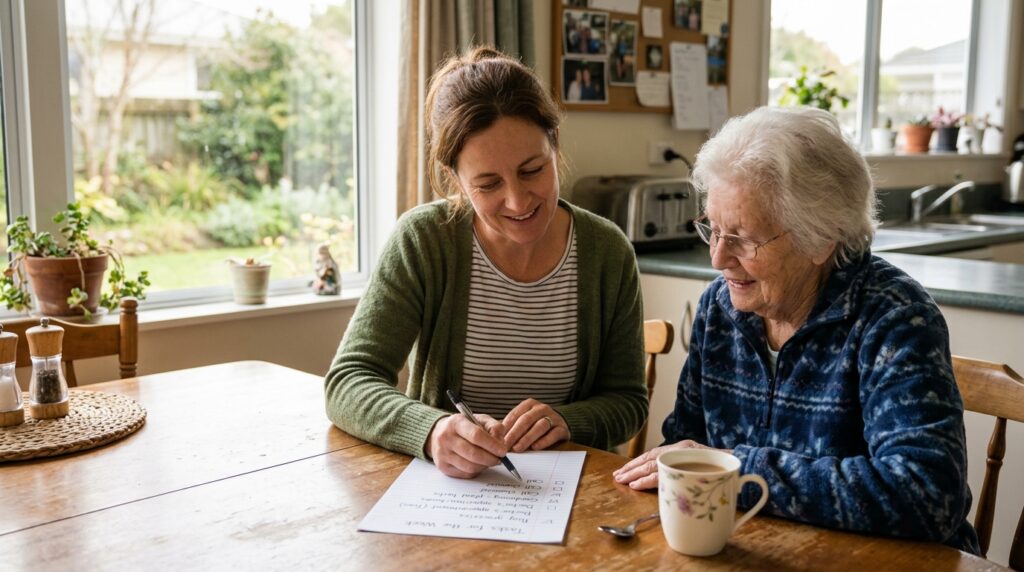
A Practical Family Checklist After Repeated Falls
If Mum or Dad has fallen more than once, work through these ten questions together:
- Do we know why the falls are happening?
- Has their GP or healthcare provider been told, including about near-falls?
- Has their walking, strength or balance changed noticeably in the past six months?
- Are they having difficulty with everyday activities such as showering, cooking or getting around the house?
- Is the home still suitable for their current level of mobility and strength?
- Are falls or near-falls happening at a particular time, especially at night?
- Are they becoming afraid to move around or go outside?
- Could a small amount of practical support reduce some of the risk and restore some confidence?
- Are family members providing more informal supervision than they were six months ago?
- What would genuinely help Mum or Dad remain independent before another fall leads to a bigger change?
You do not need every answer to be “yes” before acting. Small changes made early may help reduce the risk of another fall and make daily life feel safer.
Support for Older People Who Want to Remain at Home
For most older New Zealanders, the goal after a fall is not to leave home. It is to regain enough confidence and practical support to continue living there safely.
Home Carers provides flexible support for older people and their families across Christchurch, Tauranga and other parts of New Zealand. Depending on the individual’s circumstances, this may include help with daily personal care and household tasks, mobility assistance, companionship, recovery support after a fall or hospital stay, overnight supervision, or more comprehensive 24/7 care when higher levels of support are needed.
The starting point is always the same: understanding what the person can still do confidently, where the risks have changed, and what level of support would help them keep living the way they want to.
Not Sure Whether the Level of Support at Home Is Still Right for Your Parent?
Talk to Home Carers New Zealand about what has changed, where the current risks may be, and what level of flexible, carefully matched support could help your parent remain independent at home.
Home Carers supports older people across Christchurch and Tauranga with everything from a few hours of weekly companionship to overnight care and full daily support.
Whether you’re responding to a recent fall or recognising a gradual change that’s been building for a while, our team can help you find the right next step.
YOU CAN ALSO REACH US DIRECTLY
Frequently Asked Questions
Should I tell the GP about a fall even if it seemed minor?
Yes. GPs can identify patterns across visits that a family might not see, including medication changes, blood pressure issues or early mobility decline that may contribute to falls over time. A seemingly minor fall that came with dizziness, a moment of confusion or an inability to remember what happened is particularly worth reporting promptly.
How do I know if my parent is hiding how often they're falling?
It's very common for older people to minimise or simply not mention falls, either to avoid worrying the family or because they don't want to signal that something has changed. Look for indirect signs such as unexplained bruising, furniture rearranged in unexpected ways, changes around the home, or reluctance to explain a mark or injury. Setting up a regular, low-key check-in, whether through a call, visit or care update, can help families stay informed without putting their parent on the defensive.
What's the difference between a falls risk and needing a carer?
Not everyone with a falls risk needs ongoing home care. Some people benefit from a one-off OT assessment, a medication review or a strength and balance programme rather than regular support. A carer becomes more relevant when daily activities such as showering, cooking or getting around the house are becoming difficult, when falls are occurring regularly, or when the person can't safely be alone for extended periods.
How long does recovery support typically last after a fall injury?
It varies considerably depending on the injury and the person's baseline health. A soft-tissue injury might need a short period of practical support at home. A hip fracture or surgery can require several months of recovery, with the intensity of support gradually reducing as mobility and confidence return. Support arranged for recovery can be adjusted as needs change. It does not have to become permanent.
Can a home carer help with the emotional side of recovery, not just the physical?
Yes. For many older people, consistent companionship and reassurance can be an important part of recovery. Fear after a fall, reduced confidence and withdrawal from normal activities are common and can affect recovery. A carer who visits regularly can provide a familiar presence and practical encouragement, helping an older person gradually return to activities they may have been avoiding and feel more confident at home.
Is there any funding available in NZ for home support after a fall?
ACC may contribute to home support costs where the need follows an injury from a covered accident. A NASC needs assessment through Health NZ can also result in publicly funded home and community support hours for those who qualify. These pathways may not cover all the support a family wants or needs, so some families also explore private home care alongside them. See our full guide to government funding and home care in NZ.
Do I need a referral from a doctor to arrange private home care?
No. Private home care can be arranged directly. You do not need a GP referral or needs assessment to contact Home Carers and discuss what support might suit your parent's situation. Publicly funded support follows separate assessment and eligibility processes.