
There’s a moment many families reach, not always dramatic, sometimes just a quiet build-up of small worries, when part-time help no longer feels like enough. If you’ve found yourself wondering whether your parent needs more than the occasional check-in, you’re already asking the right question.
This guide looks at when home care in Wellington typically shifts from occasional support to full 24/7 care, and how families usually make that call.
It’s rarely one single event that triggers this decision. More often, it’s a pattern, like a fall here, a missed medication there, or even a phone call that leaves you unsettled. These small incidents slowly add up until the current arrangement no longer feels safe.
Here’s how to recognise when that shift is happening, and what the transition to 24/7 care typically looks like for families here in Wellington.
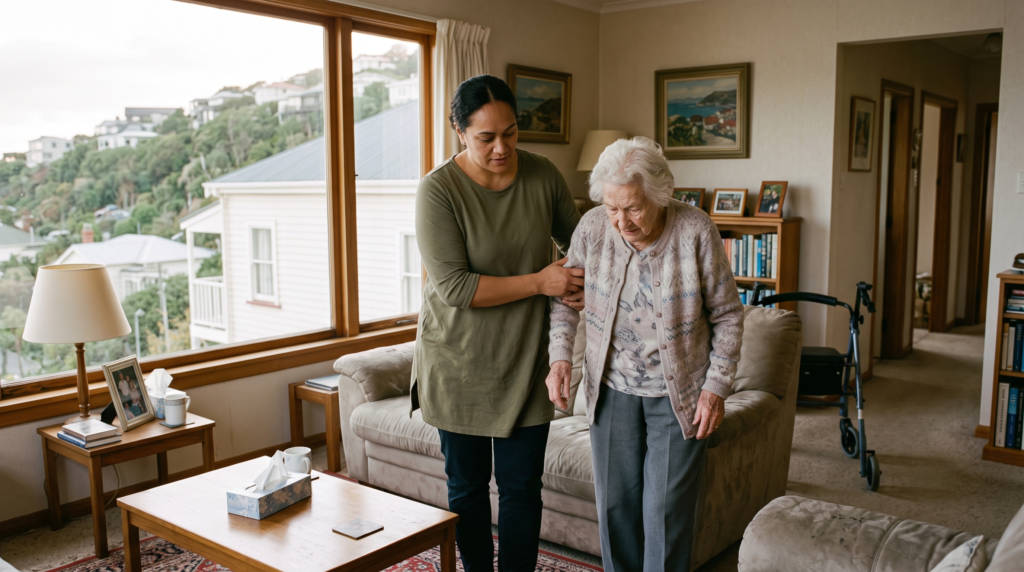
✅ Quick Answer
- 24/7 care usually becomes necessary when safety risks occur regularly, such as frequent falls, wandering, medication errors, or being unable to call for help.
- Caregiver burnout is a valid reason too. If the family carer is exhausted or unwell, that alone can justify moving to full-time support.
- The shift is often gradual, starting with part-time help and increasing as needs grow, rather than being the result of a single dramatic decision.
- A needs assessment can help clarify whether 24/7 care is genuinely required, or whether a lower level of support is still appropriate.
What Does 24/7 Home Care Actually Mean?
24/7 home care means a parent is never left without support, either through a live-in carer or a team covering rotating shifts across the day and night. It’s different from having “someone pop in” a few times a day. Instead, it provides continuous supervision and support at home.
This level of care typically includes:
- Personal care (washing, dressing, and mobility support)
- Medication management
- Meal preparation
- Overnight supervision and safety checks
- Companionship throughout the day
For families weighing this up, it helps to understand what a typical home care service actually involves before deciding whether 24/7 care is the right level of support.
Key Signs 24/7 Care May Be Necessary
Certain patterns tend to signal that part-time support is no longer sufficient:
- Frequent falls or near-misses, particularly at night or when alone
- Wandering or getting lost, even in familiar surroundings
- Medication mismanagement, such as missed doses, doubling up, or confusion about timing
- Inability to call for help during an emergency
- Leaving appliances on, such as the stove, creating fire risk
- Significant weight loss or dehydration from forgetting to eat or drink
- Night-time confusion (sundowning), which is common with dementia
If you’re seeing a pattern rather than a one-off event, that’s usually the clearer signal. Our guide on signs your parent should no longer be left alone goes into more depth on this.
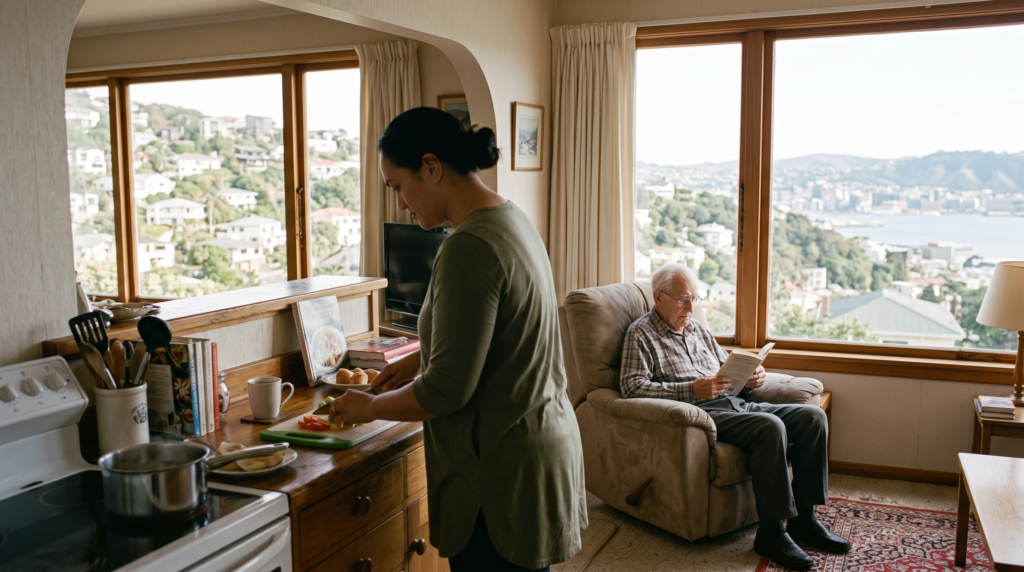
The Role of Family Caregiver Burnout in This Decision
It’s easy to focus purely on your parent’s needs and forget that your own capacity matters too. Caregiver burnout, which can include chronic exhaustion, resentment, or declining health in the person providing care — is itself a legitimate reason to move towards 24/7 support.
Signs of burnout worth taking seriously include:
- Ongoing sleep deprivation from night-time worry or interruptions
- Neglecting your own health, work, or relationships
- Feeling constantly on edge or unable to switch off
- Resentment building, even towards someone you love
If this sounds familiar, it’s worth reading more about recognising dementia caregiver burnout. Many of the warning signs apply beyond dementia specifically.
24/7 Care vs Occasional Support: How to Tell the Difference
Not every family needs to jump straight to full-time care. It helps to think in terms of a spectrum:
- Occasional support: a few hours a week for companionship, errands, or light help
- Part-time daily care: regular visits covering meals, medication, and personal care
- 24/7 care: continuous supervision, day and night, with no gaps in coverage
Many families move through these stages over months or years, rather than starting with full-time care immediately. There are also hidden benefits to home care worth understanding at any stage of this journey, not just once needs become urgent.
How the Transition Typically Happens in Wellington
For Wellington families specifically, a few local factors often shape how this transition plays out:
- Hilly, hard-to-navigate suburbs can make it harder for a parent to get out safely alone, which may increase the need for additional support.
- Busy family schedules, especially with Wellington’s commuter lifestyle, can limit how much informal support siblings or neighbours can realistically provide.
- NASC assessments (Needs Assessment Service Coordination) are available through Health New Zealand to help determine eligibility for funded support, though this process can take time.
Many families choose to begin private 24/7 care while a NASC assessment is underway, rather than waiting for the process to be completed before any support begins. You may also find our piece on overnight dementia support useful if night-time needs are part of the picture.
Practical Next Steps
- Keep a simple log of incidents, such as falls, confusion, and missed medication over a couple of weeks.
- Be honest about your own capacity as the primary carer, not just your parent’s needs.
- Book a needs assessment through Health New Zealand to get an independent view.
- Start a conversation with a home care provider about what a trial period could look like.
If home help alone might still be appropriate rather than full 24/7 care, it’s worth reading about what home help typically involves before deciding on the next step.
Making the Right Call, One Step at a Time
Deciding on 24/7 care doesn’t have to happen all at once, and it doesn’t mean you’ve failed at managing things alone.
For many families, it’s simply the next logical step in keeping a parent safe, comfortable, and supported, while giving everyone involved a little more breathing room.
If you’re unsure whether your parent’s situation calls for full-time support, speaking with an experienced care team can help you get clarity, rather than guessing.
Learn more about home care and the support options available for families in Wellington by visiting Home Carers New Zealand.
YOU CAN ALSO REACH US DIRECTLY
Frequently Asked Questions
Is there a single event that usually triggers 24/7 care?
Sometimes — a fall, hospital admission, or health scare can prompt an immediate decision. More often, though, it's a build-up of smaller incidents over time.
Can 24/7 care start on a trial basis?
Yes, many providers offer a short trial period, which can help both your parent and your family assess whether full-time support feels right before making a long-term commitment.
What if my parent refuses to accept 24/7 care?
This is common. Framing the conversation around safety and independence, rather than a loss of control, often helps. It can also help to involve your parent in decisions where possible.
How is 24/7 care different from moving into a rest home?
24/7 home care allows your parent to remain in their own home with continuous support, whereas a rest home involves relocating to a residential facility.
Does needing 24/7 care mean my parent has lost their independence?
Not necessarily. Many people receiving 24/7 care still make their own decisions and maintain their usual routines. The support exists to keep them safe while doing so.
How quickly can 24/7 care be arranged if the situation is urgent?
Private providers can often begin support quickly, sometimes within days, which can be faster than waiting for a full NASC-funded assessment process.
Is it normal to feel guilty about arranging 24/7 care for a parent?
Yes, and those feelings are understandable. However, arranging appropriate support is often what allows a parent to stay safely at home for longer instead of needing to move into residential care.
Can siblings share the decision-making process for arranging care?
Yes, and this can often make the process easier. Involving siblings early can prevent later disagreements and help share both the emotional and practical load.