
The relief of bringing a parent home from hospital can vanish fast once the front door closes and it’s just you, wondering if you’re actually prepared. If you’re arranging private home care in Wanaka after a hospital stay, this checklist is designed to take some of that guesswork away.
Hospitals discharge patients as soon as they’re medically stable, not necessarily when the family or household is fully ready. For families in Wanaka, that gap can feel even bigger, given that the nearest hospitals are in Dunedin or further afield, and specialist follow-up isn’t always just around the corner.
This guide walks you through exactly what to prepare, what to watch for in the first week, and where private support can fill the gaps that public services can’t always cover quickly.
✅ Quick Answer
- The first two weeks after discharge can carry the highest risk of falls, medication errors, and complications that may lead back to hospital.
- A short checklist before discharge day, covering medications, home safety, transport and support, can make a real difference to recovery.
- Private home care can start almost immediately, which matters in Wanaka where NASC-funded assessments and specialist follow-ups may involve waiting or travel.
- You don’t need to choose between public and private support — many families use both, with private care filling the immediate gap.
What “Private Home Care After Hospital Discharge” Actually Covers
Private hospital-to-home care is short-term, practical support arranged as soon as your parent leaves hospital — sometimes starting on the day of discharge itself. It typically includes:
- Safe transport home, if needed
- Medication reminders and monitoring
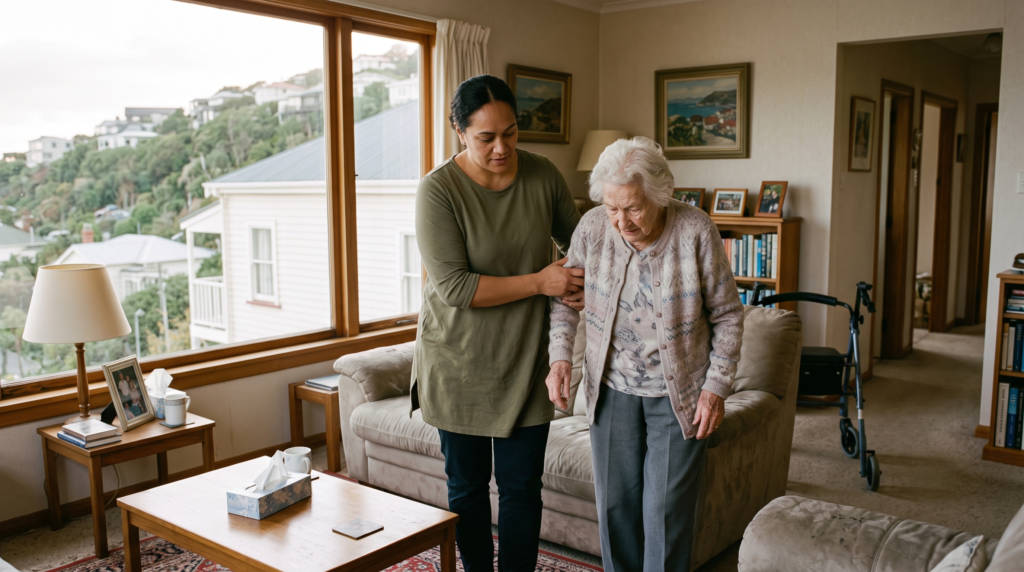
- Help with mobility, so early movement doesn’t turn into a fall
- Meal preparation and hydration support
- Wound care coordination alongside district nursing, where relevant
- Companionship and observation, including having someone there to notice if something doesn’t seem right
Unlike ongoing home care, this kind of support is usually time-limited, often lasting one to four weeks, with a specific focus on helping your parent through the early recovery period safely.
The Family Checklist: Before Your Parent Comes Home
A little preparation before discharge day goes a long way. Before your parent leaves hospital, try to have:
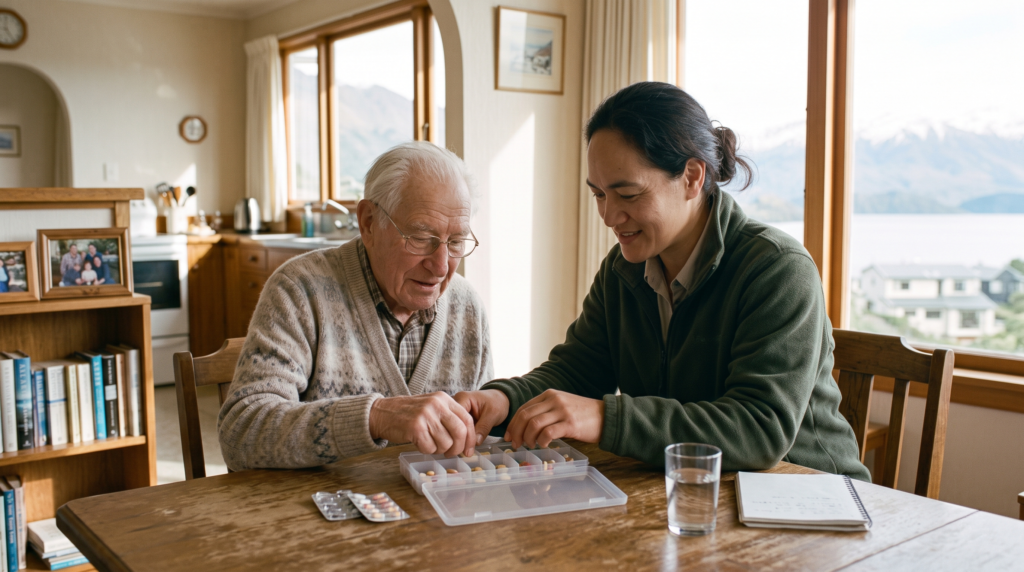
- Medications organised, with a pill organiser or clear list matched against the discharge summary
- A safe recovery space set up, with clear pathways, a comfortable chair, good lighting, and easy bathroom access
- Transport arranged, ideally with someone accompanying your parent home rather than having them travel alone
- Follow-up appointments noted, including any that may require travel from Wanaka
- Support confirmed — whether that’s family, a private carer, or both, for at least the first few days
If you’re short on time before discharge, even ticking off the first two or three items can make a real difference to how the first few days go.
Having hospital discharge care in Wanaka arranged before your parent comes home can also make those first few days feel more manageable.
The First Week at Home: What to Watch For
The first week is when complications can appear, often quietly at first. Keep an eye out for:
- Increased confusion or drowsiness, which can linger after an anaesthetic or when starting new medication
- Difficulty with mobility, especially getting up from a chair or bed unaided
- Missed or doubled medication doses
- Poor appetite or reduced fluid intake
- Low mood or anxiety, which are common and deserve the same attention as physical symptoms
If something feels genuinely wrong, such as chest pain, breathlessness, or unusual bleeding, seek urgent medical attention rather than waiting to see if it improves. For less urgent concerns, a call to your GP or Healthline (0800 611 116) is a sensible first step.
Common Reasons for Readmission (and How to Avoid Them)
Understanding what can send older adults back to hospital helps you watch for the right things:
- Medication mistakes, which can sometimes be avoided with a clear, visible medication schedule
- Falls, particularly in the bathroom or when getting out of bed at night
- Infections, especially around surgical wounds
- Dehydration or poor nutrition in the first few days at home
- Missed follow-up appointments, which can let small issues become bigger ones
While not every complication can be prevented, a bit of structure can help reduce the risk. Clear routines, visible reminders, and having someone regularly checking in can all support a safer recovery.
Public vs Private Support in Wanaka: Filling the Gaps
Public support through NASC (Needs Assessment Service Coordination) is available and can be genuinely valuable, but assessment, eligibility and the time it takes for services to begin can vary. Your parent may still need support during those critical first days at home.
This is where many Wanaka families may choose hybrid approach:
- Private care begins straight away, covering the first days to weeks after discharge
- A NASC assessment runs in parallel, determining what ongoing funded support may be available
- Support is adjusted once the assessment outcome is known, rather than waiting to arrange any help at all
This way, your parent can have support in place while the assessment and funding process is underway.
Practical Next Steps
- Start preparing as soon as a discharge date is confirmed. Even a few days’ notice can help.
- Ask the hospital care team directly what support they recommend at home.
- Arrange private hospital-to-home support to cover the immediate gap, if needed.
- Request a NASC referral in parallel, so longer-term funded support can be explored without unnecessary delay.
Supporting a Safer Recovery, Right from Day One
Coming home from hospital shouldn’t feel like the start of a new set of worries.
For many families, having the right support in place from day one can help make recovery safer while reducing the pressure on everyone involved.
If you’re preparing for a parent’s discharge and aren’t sure what support is appropriate, speaking with an experienced care team can help you plan with confidence rather than relying on guesswork.
Learn more about hospital-to-home care and the support options available for families in Wanaka by visiting Home Carers New Zealand.
YOU CAN ALSO REACH US DIRECTLY
Frequently Asked Questions
How soon can private home care start after discharge?
Often on the day of discharge itself, or within a day or two. Availability will depend on the provider, location, and level of support required.
Is private home care only needed for major surgery?
No. It's just as relevant after a fall, a medical admission, or any hospital stay that leaves a parent temporarily less capable of managing alone.
How long does hospital-to-home support usually last?
It varies, but many arrangements run from one to four weeks, with the focus on supporting your parent through the early recovery period rather than providing ongoing care.
Can private and publicly funded care run at the same time?
Yes — many families use private support immediately after discharge while a NASC assessment for funded care is processed in parallel.
What should I do if my parent seems more confused than usual after coming home?
Confusion can sometimes occur after an anaesthetic, illness, or changes in medication. However, new or worsening confusion should not be ignored. Contact your GP, Healthline, or the appropriate medical service for advice.
Do I need to arrange transport home myself, or does the hospital help?
This varies by hospital and situation. Always confirm arrangements directly with the discharge team, particularly if your parent will need door-to-door assistance.
What happens if there isn't anyone available to help in the first few days?
This is exactly the gap private hospital-to-home care is designed to fill, particularly for families who can't be present full-time or who live some distance from Wanaka.
Is a hospital discharge checklist really necessary, or is it overkill?
A simple checklist can make the transition home easier and help ensure important things, such as medications, appointments, transport, and support, aren’t overlooked.