
Talking to a parent with dementia about getting help at home is often easier when the conversation focuses on safety, independence, and connection — not limitations or loss. Choose a calm moment, acknowledge their feelings, start small, and frame support as a way to help them stay in the home they love for longer. Early conversations are almost always easier than waiting for a crisis.
Why This Conversation Matters — And Why It’s So Hard
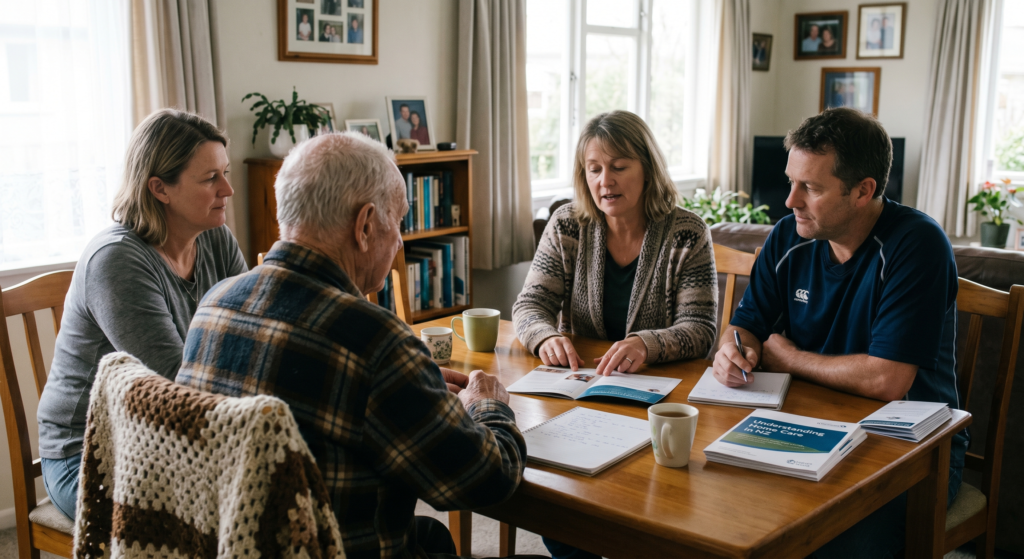
For many families across New Zealand, the moment they realise Mum or Dad needs more support at home is the moment they also realise they have no idea how to bring it up. The worry is understandable: what if they get upset, refuse help, or feel their trust has been damaged?
These fears are real — and shared by thousands of adult children navigating a parent’s dementia journey for the first time. Whether a parent lives independently in Christchurch, Tauranga, or any other part of the country, the challenge of starting this conversation is one of the most common things families face when dementia begins to change daily life.
The good news is that how the conversation happens matters far more than the specific words used. With the right timing, tone, and framing, it’s entirely possible to talk openly about home support — and to do it in a way that leaves a parent feeling heard, respected, and reassured rather than threatened.
Families who start this conversation early — before a crisis — almost always have an easier road ahead. Waiting rarely makes it simpler.
Recognising the Signs That a Conversation Is Needed
It can be tempting to wait, hoping things will stabilise on their own. But dementia is progressive, and the window for a meaningful, collaborative conversation narrows as cognitive decline deepens. Knowing when to act is often half the challenge.
Signs that it may be time to talk about support at home include:
- Meals being skipped, forgotten, or poorly prepared
- Noticeable changes in hygiene or personal care routines
- Missed medications or confusion about what to take and when
- Increased confusion in the evenings (sometimes called “sundowning”)
- Getting lost on familiar routes or forgetting known faces
- A recent fall or a near-miss that nobody mentioned until later
- Growing isolation — less contact with friends, neighbours, or community
- Heightened anxiety, irritability, or distress, particularly when alone
If several of these signs are present, or if there’s been a recent escalation, the conversation shouldn’t wait. According to Dementia New Zealand, early intervention and structured support at home can significantly slow the impact of dementia on independence and daily wellbeing.
Before the Conversation: What to Think Through First
Going into the conversation without preparation often makes things harder. Spending a few minutes thinking things through beforehand can change how the whole conversation lands.
Understand Their Perspective
For most older New Zealanders, the idea of “needing help” carries a weight that younger generations sometimes underestimate. Independence has often been a lifelong source of identity and pride. Being asked to accept care can feel — to them — as though they’re being told they’re no longer capable of managing their own life. That’s not the message to deliver.
Know What Support Looks Like in Practice
Vague conversations tend to go nowhere. Before talking to a parent, it helps to have a rough sense of what kind of support might look like — whether that’s a few hours of practical help each week, regular respite care for the family, overnight supervision, or more comprehensive dementia support at home. Having a concrete picture gives the conversation a clearer sense of direction.
Choose the Right Time and Place
Timing matters enormously. Avoid raising this topic when anyone is tired, distracted, hungry, or already stressed. Choose a calm, familiar setting — ideally their own home — during a time of day when they tend to feel most alert and settled. For many people with dementia, morning hours are clearer and calmer.
💡 PRACTICAL TIP
If possible, involve a trusted friend, sibling, or even the person’s GP before or during the conversation. A familiar voice of support can make a significant difference. Having a GP involved can shift the conversation from “my family thinks I need help” to “my doctor and I have been talking about what would help me stay at home”.
How to Start the Conversation: What Actually Works
There is no single perfect script. What matters is that the tone is warm, the approach is patient, and the conversation centres their needs rather than family anxieties. Here is a structure that often works well.
- Open with connection, not concern. Start with something warm — a shared memory, a recent positive moment, a genuine check-in. Jumping straight to “we need to talk about your safety” puts people on the defensive before anything has been said.
- Name what you’ve noticed, gently and specifically. Rather than general statements like “you’re not coping,” try something more specific: “I noticed the meals in the fridge hadn’t been touched this week and I wanted to make sure you were okay.” Specific observations feel less like a judgement.
- Ask before telling. Give them a chance to share their own experience first. Asking, “How have things been feeling lately?” or “Has anything been a bit tricky this week?” opens the door rather than forcing it. Many people with dementia are more aware of their challenges than families expect.
- Frame support around staying at home longer. Phrase support as a tool for independence, not a sign of giving up. For example, you could say, “We want to make sure you can keep living here, in your own home. Getting a bit of help a few times a week could make that easier.” This is usually far better received than language centred on risk or decline.
- Start small and flexible. Proposing a full care package in the first conversation can feel overwhelming. Instead, starting with a single session — such as a visitor to help with meals or a bit of company — and letting that grow naturally tends to work much better.
- Listen more than you speak. If they push back, resist the urge to argue or escalate. Simply acknowledge their feelings: “I hear you — you’ve managed things on your own for a long time. That matters.” Pushback is normal and doesn’t mean the conversation has failed. It may simply need to happen more than once.
When a Parent Refuses or Gets Upset
Refusal is one of the most common — and most distressing — responses families encounter. It can feel like a door closing, particularly when the concern driving the conversation is genuine. But refusal in the moment doesn’t mean refusal forever.
A few things to keep in mind:
- Dementia affects insight. One of the early symptoms of many forms of dementia is reduced awareness of one’s own difficulties. A parent who insists they’re “fine” may genuinely believe that. This is usually not because they’re being stubborn, but because the condition itself limits self-awareness. This is known clinically as anosognosia, and it’s very common.
- Emotional memory often outlasts factual memory. Even if a parent doesn’t remember the details of a conversation later, they will often retain the feeling of it. A calm, respectful exchange builds trust even if it doesn’t produce immediate agreement.
- Multiple conversations are normal. Very few families get to a support arrangement after a single discussion. Coming back to the topic gently and consistently — without pressure — is usually what eventually works.
- A GP or specialist can help. If conversations keep stalling, involving the family GP or requesting a referral to a geriatrician can shift the dynamic. It also opens the door to a formal Needs Assessment through Health New Zealand, which can provide additional support pathways.
Talking to a Parent With Moderate to Advanced Dementia
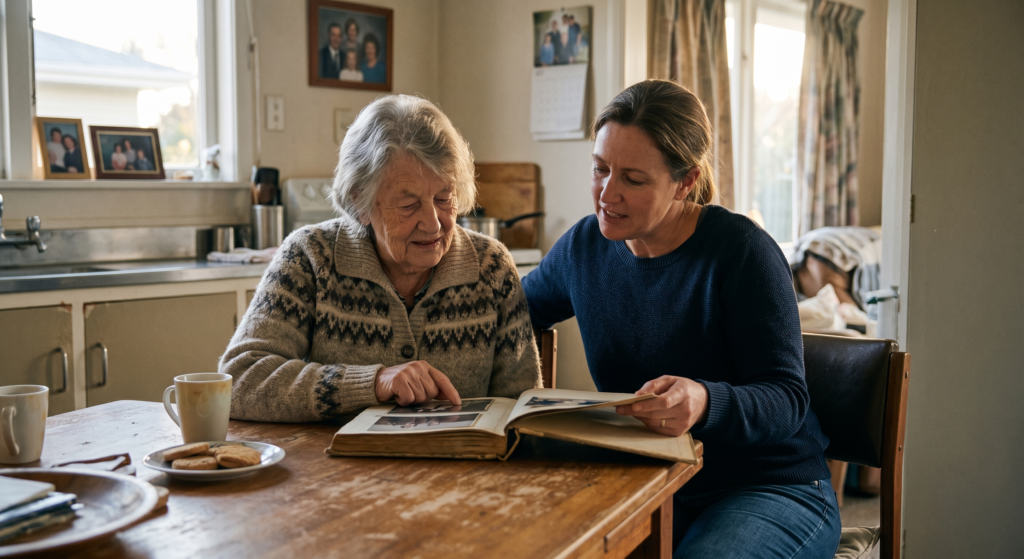
The conversation looks different once dementia has progressed. At this stage, a parent may no longer have the capacity to weigh up options or engage in a nuanced discussion about their needs. The family’s role often shifts from collaborative decision-making to advocating on their behalf — a change that carries its own emotional weight.
If this is where things are, it helps to:
- Keep explanations short, simple, and reassuring, such as, “Someone lovely is going to come and help us today.”
- Focus on feelings rather than facts — reassurance, tone, and warmth matter more than information.
- Introduce a support person gradually, so the relationship builds over time.
- Talk to a dementia care specialist about how to manage resistance or distress around care.
At this stage, families in Christchurch and Tauranga often benefit from more structured support, including overnight supervision or 24/7 care at home, to ensure safety while preserving the comfort of a familiar environment.
The Role Families Play: Supporting Without Burning Out
Many families across New Zealand quietly take on the role of primary carer — often without realising how much they’re doing until they’re exhausted. The combination of worry, practical demands, and the emotional complexity of dementia care is genuinely significant.
Carer burnout is not a sign of failure. Instead, it’s a predictable consequence of sustained, high-stakes caring without adequate support. Carers New Zealand offers resources and community support for family carers, and it’s worth connecting with them early.
Flexible respite care — whether for a few hours a week or across a longer break — gives family carers the space to recover while ensuring a parent continues to receive quality, consistent support at home. Respite isn’t a last resort. It’s a way to protect the quality of care over the long term.
| Factor | Support at Home | Residential / Rest Home |
|---|---|---|
|
Familiar Environment |
✔ Own home, familiar routines |
✘ New environment — adjustment required |
|
Continuity of Carers |
✔ Matched, relationship-based carers |
✘ Rotating staff, shared attention |
|
Flexibility of Support |
✔ Hours adjusted to changing needs |
✘ Fixed schedules and routines |
|
Family Involvement |
✔ Families stay closely involved |
Varies — depends on facility |
|
Cost Control |
✔ Flexible — pay for what’s needed |
Fixed weekly or monthly fees regardless of usage |
|
Overnight Supervision |
✔ Available as needed |
✔ Included in residential care |
|
Independence Preserved |
✔ High — within own home |
Reduced — institutional routines |
|
Suitable for Complex Dementia |
✔ Yes, with appropriate support level |
✔ Yes — especially memory care units |
🌐 RELATED READING — HOME CARERS NZ
- Dementia Care at Home in Christchurch & Tauranga → Support, helpline, and education for families
- Overnight Care in Christchurch & Tauranga → Supervision while families rest
- Respite Care for Family Carers → Taking a break without guilt
- 24/7 Home Care Support → Around-the-clock dementia supervision
- Resources Hub for Older People & Families → Guides, tools, and planning support
What Quality Dementia Support at Home Looks Like
Families sometimes worry that bringing in external support means stepping back from their loved one’s care. However, in practice, the opposite is usually true. Quality dementia support at home works alongside families — communicating regularly, staying flexible, and adjusting as needs change.
In the Home Carers model, support is built around continuity and relationship. The same carers return consistently so that familiarity develops. This matters enormously for people with dementia, who can find frequent changes in carers deeply unsettling. Carers are police-vetted and matched carefully to the individual’s personality, preferences, and routines.
Support can include:
- Assistance with personal care and morning or evening routines
- Meal preparation and ensuring proper nutrition and hydration
- Medication reminders and monitoring
- Companionship, gentle activity, and cognitive stimulation
- Supervision at night to reduce wandering risk and support safety
- Transport to appointments and social activities
- Regular communication with family members, wherever they are
Support can begin with a few hours a week and scale up naturally as needs evolve — without requiring a move into residential care unless that becomes genuinely the right option.
🌐 TRUSTED EXTERNAL RESOURCES FOR TAURANGA FAMILIES
- Dementia New Zealand — Support, helpline, and education for families
- Carers New Zealand — Respite resources and carer support services
- Health NZ / Te Whatu Ora — NASC, home care and aged care funding information
- Age Concern New Zealand — Elder wellbeing and community support
- Health Navigator NZ — Dementia — Clinical information and symptom guidance
Ready to Talk Through Dementia Home Care Options for Your Parent?
Visit Home Carers New Zealand to explore dementia care services that support safety, independence, and peace of mind for families across Christchurch and Tauranga. From overnight dementia supervision and respite care to ongoing daily support, Home Carers helps families navigate the challenges of dementia with flexible, relationship-based care at home.
Whether support is needed urgently or you’re planning ahead, the team can guide you through the next steps in a calm and supportive way.
YOU CAN ALSO REACH US DIRECTLY
Frequently Asked Questions
How do I talk to my parent about getting help at home when they keep refusing?
Refusal is very common, particularly in early to mid-stage dementia, and it doesn't mean the conversation has failed. Try returning to the topic gently over time rather than pushing in a single conversation. Framing support as something that helps them stay at home — rather than something they need because they're finding things more difficult — tends to work better. Involving the GP can also help shift the dynamic. If resistance continues and safety is a concern, speaking with a dementia specialist or contacting a support provider for guidance is a sensible next step.
Can someone with dementia stay safely at home in New Zealand?
Yes — many people live safely at home with dementia, particularly when the right support is in place. The key factors are the level of supervision available, the safety of the home environment, and the flexibility of care to adjust as needs change. In-home dementia support — from a few hours a week through to 24/7 care — can make a significant difference to both safety and quality of life, and can often delay or prevent a move to residential care.
What does dementia home care typically include in Christchurch or Tauranga?
Dementia home care typically includes personal care assistance, meal preparation, medication reminders, companionship, cognitive stimulation, transport to appointments, and safety supervision — including overnight monitoring where needed. The level of support is tailored to the individual and can start small, scaling up as needs change. Home Carers provides this kind of flexible, personalised support across Christchurch and Tauranga.
How much does dementia home care cost in Christchurch or Tauranga?
Private home care costs in New Zealand vary depending on the level and hours of support required. Families who pay privately have the advantage of flexible, responsive care that can begin quickly and adjust as needs evolve — without lengthy public waitlists. Home Carers offers transparent pricing, and a free consultation is available to help families understand what support might look like and what it would cost. Visit the pricing page or call 0800 227 686 for a direct conversation.
What is respite care, and can it help with dementia?
Respite care provides temporary relief for family carers — giving them a break while ensuring a loved one continues to receive quality, consistent support. For families managing dementia care at home, respite can prevent carer burnout and allow the primary family carer to rest, work, or simply recover. It can be as flexible as a few hours a week or more structured overnight support. Home Carers offers respite care in both Christchurch and Tauranga.
When should someone with dementia have overnight or 24/7 care?
Overnight or 24/7 care becomes important when a person with dementia can no longer be safely left alone — particularly if there is a risk of wandering, falls at night, confusion that causes distress, or an inability to respond to an emergency. If a family carer is losing sleep due to night-time supervision, that's also a strong signal that overnight support would help. Home Carers can help families assess whether this level of support is needed.
Can dementia home care start quickly in New Zealand?
Private home care through providers like Home Carers can often be arranged much more quickly than public support pathways, which may involve a Needs Assessment and a waiting list. Families who need support urgently — following a fall, a hospitalisation, or a sudden increase in care needs — can often have support in place within days. Contact Home Carers directly on 0800 227 686 to discuss what support may be available.
How can I help my parent feel comfortable with a new carer coming into the home?
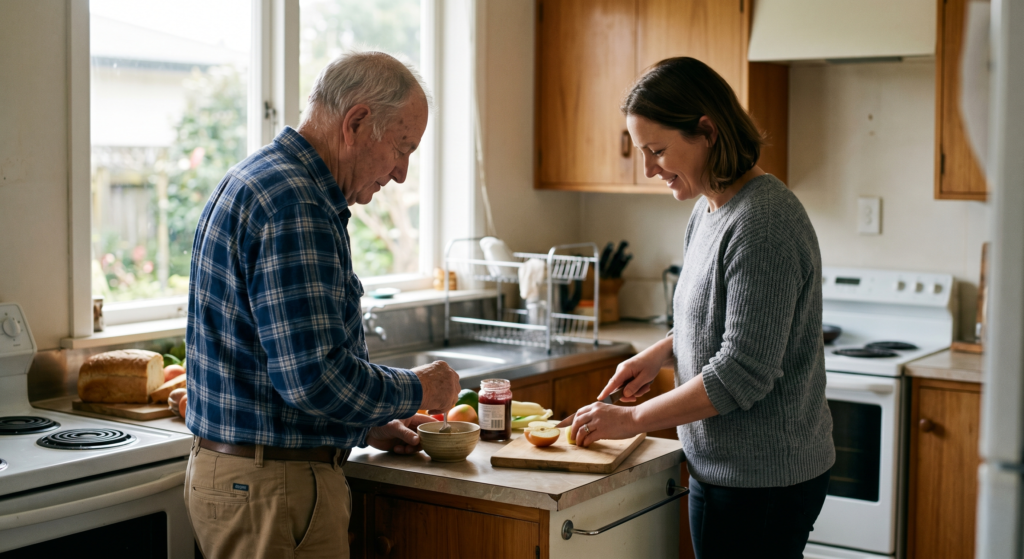
Introducing a new carer gradually and consistently works best. Start with shorter visits focused on a shared activity — making a cup of tea, looking at photos, or helping with something familiar. Consistency matters enormously for people with dementia: the same carer returning regularly allows trust and familiarity to build. Providers like Home Carers match carers carefully to the individual, which helps make the transition smoother.