
24/7 home care in New Zealand means a trained carer is present in the home at all hours — day, night, and overnight — providing continuous supervision, personal care, dementia support, mobility assistance, and companionship. It typically involves a small team of rotating carers who get to know the person well, so the support feels consistent and relationship-based rather than clinical. It is most often used for people with advanced dementia, a high risk of falls, or complex support needs who want to remain safely at home rather than move into a rest home or care facility.
What You’ll Learn in This Article
- What overnight care actually means — and when it’s the right choice
- What 24/7 home care includes and who it’s designed for
- Side-by-side comparison: hours, cost, staffing, and suitability
- Dementia-specific considerations for overnight supervision
- How New Zealand families access and fund these services
- Signs it may be time to increase support at home
Why Families Start Asking About 24/7 Care
There’s usually a turning point. It might be the fourth fall in two months. Or the day a parent with dementia walked out the front door at 2am and couldn’t find their way back. For many families, it’s the quiet realisation that their own capacity to provide safe, consistent oversight has reached its limit — and that something more substantial needs to be in place.
When families in Christchurch and Tauranga begin researching 24/7 home care, they’re often not looking for information about aged care facilities. They’re asking: Is it actually possible to keep Mum or Dad safely at home with someone there all the time? The answer, for many people, is yes — and understanding exactly what that support includes makes the decision far less overwhelming.
For most families, the shift from daytime visits to around-the-clock support is less about a single crisis and more about a gradual acknowledgement that the level of need has changed.
What Is Included in 24/7 Home Care?
Around-the-clock home care is not simply a care worker sitting in the corner of a room. At its best, it’s a carefully coordinated support structure that covers every aspect of a person’s day — and night — while preserving as much independence and routine as possible.
A well-structured 24/7 care arrangement typically includes:
Overnight Supervision
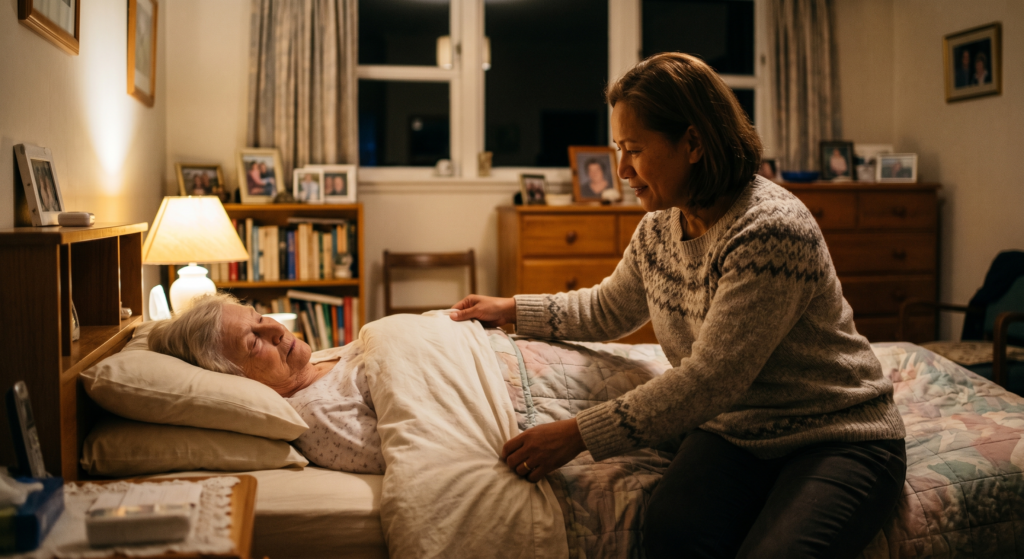
A carer is present through the night to assist with bathroom trips, manage wandering risk, and respond quickly to any distress or confusion.
Dementia Support
Consistent, familiar carers who understand dementia behaviour, reducing agitation, managing routines, and providing gentle reassurance through difficult moments.
Mobility Assistance
Support with moving safely around the home — from getting out of bed to walking to the bathroom — reducing the risk of falls at any hour.
Meals and Daily Living
Preparation of nutritious meals, medication prompts, personal hygiene assistance, and support with dressing throughout the day.
Companionship and Wellbeing
Meaningful conversation, engagement with familiar activities, and emotional support to reduce loneliness and maintain quality of life.
Family Communication
Regular updates shared with family members — even those living in other cities or overseas — so everyone stays informed and reassured.
Who Provides the Care? Understanding Rotating Carers
One of the most common misconceptions about 24/7 care is that a single person lives in the home permanently. In practice, around-the-clock support is provided by a small, consistent team of carers working in rotating shifts — typically across morning, afternoon, and overnight periods.
This model has important advantages. No single carer is stretched beyond what is safe or sustainable, which helps ensure high-quality care throughout every shift. A well-matched team of two to four carers can provide genuine continuity — the same familiar faces, the same understanding of preferences and routines — while maintaining the energy and attentiveness that consistent care requires.
At Home Carers NZ, the focus on continuity of carers is deliberate. Families consistently report that relationships between carers and clients are one of the most important factors in making 24/7 care feel genuinely supportive rather than institutional.
24/7 Home Care vs. Rest Home Care — A Comparison
Many families arrive at this conversation after exploring residential care options. Understanding the practical differences can help clarify whether home-based support is realistic for their situation.
| FEATURE | 24/7 HOME CARE | REST HOME / CARE FACILITY |
|---|---|---|
|
Environment |
Person’s own home — familiar surroundings, routines, pets |
Shared facility — new environment and schedule |
|
Carer consistency |
✓ Small dedicated team — familiar faces daily |
✗ Rotating staff — less consistent relationships |
|
Personalisation |
✓ Support built around individual routines and preferences |
✗ Shared schedules across many residents |
|
Family involvement |
✓ High — family can visit at any time and communicate directly with carers |
Varies — visiting hours and protocols differ |
|
Flexibility |
✓ Care adjusted as needs change |
Structured — harder to adapt quickly |
|
Cost |
Private funding — varies by hours and level of support |
Means-tested public funding may apply |
|
For dementia |
✓ Familiar home reduces confusion and distress |
New environment can increase agitation |
Dementia and 24/7 Care — A Particularly Important Connection
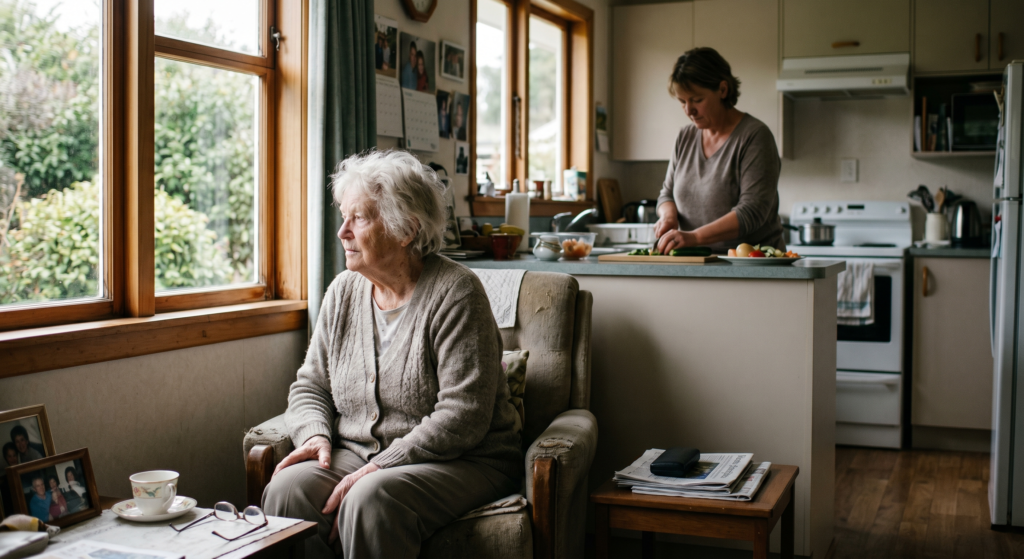
For families supporting a loved one with dementia, around-the-clock care at home takes on additional significance. Dementia can significantly disrupt sleep patterns, creating overnight restlessness, confusion, and wandering behaviour that is genuinely unsafe without supervision. A person with dementia who wakes at 3am, confused about where they are and unable to safely navigate their own home, needs someone present — not a scheduled check-in, but consistent human presence.
Research into dementia care has consistently found that familiar environments reduce confusion and agitation in people with dementia. Remaining at home — surrounded by objects, smells, and spaces that carry decades of memory — provides a form of grounding that even excellent residential care facilities cannot replicate.
Alongside overnight supervision, 24/7 dementia care at home typically includes:
- Gentle redirection when confusion or distress arises — without the use of restraint or sedation
- Safe management of wandering risk, including environmental modifications where appropriate
- Consistent daily routines that provide rhythm and predictability, which reduces anxiety
- Coordination with occupational therapists and other allied health providers where needed
- Regular family updates so that loved ones — including those overseas — stay informed
When Does Someone Actually Need 24/7 Care?
Not every situation calls for around-the-clock support. Recognising the signs that a higher level of care is needed — rather than waiting for a crisis — can make the transition far smoother for everyone involved.
The following are common indicators that 24/7 care may be worth exploring:
- Overnight safety concerns — wandering, falls in the night, or significant confusion after dark
- Advanced dementia with unpredictable behaviour — where supervision is needed consistently, not only at peak times
- High fall risk — particularly following a recent fall, hip fracture, or surgery
- Caregiver burnout — when the primary family carer is physically or emotionally exhausted and a break is no longer sufficient
- Deteriorating self-care — where consistent prompting and assistance with all activities of daily living is required
- Post-hospital discharge with complex needs — where a person returns home with significantly higher support requirements than before
Many families wait longer than they should before arranging 24/7 support — often until a crisis makes the need undeniable. Earlier conversations tend to produce calmer, more considered arrangements.
How Does 24/7 Care Relate to Respite Support?
Respite care and 24/7 home care are closely related, and families often move between them. Some families begin with overnight or weekend respite care — giving the primary family carer a genuine break — and gradually increase this to more consistent coverage as needs evolve. Others begin with a full 24/7 arrangement from the outset, particularly following a hospital discharge or a significant change in condition.
Flexible, scalable support is one of the core advantages of working with a private home care provider. Rather than committing to a fixed level of care that may not be right six months down the track, arrangements can be adjusted — up or down — in response to what’s actually happening.
🌐 RELATED READING ON HOME CARERS NZ
- 24/7 Home Care Services — Christchurch and Tauranga — Explore how continuous home support is structured
- Overnight Care at Home — What overnight supervision involves and who it’s for
- Dementia Care at Home — Specialist dementia support and supervision at home
- Respite Care — Giving Families a Break — Short-term and emergency respite options
- Home Care Pricing and Support Options — Private care costs explained clearly
New Zealand Context: Public Waiting Lists and Private Options
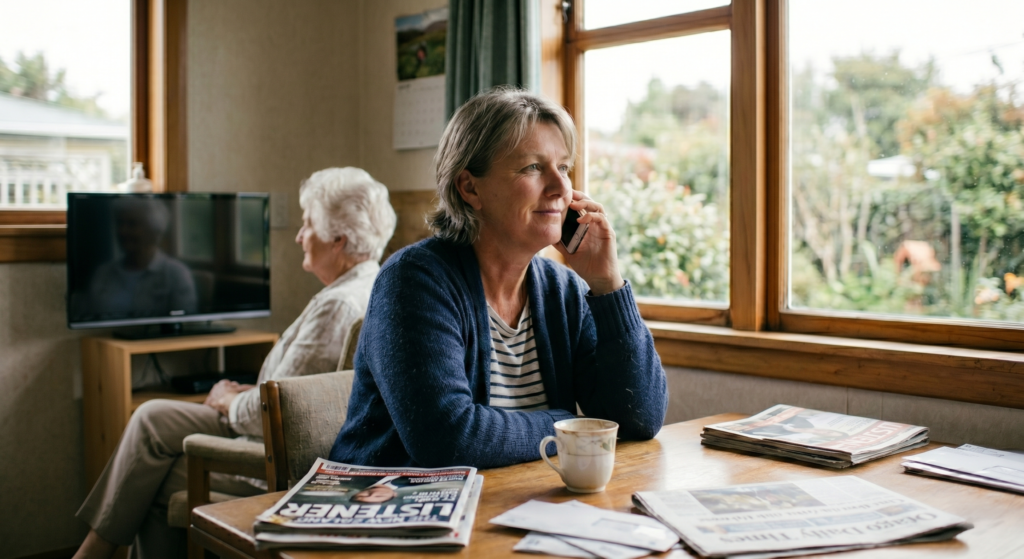
In New Zealand, publicly funded home support is coordinated through Needs Assessment and Service Coordination (NASC) services, accessed initially via a general practitioner referral. For people who qualify, this can provide meaningful support — but the reality is that publicly funded hours often fall well short of what families managing complex dementia or high-dependency needs actually require. Waiting periods can be extended, and the hours allocated may not cover overnight periods at all.
For families who need 24/7 support — or who need it urgently — private home care is frequently the most practical option. It can be arranged quickly, tailored precisely to the situation, and adjusted as needs change without navigating a reassessment process. Some families use private care exclusively, while others use it to supplement publicly funded support while they wait for an assessment or an increase in funded hours.
Understanding the full picture of what’s available — public and private — helps families make informed decisions rather than reactive ones under pressure.
🌐 TRUSTED NEW ZEALAND RESOURCES
- Dementia New Zealand — Support, resources, and helpline for families
- Carers New Zealand — Caregiver wellbeing, rights, and support
- Health NZ / Te Whatu Ora — Hospital discharge and rehabilitation information
- Age Concern New Zealand — Falls prevention and healthy ageing guidance
- Health Navigator NZ — Dementia — Clinical information and symptom guidance
Wondering Whether 24/7 Care Could Work for Your Family?
Home Carers New Zealand helps families in Christchurch, Tauranga, and across New Zealand arrange flexible, relationship-based support at home. Whether the need is urgent or you’re planning ahead, a free conversation with our care team is a calm, no-pressure first step. From overnight supervision and dementia monitoring to full around-the-clock support, we help families understand what’s possible — and what’s right for their situation.
YOU CAN ALSO REACH US DIRECTLY
Frequently Asked Questions
What exactly is included in 24/7 home care in New Zealand?
24/7 home care in New Zealand includes continuous in-home support across all hours — typically provided by a small rotating team of carers. This covers overnight supervision, personal care (bathing, dressing, toileting), dementia support and wandering management, mobility assistance and fall prevention, meal preparation, medication prompts, companionship, and regular family communication. The exact services are tailored to each individual's needs and can be adjusted over time.
How much does 24/7 home care cost in Christchurch or Tauranga?
The cost of 24/7 home care varies depending on the number of hours required, the level of care complexity, and whether overnight carers are live-in or rotating. Home Carers NZ provides transparent, upfront pricing — you can view rates directly on our pricing page. Most families self-fund this level of support privately, though some may access partial public funding through a NASC needs assessment.
Can someone with advanced dementia receive 24/7 care at home?
Yes — in many cases, people with advanced dementia can receive comprehensive 24/7 support at home. Familiar home environments are often better for people with dementia than new residential settings, which can increase confusion and distress. Continuous overnight supervision manages wandering risk and night-time agitation. The key is having a consistent team of carers who understand the individual's specific behaviours and needs. Home Carers NZ specialises in dementia care across Christchurch and Tauranga.
What is the difference between 24/7 care and overnight care?
Overnight care covers the night-time hours only — typically from around 9pm to 7am — providing supervision and assistance through the night without daytime coverage. 24/7 care extends this to all hours: day, evening, and overnight. Many families begin with overnight care and transition to full 24/7 support as needs increase. Both can be arranged through Home Carers NZ.
How quickly can 24/7 home care be arranged in New Zealand?
In many cases, care can be arranged within 24–48 hours — particularly for urgent situations such as hospital discharge or a sudden change in condition. Home Carers NZ prioritises fast setup for families who need support immediately, and can guide you through the process in a calm and practical way. Call 0800 227 686 to discuss urgent requirements directly with the team.
Does publicly funded home care cover 24/7 support in New Zealand?
Publicly funded home support — coordinated through NASC (Needs Assessment and Service Coordination) — can provide meaningful help, but allocated hours typically do not cover 24/7 support needs. Publicly funded packages are often limited in hours and may not include overnight coverage. Most families requiring consistent around-the-clock support choose private home care, sometimes using it to complement any public funding they receive. Your GP or a NASC service can advise on what may be available through the public system.
Is 24/7 home care better than a rest home for someone with dementia?
This depends on individual circumstances, but research and family experience both suggest that remaining in a familiar home environment can significantly reduce confusion and agitation for people with dementia. The personalised, relationship-based nature of in-home support — with consistent carers, familiar surroundings, and maintained routines — offers advantages that shared care facilities find difficult to replicate. That said, the decision is deeply personal, and the right answer depends on the person's condition, the family's capacity, and the level of support available at home.
Can 24/7 home care prevent a move into residential care?
For many families, yes — well-organised around-the-clock home support can allow a person to remain safely at home for considerably longer than would otherwise be possible. The key factors are the complexity of support needs, the availability of a quality care team, and clear communication between carers, family, and other health providers. Home Carers NZ works with families to assess whether home-based 24/7 support is a realistic and sustainable option for their situation.