
Overnight care provides a dedicated carer during night-time hours — typically 10pm to 7am — to supervise safety, prevent falls, and manage dementia-related wandering. 24/7 care delivers continuous, around-the-clock support with rotating carers present day and night, making it suitable for those who can no longer safely be left alone at any time. Choosing between them depends on your loved one's level of need, risk, and the family's situation.
What You’ll Learn in This Article
- What overnight care actually means — and when it’s the right choice
- What 24/7 home care includes and who it’s designed for
- Side-by-side comparison: hours, cost, staffing, and suitability
- Dementia-specific considerations for overnight supervision
- How New Zealand families access and fund these services
- Signs it may be time to increase support at home
What Is Overnight Care?
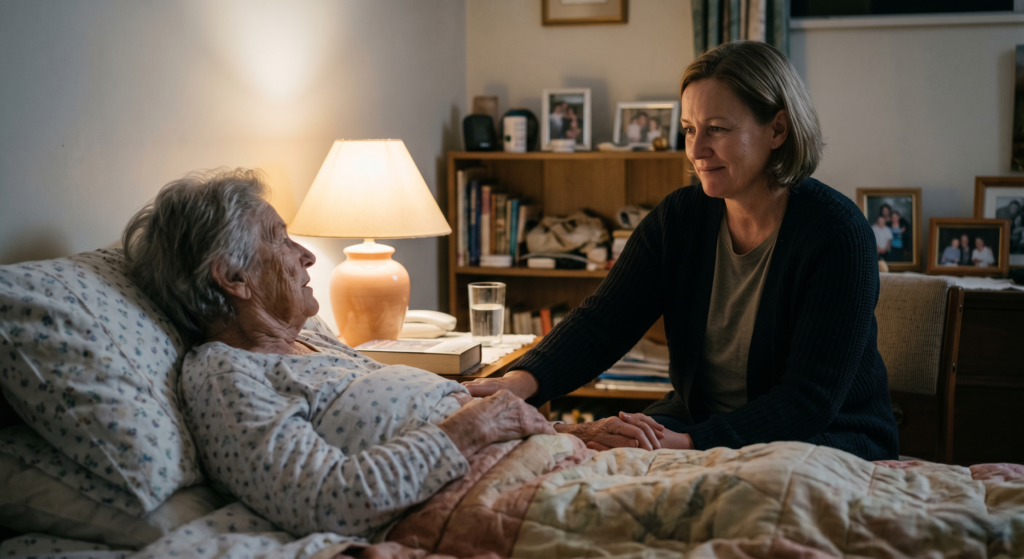
Overnight care means a trained carer stays in the home during the night — usually from around 10pm until 7am. They may sleep lightly in a spare room and be available to respond if needed, or they may be awake and actively monitoring throughout the night, depending on the level of support required.
For many families, the daytime routine feels manageable. A parent copes independently with meals and movement during the day, but night-time is a different story. Falls happen more often at night. People living with dementia often become more confused and restless after dark — a phenomenon known as sundowning. The anxiety of not being there when something goes wrong is something many adult children describe as exhausting.
Overnight care is not the same as a nursing care — it is compassionate, practical supervision delivered by an experienced carer who knows your loved one, understands their routines, and can respond calmly in the night.
What overnight care typically includes
A carer present during night-time hours can assist with:
- Responding to calls for help, toilet visits, or moments of confusion
- Preventing unsupervised wandering in people with dementia
- Assisting with repositioning to prevent pressure injuries
- Medication reminders if required overnight
- Fall response and basic first aid until emergency services arrive
- Providing reassurance and calm during anxious or distressed moments
- Monitoring general wellbeing and flagging concerns to families in the morning
What Is 24/7 Home Care?
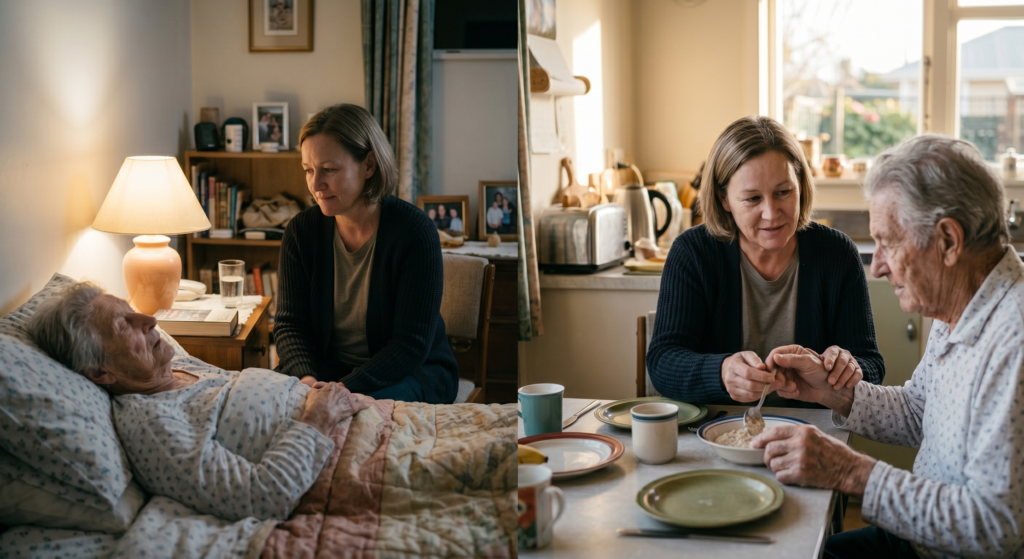
24/7 home care is a continuous care model — someone is always present, day and night. It typically involves a rotating team of two or more carers who work in shifts to provide uninterrupted support throughout each 24-hour period. There are no gaps. There is no period during the day or night when your loved one is unsupported.
This is the level of support typically considered when families reach a point where their loved one can no longer be safely left alone at any time. It is also the model that can offer a genuine alternative to residential care for families who want their parent to remain at home despite complex or high support needs.
Many families in Christchurch and Tauranga reach out after a crisis — a fall at 2am, or a frightening episode of night-time wandering. 24/7 care isn't just about safety — it's about giving families their own lives back.
What 24/7 care typically includes
- Continuous presence of a trained carer across all shifts — morning, afternoon, overnight
- Personal care assistance: showering, dressing, grooming, continence support
- Meal preparation, nutrition monitoring, and fluid intake support
- Mobility assistance and falls prevention throughout the day and night
- Dementia supervision — managing sundowning, wandering, agitation, and disorientation
- Medication reminders and support with medical appointments
- Regular family communication and daily updates
- Allied health coordination — working alongside physiotherapists, OTs, and other providers
Side-by-Side Comparison
The table below outlines the core differences to help families understand which model fits their situation best. These are general guidelines — every family’s needs are different, and the right support level should always be discussed individually.
| Feature | Overnight Care | 24/7 Home Care |
|---|---|---|
|
Hours of support |
Night-time only (approx. 10pm–7am) |
All hours — day, evening, night |
|
Carer presence |
1 carer overnight |
Rotating team (2–3 carers in shifts) |
|
Best suited for |
Those who manage well by day but need night-time supervision |
Those with complex or high needs requiring constant presence |
|
Dementia support |
Night-time wandering & sundowning management |
Full dementia support across all hours |
|
Fall prevention |
Overnight monitoring and response |
24-hour monitoring and assistance |
|
Personal care (showering, dressing) |
Not included overnight |
Fully included across all shifts |
|
Meal preparation |
Not typically overnight |
All meals supported |
|
Cost level (private) |
Lower — night-time hours only |
Higher — full-time team of carers |
|
Rest home alternative |
Partial — combined with day support |
Strong alternative to residential care |
|
Allied health coordination |
Can be arranged alongside |
Integrated into care planning |
|
Flexibility |
Can start quickly |
Can be arranged within days |
|
Funding options (NZ) |
Primarily private pay; NASC may contribute |
Primarily private pay; NASC assessed; ACC pathways |
Dementia Care — Why Night-time Supervision Matters
For families supporting a parent with dementia, nights are often the most difficult part of the day. Sundowning — a pattern of increased confusion, agitation, and restlessness that occurs in the late afternoon and evening — affects a significant proportion of people living with Alzheimer’s disease and other forms of dementia.
Unsupervised night-time wandering carries serious risks. Falls on the way to the bathroom, leaving the house at 3am, or turning on the stove in confusion — these are not hypothetical concerns. They are the situations families in Christchurch and Tauranga contact Home Carers about regularly.
When overnight care fits
- Managing daytime routine independently or with part-day help
- Experiencing night-time wandering or sundowning episodes
- Falls risk at night — unsafe unsupervised trips to the bathroom
- Family caregiver requiring sleep to continue daytime support
- Recent hospital discharge — short-term overnight reassurance
When 24/7 care fits
- Cannot safely be left alone at any hour
- Advanced dementia with high agitation or complex behaviours
- Significant mobility decline or high fall risk throughout the day
- Family caregiver exhaustion — risk of total carer burnout
- Considering rest home placement but preferring to stay at home
The New Zealand Context — Accessing Support in Christchurch & Tauranga
New Zealand’s public home care system can provide some funded support through a Needs Assessment and Service Coordination (NASC) process — but publicly funded overnight care and 24/7 support remain limited, and waitlists can be significant. Many families across Christchurch and Tauranga turn to private providers when the need is urgent or when a higher level of care is required than the public system can offer.
ACC pathways may also provide temporary support at home following a fall or injury. If your parent has been discharged from Christchurch Hospital or Tauranga Hospital and requires overnight supervision during recovery, it is worth exploring whether ACC funding applies to their situation.
Private overnight care and 24/7 care can typically be arranged within a matter of days. For families who are urgently trying to prevent a rest home admission, or who are managing a post-discharge crisis, this responsiveness is often critical.
🌐 RELATED READING ON HOME CARERS NZ
- 24/7 Home Care Services — Christchurch & Tauranga — Explore how continuous home support is structured
- Overnight Care at Home — What overnight supervision involves and who it’s for
- Dementia Care at Home — Specialist dementia support and supervision at home
- Respite Care — Giving Families a Break — Short-term and emergency respite options
- Home Care Pricing & Support Options — Private care costs explained clearly
Signs It May Be Time to Increase Support
Families often wait longer than they should before increasing a loved one’s support level — often because of guilt, cost concerns, or uncertainty about the right next step. These are signs that suggest it may be time to have the conversation about overnight or 24/7 care:
| Situation | Consider overnight care | Consider 24/7 care |
|---|---|---|
|
Falls have occurred at night |
✔ |
if also falling by day |
|
Night-time wandering or exiting the home |
✔ |
if also disoriented by day |
|
Family caregiver sleeping poorly due to worry |
✔ |
|
|
Cannot be left unsupervised at any time |
|
✔ |
|
Advanced dementia with complex behaviours |
|
✔ |
|
Family caregiver nearing burnout |
short-term respite |
full support |
|
Considering rest home placement |
explore first |
strong alternative |
|
Recent hospital discharge |
short-term |
if complex recovery |
🌐 TRUSTED NEW ZEALAND RESOURCES
- Dementia New Zealand — Support, resources, and helpline for families
- Carers New Zealand — Caregiver wellbeing, rights, and support
- Health NZ / Te Whatu Ora — Hospital discharge and rehabilitation information
- Age Concern New Zealand — Falls prevention and healthy ageing guidance
- Health Navigator NZ — Dementia — Clinical information and symptom guidance
Not sure which level of support Mum or Dad needs?
Whether you’re weighing overnight care or considering full 24/7 support, Home Carers can help you understand the right option — without pressure and at no cost. Our team in Christchurch and Tauranga is available to talk through your situation and outline what support can look like in practice.
YOU CAN ALSO REACH US DIRECTLY
Frequently Asked Questions
What is the difference between overnight care and 24/7 home care?
Overnight care provides a trained carer during night-time hours — typically 10pm to 7am. The carer is present to respond to night-time needs, prevent falls, and manage dementia-related behaviours like wandering. 24/7 care is continuous support across all hours of the day and night, delivered by a rotating team of carers. It is suited to people who cannot safely be left alone at any time of day.
How much does overnight care cost in Christchurch and Tauranga?
Overnight care costs depend on the hours required, the level of support, and whether a carer is active or on a sleepover arrangement. Home Carers offers transparent pricing with no hidden fees — contact the team for a personalised quote based on your parent's specific needs. Visit our website for more pricing information
Can my parent with dementia stay safely at home with overnight care?
In many cases, yes — particularly in the earlier to middle stages of dementia when a person manages reasonably well during daylight hours. Overnight care can manage sundowning, prevent wandering, and respond to distressed episodes. As dementia progresses, 24/7 supervision may become more appropriate. A care assessment will help identify the right level of support.
Is 24/7 home care a real alternative to a rest home in New Zealand?
For many families, yes. 24/7 in-home care provides continuous support from a familiar team of carers in a known environment — the person's own home. This approach is associated with better emotional wellbeing, greater dignity, and reduced distress compared to institutional settings. It is a premium option that requires private funding, but many New Zealand families consider it worth the cost when the alternative is a rest home placement.
Can ACC help fund overnight or 24/7 home care in New Zealand?
ACC may cover support at home following an injury — including overnight assistance during a recovery period. The scope of ACC-funded home care depends on the individual's injury, their recovery plan, and their eligibility. Home Carers can work alongside ACC-funded recovery pathways. It is worth speaking with your ACC case manager about what night-time support may be covered.
What is the NASC process for publicly funded overnight home care in New Zealand?
A Needs Assessment and Service Coordination (NASC) assessment is required to access publicly funded home care in New Zealand. An assessor from Health New Zealand evaluates a person's needs and determines the level of funded support. Publicly funded overnight care and 24/7 support are limited in availability, and many families supplement or fully fund private overnight care while waiting for or alongside NASC-funded services.
Can I arrange care for a parent in New Zealand if I live overseas?
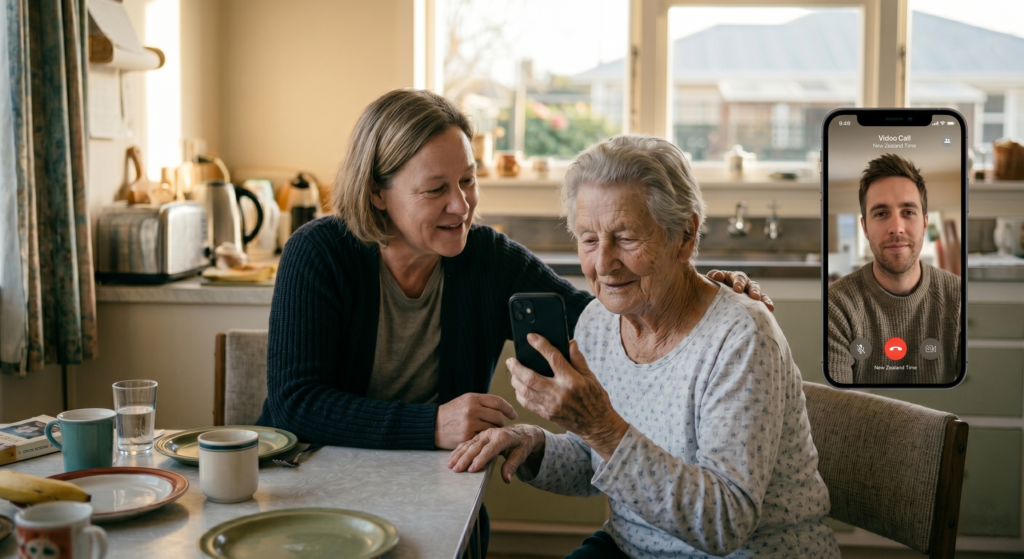
Absolutely. A significant number of Home Carers clients have families based overseas or in other parts of New Zealand. The team provides regular updates, digital communication, and clear reporting so families abroad can stay closely informed. The care setup process can be completed remotely, and care can be arranged ahead of or following a hospital discharge.