
The key signs that a parent should no longer be left alone include frequent falls or near-misses, forgetting medication, getting lost in familiar surroundings, neglecting meals or hygiene, and signs of night-time confusion or wandering. When two or more of these occur regularly, 24/7 home care is worth seriously considering — and in New Zealand, private support can often be arranged within days.

Common Signs Mum or Dad May No Longer Be Safe Alone
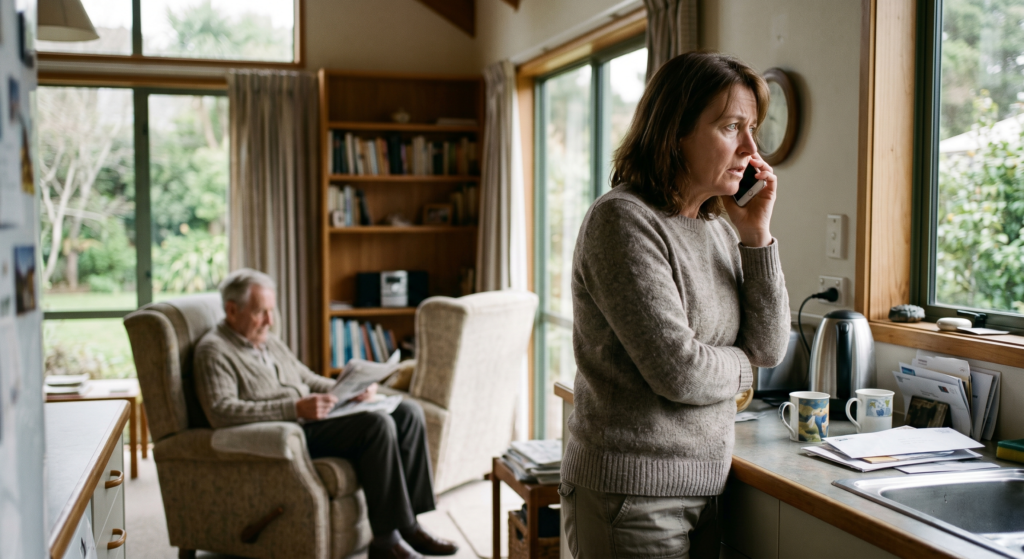
Adult children often notice the early signs but find it difficult to act. Partly because bringing it up feels like a betrayal. Partly because Mum or Dad insists they are fine. And partly because the alternative — a rest home — feels like something neither of you is ready for.
But there is a middle path. Around-the-clock support at home allows a parent to remain in familiar surroundings, surrounded by their own things, while having someone present at all times. For families in Christchurch and Tauranga, this kind of support is available privately, often at short notice, and can be tailored completely to the person’s needs.
The 10 clearest signs your parent should not be left alone:
- Falls or near-misses
- Missed or wrong medication
- Night-time confusion or wandering
- Skipping meals or weight loss
- Poor hygiene or household neglect
- Getting lost in familiar places
- Recent hospital discharge
- Increasing isolation or withdrawal
- Family caregiver exhaustion
- Unexplained injuries or accidents
The goal of 24/7 home care is not to take over someone's life — it is to make sure they are safe enough to keep living it.
When a few signs become a pattern
None of these signs on their own necessarily means your parent needs full-time support right away. But when two, three, or more are present — and especially when they are worsening — the risk of a serious incident increases significantly.
New Zealand’s public care system, under pressure from GP shortages and hospital bed constraints, may not move quickly enough. Families in Christchurch and Tauranga often find that waiting for a NASC assessment or a public support package takes longer than the situation safely allows. Private 24/7 home care can be arranged within days and adjusted as needs change.
What 24/7 home care actually looks like
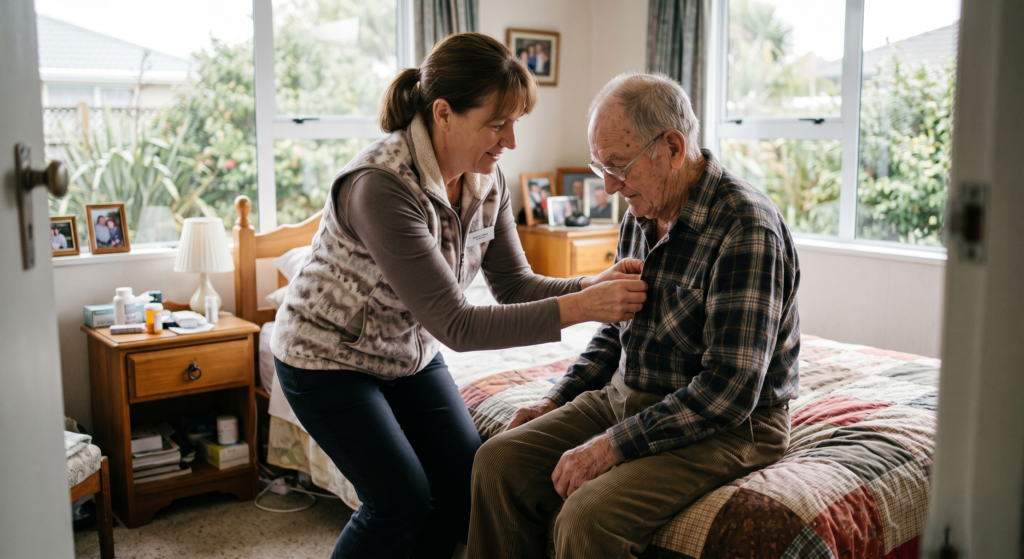
Around-the-clock care does not mean your parent loses privacy or independence. In practice, it means having a trusted, familiar person present at all hours — someone who knows their routines, respects their preferences, and is there when something goes wrong.
For most families, this involves rotating carers across shifts, with particular attention paid to maintaining consistent faces so your parent is not meeting a new person every day. A good 24/7 care arrangement includes:
- Overnight supervision and safe monitoring through the night
- Medication prompts at the right times
- Meal preparation and support at mealtimes
- Assistance with personal hygiene and dressing
- Companionship and engagement during the day
- Regular communication with family members
- Coordination with GPs, physiotherapists, and other healthcare providers
- Falls prevention and home safety monitoring
Home Care vs Rest Home: Understanding Your Options
| Factor | 24/7 Home Care | Rest Home / Residential |
|---|---|---|
|
Familiar environment |
✔ Own home |
✘ New facility |
|
Personalised routine |
✔ Fully tailored |
✘ Facility schedule |
|
Continuity of carers |
✔ Same small team |
✘ Variable staffing |
|
Family involvement |
✔ Daily communication |
Limited visiting hours |
|
Start date |
✔ Often within days |
Waitlist may apply |
|
Allied health coordination |
✔ Built-in |
Varies by facility |
|
Flexibility to scale |
✔ Adjust as needed |
✘ Fixed care levels |
For families weighing up these options, 24/7 home care is increasingly preferred as a first response — particularly for parents with dementia, post-hospital recovery needs, or complex ongoing support requirements. It can also serve as a stabilising bridge before longer-term decisions need to be made.
The New Zealand context: why families act sooner now
New Zealand’s ageing population is placing significant pressure on public aged care services. In both Christchurch and Tauranga — cities with fast-growing older populations — NASC assessments and publicly funded support packages can involve meaningful wait times.
Families that once assumed the public system would support their parent are increasingly finding that private support is not a luxury but a practical necessity. ACC-funded recovery support may cover some short-term needs following a fall or injury, but for ongoing supervision and complex home care, private arrangements offer the speed, flexibility, and consistency that most families need.
How to start the conversation with your parent
Raising the idea of 24/7 care is rarely easy. Most older people are fiercely independent and may react with resistance or hurt. A few approaches that tend to work better:
- Frame it around safety, not capability. “I worry about you at night” lands very differently than “I don’t think you can manage.”
- Introduce support gradually. Starting with overnight care or daytime check-ins can build trust before moving to full-time support.
- Involve them in choosing the carer. When a parent feels like the decision is happening to them rather than with them, resistance increases.
- Keep the alternative in view. Gently noting that the alternative may be a rest home — which most older people want to avoid — can shift perspective.
🌐 TRUSTED NEW ZEALAND RESOURCES
- Carers New Zealand — Caregiver support and 24/7 resources
- Dementia NZ — Dementia support at home
- Health NZ/ Te Whatu Ora — Hospital discharge and rehabilitation information
- Age Concern New Zealand — Falls prevention and healthy ageing guidance
- ACC New Zealand — Care support pathways
Concerned Mum or Dad May No Longer Be Safe Alone?
Home Carers New Zealand supports families across Christchurch and Tauranga with flexible 24/7 home care designed to help older adults remain safe, comfortable, and independent at home.
From overnight supervision and daily assistance to ongoing around-the-clock support, Home Carers provides personalised, relationship-based care tailored to each family’s situation. Whether support is needed urgently after a fall or hospital discharge, or whether families are planning ahead for increasing care needs, the team can help guide the next steps with calm and compassionate support.
CONTACT OPTIONS:
Frequently Asked Questions
When does someone actually need 24/7 home care?
When a person can no longer safely manage basic daily tasks without supervision, or when safety risks exist through the night — such as wandering, falls, or confusion — 24/7 care is appropriate. If two or more of the signs listed in this article occur regularly, it is a strong indicator that additional support may be needed.
How much does 24/7 home care cost in Christchurch or Tauranga?
Home Carers publishes transparent pricing on its website and can provide a tailored cost estimate during an initial consultation. Visiting the Home Carers pricing page is a good starting point.
Is 24/7 home care available at short notice in New Zealand?
Yes. Private home care providers like Home Carers can typically arrange support within a few days. This is one of the key advantages of private care over publicly funded options, which may involve longer wait times for needs assessments and placement.
What is the difference between overnight care and 24/7 care?
Overnight care provides a carer specifically during sleeping hours — typically to monitor for wandering, assist with night-time needs, and prevent falls. 24/7 care extends this to around-the-clock coverage, with rotating carers ensuring continuous support day and night.
Can ACC help fund home support after a fall or injury?
ACC may fund some in-home support following an accidental injury or fall. However, ACC-funded support is typically short-term and focused on recovery rather than ongoing supervision. A provider like Home Carers can help families understand what ACC covers and what private support may be needed alongside it.
What happens if my parent's needs increase over time?
Private home care can be scaled up as needs change. Unlike residential care facilities where moving to a higher-dependency unit can be disruptive, home-based support can be adjusted — additional hours, extra carers, or additional coordination with allied health providers.
How do I know when it's truly urgent?
If your parent has fallen and been injured, has had a recent hospital discharge, is showing signs of night-time wandering, or is refusing food and personal care, the situation is urgent. Do not wait for a further incident before seeking support. Home Carers can arrange urgent consultations and fast support setup for families in crisis.